Build the page around a book’s journey
A handwritten newspaper about book collections in ancient Chinese academies does not need to be a dry history summary. Organize it around four questions: Where did the books come from? How were they kept? How were they used? Why should they be passed on? This storyline shows the connection between an academy and its books while making the page easy to plan. Use bound books, shelves, bookmarks, and brushes as supporting motifs.
Four story boxes for the main idea
Where the books came from
Explain that books could reach an academy through hand-copying, woodblock printing, and donations from individuals or the wider community. Making a book in ancient times required considerable time and effort, so a collection was valuable. Phrases such as common sources or possible ways of sharing keep the wording accurate and easy for children to understand.
How the books were cared for
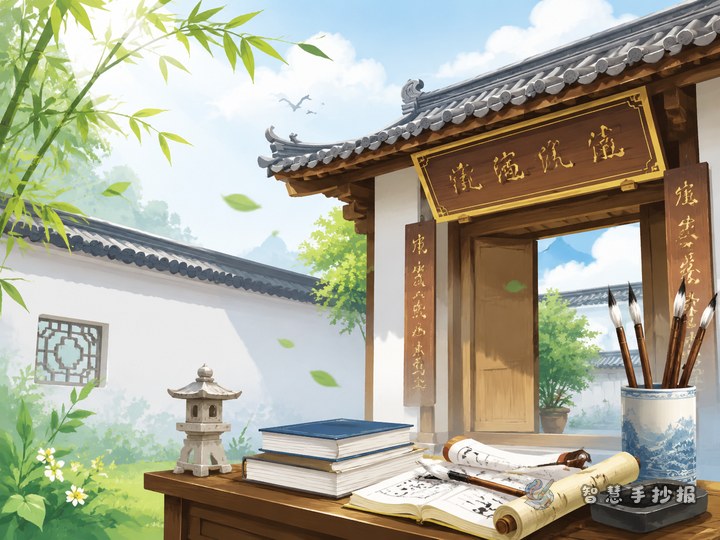
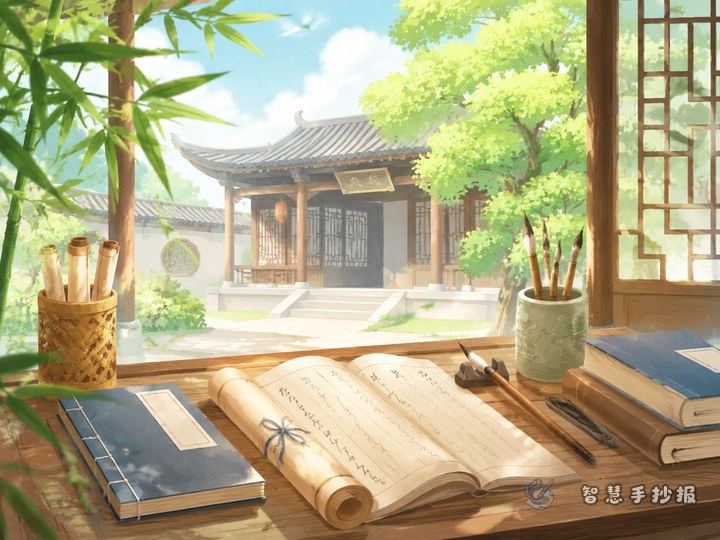
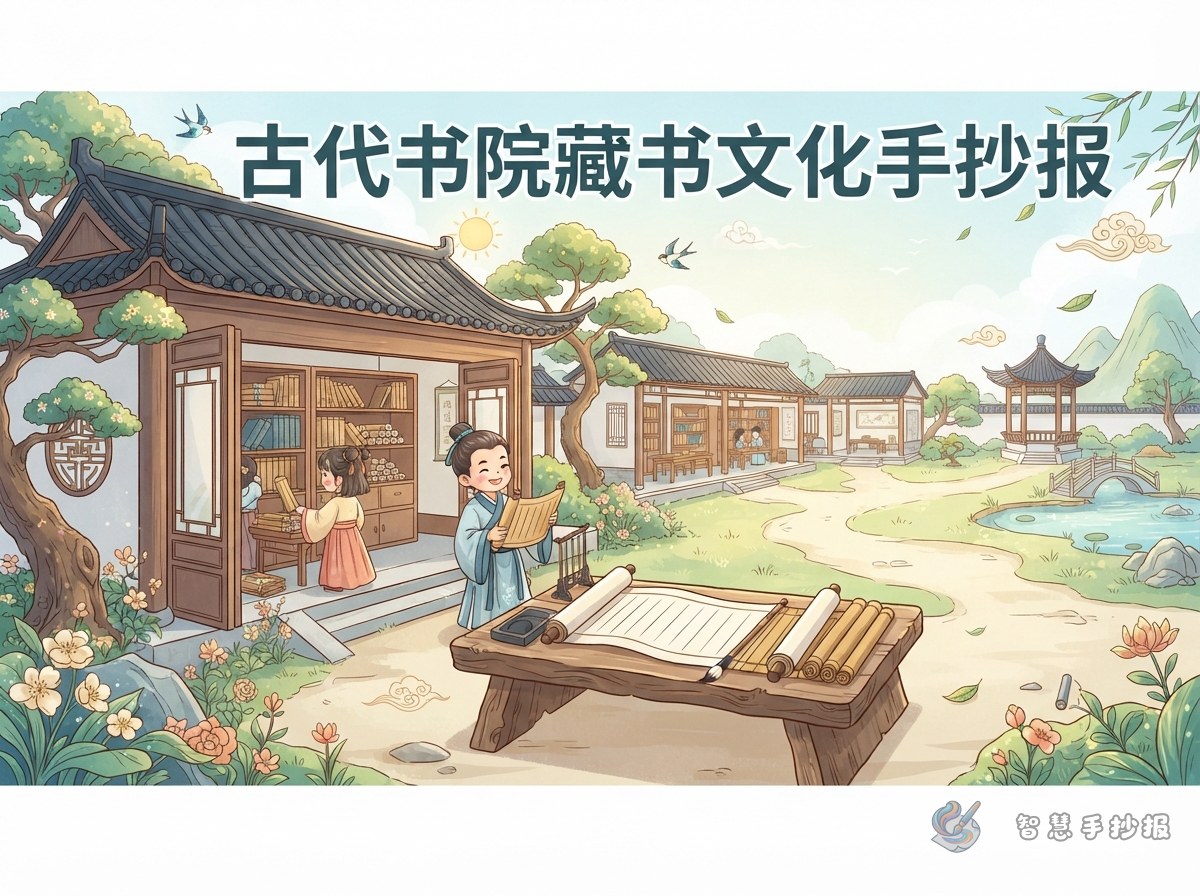
Use Book Storage as a small heading and write about sorting, recording, and handling books carefully. You do not need to draw a complicated building. A wooden shelf, scrolls, bound volumes, and a small window can suggest a quiet library space. A short reminder such as Handle books gently and keep them organized can make the section lively.
How books supported learning
The purpose of a collection was not simply to store books. It also supported reading and teaching. Draw a teacher, a reading desk, and several students, then add phrases such as checking references, thinking carefully, and discussing ideas. These details show how books helped learners gain knowledge and exchange opinions.
Why the collection mattered
Write that books preserve cultural memory, help later generations learn, and allow knowledge to continue. End with a simple original line, such as Cherish one book and pass on one piece of knowledge. A clear sentence is better than using a difficult quotation that children may not understand.
Make the layout look like an open library
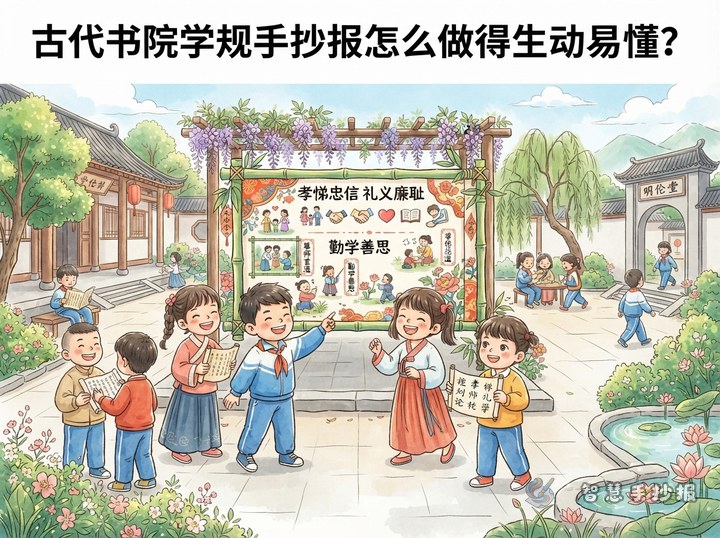
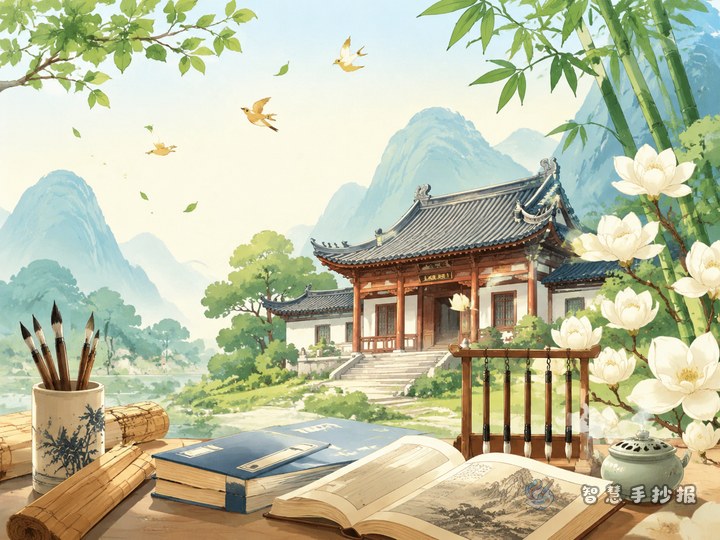
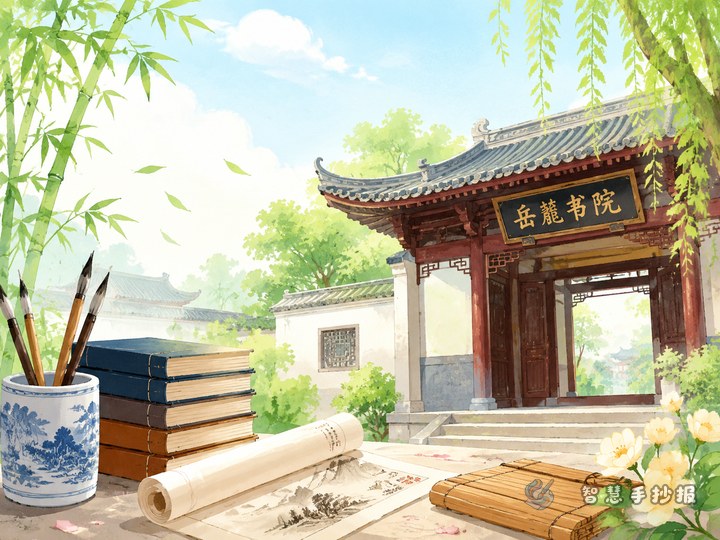
- Center image: Draw an open book, a wooden shelf, or a simple library building in the middle, with the main title nearby.
- Left side: Show the sequence Collect, Organize, Read, and Pass On with arrows so the relationship between the ideas is easy to follow.
- Right side: Place the book sources and the role of the academy inside scroll-shaped or bookmark-shaped text boxes.
- Bottom decoration: Add bamboo leaves, an inkstone, a seal, and small pages. Try cream, brown, and deep green with a touch of yellow or red for brightness.
A short paragraph to adapt
Ancient Chinese academies were places for reading and teaching, and many also valued the collection and use of books. Books could be gathered through copying, printing, or donations, then organized and preserved for teachers and students to consult. A collection gave knowledge a quiet home and helped the ideas of earlier generations reach later readers. We can still appreciate this tradition by caring for books, reading carefully, and sharing what we learn.
Check the page before finishing
- Make sure the title highlights book collections in ancient academies rather than becoming a general reading theme.
- Give every section both a short piece of writing and a matching drawing so the page does not feel crowded on one side.
- Use historical ideas that you understand, expressed in clear language suitable for primary school readers.
Sketch the library and text boxes lightly in pencil before adding the final words and colors. When you want to adjust the title, sections, or color plan, continue making the page in the 智慧手抄报 WeChat Mini Program.