Turn surname culture into a warm poster story
When students make a Chinese surname culture poster, many begin by copying facts from the Hundred Family Names. That gives useful information, but it can also feel flat. A better idea is to connect the topic to your own surname and your own family, so the poster carries both cultural meaning and personal expression.
If your theme is about designing the poster like a family story, the whole page becomes easier to plan and more memorable to read.
Section ideas you can use right away
Section 1: Where my surname comes from
Briefly explain the origin, pronunciation, and basic meaning of your surname. The content does not need to be too academic. Choose a version that is clear and easy for students to understand.
- How my surname is pronounced
- Whether it is common in daily life
- A short origin story or legend
Section 2: Family titles at home
Surname culture connects naturally with family relationships. This is a great section for younger students. You can list titles such as grandfather, grandmother, uncle, aunt, and older cousins to show the courtesy and order found in Chinese family culture.
Section 3: Famous people with the same surname
Choose one or two well-known historical, literary, or scientific figures who share your surname. Use short sentences so the content stays poster-friendly.
Section 4: Our family motto
Write one simple family value such as honesty, diligence, respect, or love of learning, then add one or two lines about how it appears in everyday family life.
Section 5: Fun surname facts
This part adds energy to the page. You can mention where a surname appears in the Hundred Family Names, surnames that sound alike but use different characters, or surnames that people often misread.
Simple text materials for student posters
These lines can be adapted for the main body of the poster:
- A surname is not only part of a name, but also part of family memory.
- Chinese surname culture has a long history and reflects family continuity and social etiquette.
- A family motto is like a lamp that guides our growth.
- Learning about our surname helps us understand both family and culture.
You can also add one personal sentence, such as: I am proud of my surname because it reminds me of my elders and the warmth of my family.
Try a family-tree-centered layout
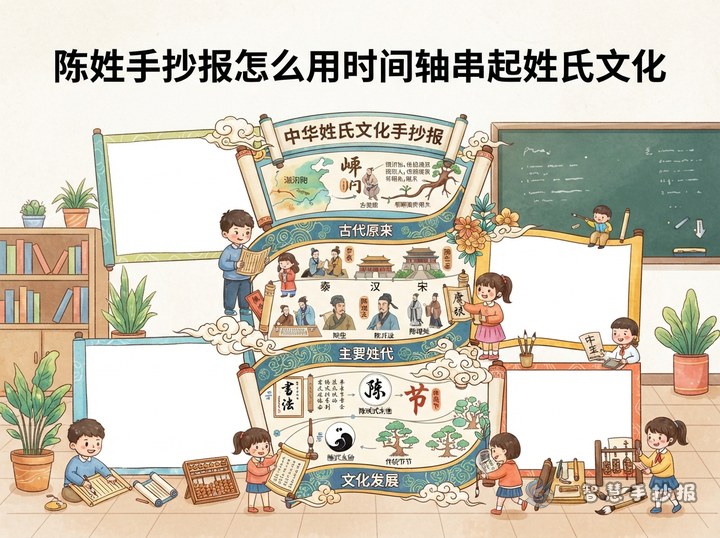
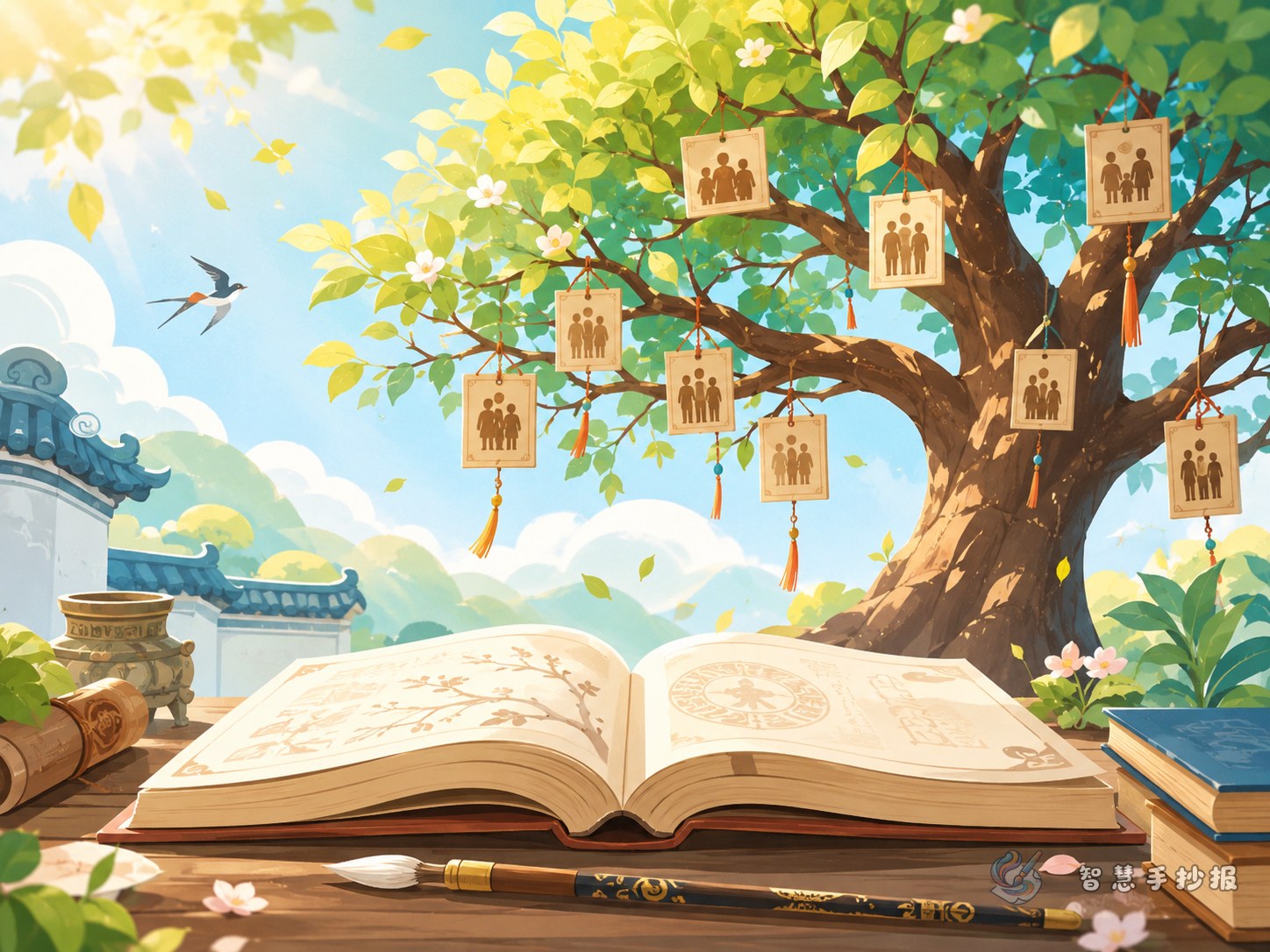
This topic works especially well with a center-focused composition. Draw a simple family tree in the middle and write the main theme on the trunk. Use the branches to show family members or titles, then place the text sections around it.
- Put a bold title at the top center.
- Use a family tree, scroll, or round emblem in the middle as the main visual.
- Place surname origin and fun facts on one side.
- Place famous people and family values on the other side.
- Use a small reflection or family story section at the bottom to finish the page.
This structure feels more alive than a simple four-box layout and matches the family story angle well.
Decoration ideas that stay neat
Chinese surname culture posters look best with a few repeated traditional elements instead of too many mixed decorations.
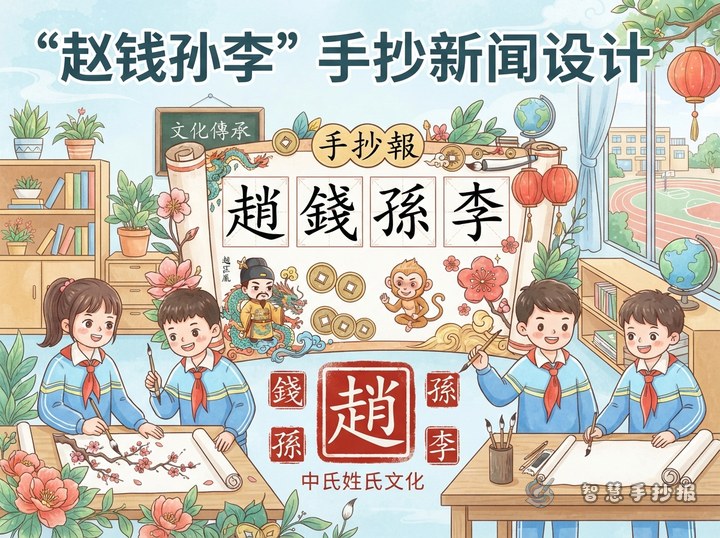
- Seal-style frames for titles and labels
- Scroll lines for text boxes
- Clouds, lanterns, or leaves in the corners
- Brushes, books, or family-tree shapes as theme symbols
Colors such as red, beige, dark green, and gold create a clean traditional feel. Avoid using a different bright color for every section, or the page may look messy.
What to add if the page still feels empty
If there is extra space, create a small box called “What I Know About Surnames” or “Questions I Want to Ask My Family.” For example:
- Is our surname common in our hometown?
- Do my elders know any stories about this surname?
- Is there a family motto that has been passed down?
These details help fill the page and make the poster more interactive. After you finish the draft, you can continue arranging text, adjusting sections, and improving the final look in the Zhihui Shouchaobao WeChat mini program.