Choose the Main Idea: Turn Surname Culture into a Map
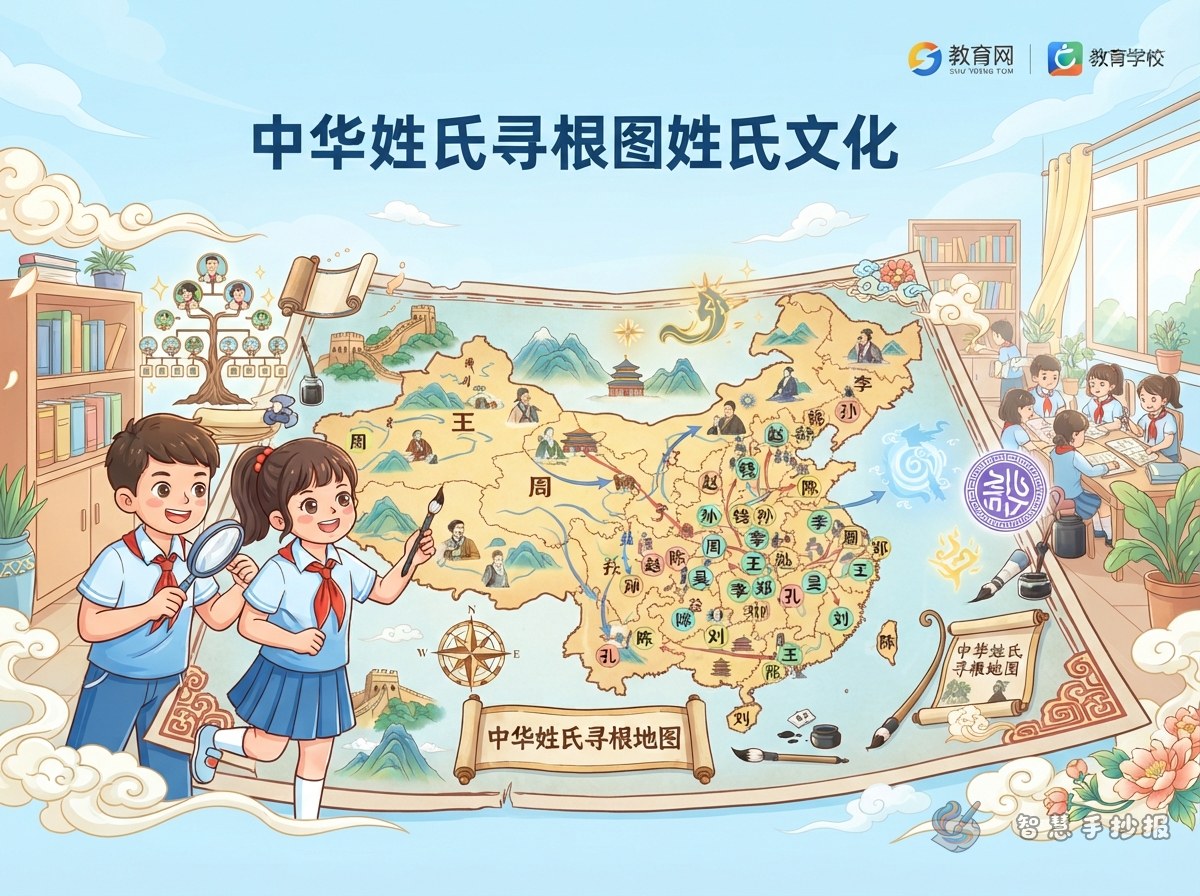
Instead of listing many surnames one by one, build the handwritten newspaper around the question “Where did a surname begin, and how did it reach different places?” Place a simple map of China in the center, then add rivers, ancient roads, family scrolls, and seals to show the development and spread of surnames.
Choose two or three familiar surnames as examples. For each one, separate the information into a commonly told origin, a clue from historical records, and a story remembered by family members. Surname branches may have different histories, so words such as “according to one tradition” or “one explanation suggests” help distinguish stories from certain conclusions.
What to Place on the Map
- Main title: Try “A Map of Chinese Surname Roots” or “Following Surnames Through Chinese History” above the map.
- Origin marks: Use dots, old-style character boxes, or seal shapes to show early clues connected with a surname.
- Movement routes: Use dashed arrows to show broad directions from earlier regions to later settlements. They do not need to be geographically exact.
- Surname cards: Put small cards around the map with the character, pronunciation, a traditional origin story, or a historical figure.
- Cultural symbols: Add words such as family tree, ancestral hall, commandery origin, and family motto to show that a surname carries family memories.
If the material feels too long, keep each card to three points: the surname character, one sentence about its origin, and one cultural symbol. The empty space will make the map easier to read.
Short Texts for the Handwritten Newspaper
Opening paragraph
A surname is part of everyone’s name and also a clue to the memory of Chinese culture. By following the beginning and movement of a surname, we can learn about historical exchanges between regions and feel the continuation of family traditions.
Note beside the map
Surnames formed for many different reasons. They may have come from an ancestor’s name, a place, an official position, an occupation, or a place of residence. As people moved and regions communicated with one another, different branches of the same surname developed their own family stories.
Closing sentence
Tracing our roots is not only about finding a place name. It also teaches us to respect history, value family affection, and discover the connection between our own names and Chinese culture.
How to Make the Layout Look Like a Clear Cultural Map
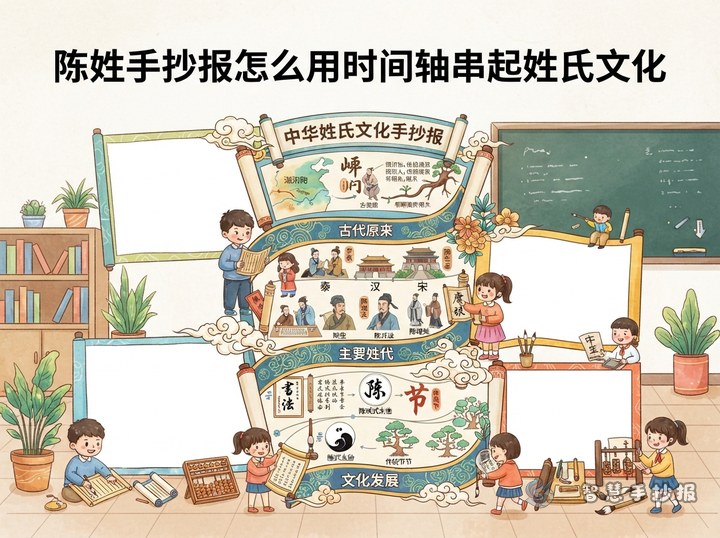
- Sketch a horizontal or vertical map outline in pencil first, then decide where the title, routes, and surname cards will go.
- Make the map the visual center. Put the title above it, the introduction on one side, and the surname cards around the edges.
- Use one color for routes and another for surname cards. Give each color only one purpose so the page remains easy to follow.
- Add a compass, scroll, seal, or family tree in the corners, but keep these decorations away from the main text and routes.
- Outline the writing in black or dark blue, then add red, orange, and teal accents for a traditional yet lively look.
Three Details to Remember
First, the map is a storytelling tool, so it does not need the scale or detail of a professional map. The important thing is that the routes and sections are understandable. Second, when writing about a surname’s origin, consult textbooks, library books, or reliable family records, and label different explanations separately. Third, write and edit the text before decorating. Keeping each card short will make the page much neater.
After choosing the theme, you can open the WeChat mini program Zhihui Shouchaobao to arrange sections, adjust the layout, and continue making the handwritten newspaper.