Build the Poster Around One Clear Timeline
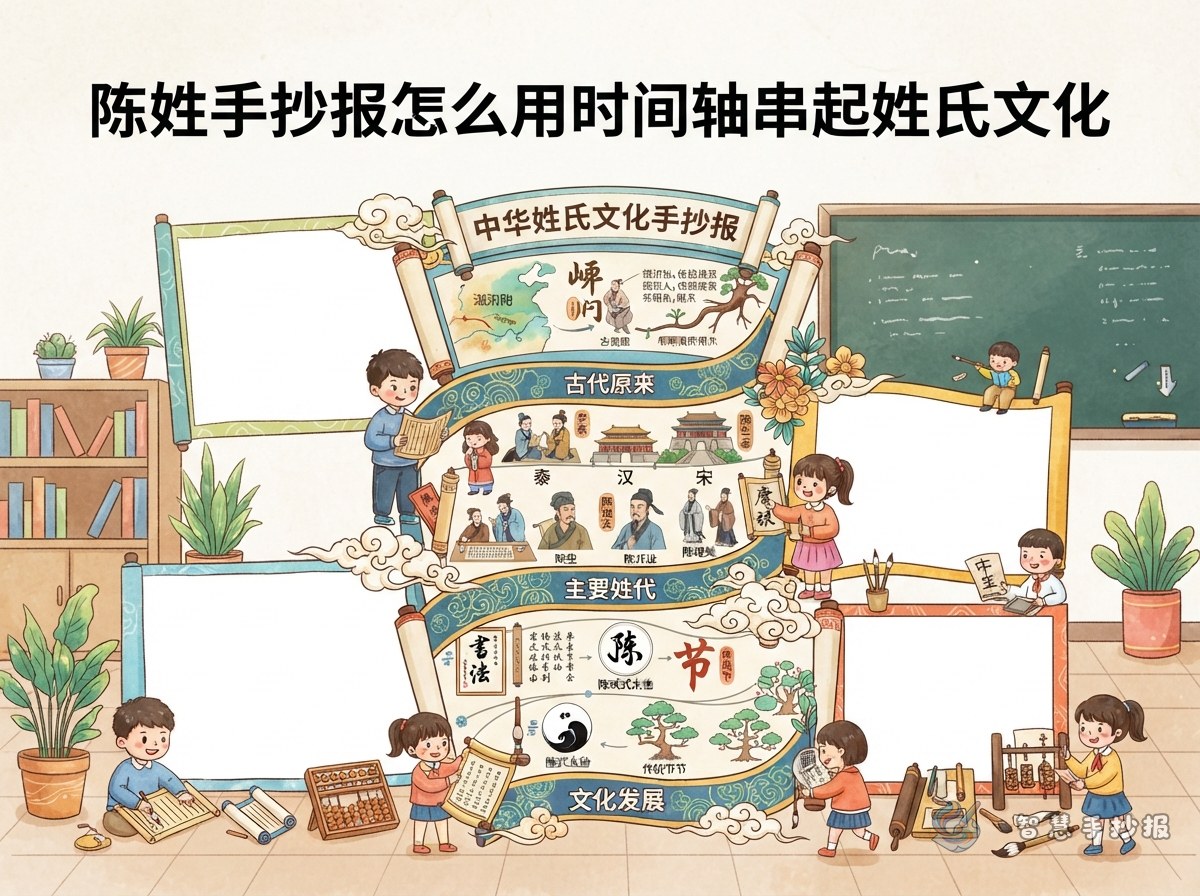
A Chen surname poster may cover origins, historical figures, and family values, but these ideas should not be crowded into unrelated boxes. Use a simple sequence: where the surname came from, how people with the surname contributed in different periods, and how good family values can be continued today.
Surname origins can involve several branches and interpretations. Consult reliable books or materials recommended by a teacher, and use careful wording such as “There are several accounts of the surname's origins” rather than presenting one account as the only answer.
Create Three Stops Along the Route
The Starting Point: Origins and Meaning
Use the first stop for basic information about the character Chen and the cultural role of Chinese surnames. Keep this section to five or six sentences. Explain that a surname can preserve family memories, regional connections, and cultural identity, followed by a short, verified account of its origin.
The Middle: People Who Left Their Mark
Choose one to three well-documented figures from different periods, such as Chen Sheng, Chen Shou, Chen Zi'ang, or Tan Kah Kee, whose Chinese name is Chen Jiageng. For each person, include an identity, a major contribution, and one admirable quality. Connecting the cards with arrows will make the passage of time easy to see.
The Present: Passing On Family Values
Bring the final stop into everyday life with examples such as respecting elders, being honest, studying diligently, living responsibly, and helping family members. A small family interview can ask about the meaning of a name or a valued tradition, but private details such as addresses and phone numbers should never be included.
Short Text Ready for Poster Sections
- Opening line: A surname is more than a name; it connects historical memory with family affection.
- Transition: As we follow the timeline, stories of real people reveal courage, responsibility, and a love of learning.
- Family-values line: Honoring a surname is not about claiming superiority. It means learning good values, appreciating family, and doing today's tasks well.
- Interview prompt: Ask a family member what your given name means and which quality your family values most.
Design It Like a Cultural Gallery
On landscape paper, place the timeline from left to right. On portrait paper, arrange it vertically like a scroll. Put the main title at the top, give each of the three stops a clear section, and use the remaining space for portrait cards, family-value notes, and interview questions. Mix short paragraphs with lists so the page does not look text-heavy.
Vermilion, warm cream, and ink black create a traditional but readable palette. Small seal, bamboo-slip, scroll, or leaf motifs can mark section changes. Keep illustrations compact, use one consistent shape for every date marker, and leave enough blank space around the writing.
Check Facts Before Finishing
- Verify each person's name, historical period, and main contribution.
- Use neutral language when sources give different origin accounts.
- Make sure every arrow follows the same chronological direction.
- Remove repeated sentences and preserve room for headings and illustrations.
- Proofread the text and ask a parent or teacher to help check the sources.
After selecting the sections and source material, scan the code to open the Smart Handwritten Poster WeChat Mini Program. You can continue arranging the title, timeline, figure cards, and decorative details for your chosen paper size.