Build the Poster Around a Clear Rescue Path
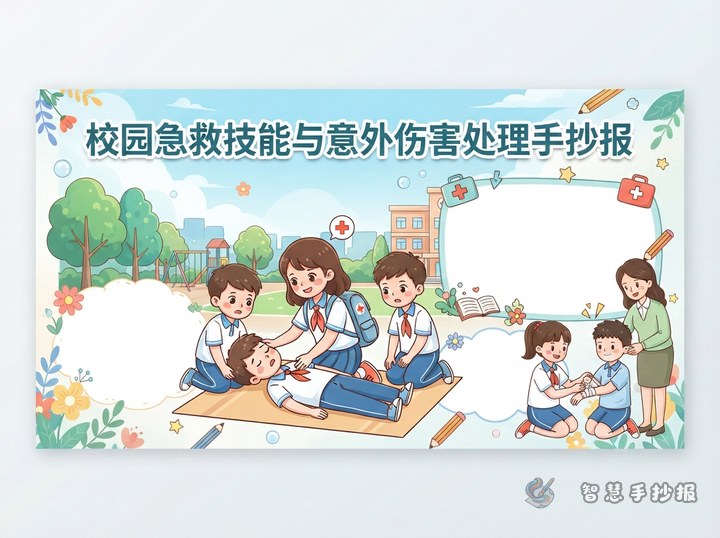
Focus the poster on what students should do when a classmate becomes ill during outdoor activities. Place small drawings of the sun, a water bottle, shade, and a first-aid kit around the title. Connect the four main actions with arrows: stop activity, move to a cool place, begin cooling, and get an adult.
Turn Heat Illness Signs into a Quick Checklist
Keep the wording short enough for young readers. Two separate boxes can distinguish early warning signs from urgent danger signs.
- Stop and rest: dizziness, headache, intense thirst, heavy sweating, weakness, nausea, or unusual skin color.
- Get emergency help: confusion, fainting, seizures, repeated vomiting, very hot skin, or an inability to respond normally.
Students should never manage serious symptoms alone. They must alert a teacher, school nurse, or another responsible adult immediately and call emergency services when danger signs appear.
First-Aid Steps Students Can Copy
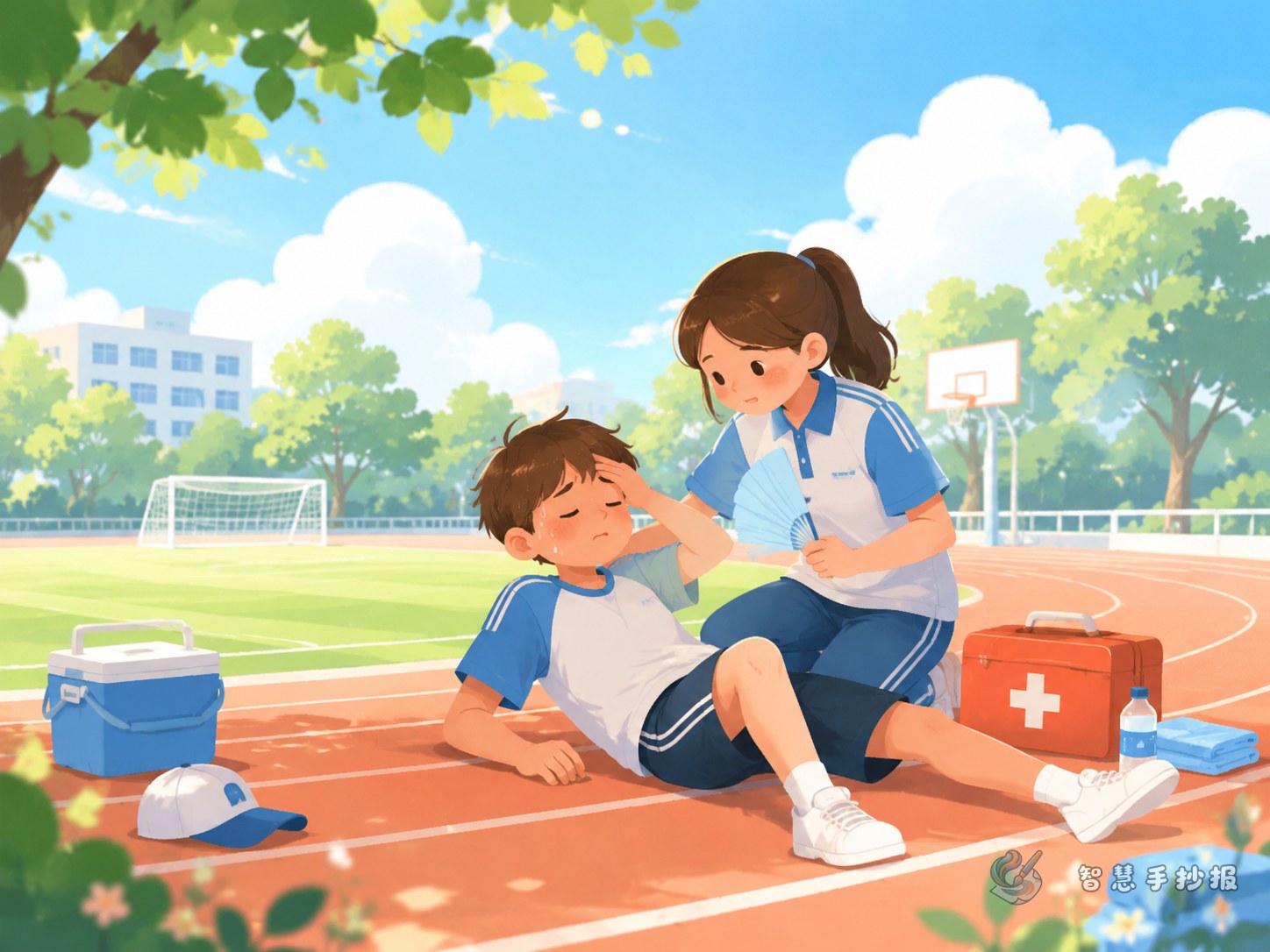
- Stop running, sports, or other physical activity and help the student move to a shaded, ventilated, or cooler place.
- Tell a teacher or the school nurse, loosen tight clothing, and let the student rest quietly.
- Use cool, damp cloths on the neck and underarms. Gentle fanning can also help the body release heat.
- If the student is fully alert and can swallow normally, offer small sips of water rather than a large amount at once.
- Call emergency services for fainting, seizures, confusion, or other severe symptoms. Do not force water or medicine, and never leave the student alone.
Add a Heat-Safety Team Section
Complete the poster with two note-card panels titled “Before PE Class” and “Hot-Weather Reminders.” Suggested lines include: drink water regularly instead of waiting until you feel thirsty; wear light, breathable clothing; report discomfort to a teacher; avoid prolonged sun exposure; and reduce intense exercise during very hot weather.
Use Color to Guide the Reader
A three-column layout works well: warning signs on the left, the rescue sequence in the center, and prevention tips on the right. Use orange and red near the title to suggest heat, blue and green for cooling actions, and a red border around emergency warning signs. Keep each paragraph to a few lines and highlight action words with numbers and bold type.
Helpful Finishing Details
- Make the first-aid steps larger than decorative text so they are easy to read.
- Avoid frightening injury scenes; show safe sports, teamwork, and adult assistance instead.
- Add a memory box that says, “Get help, start cooling, and never force fluids.”
After planning the sections, students and parents can use the 智慧手抄报 WeChat Mini Program to choose a layout, adjust the heading, and organize the writing into a classroom-ready hand-copied poster.