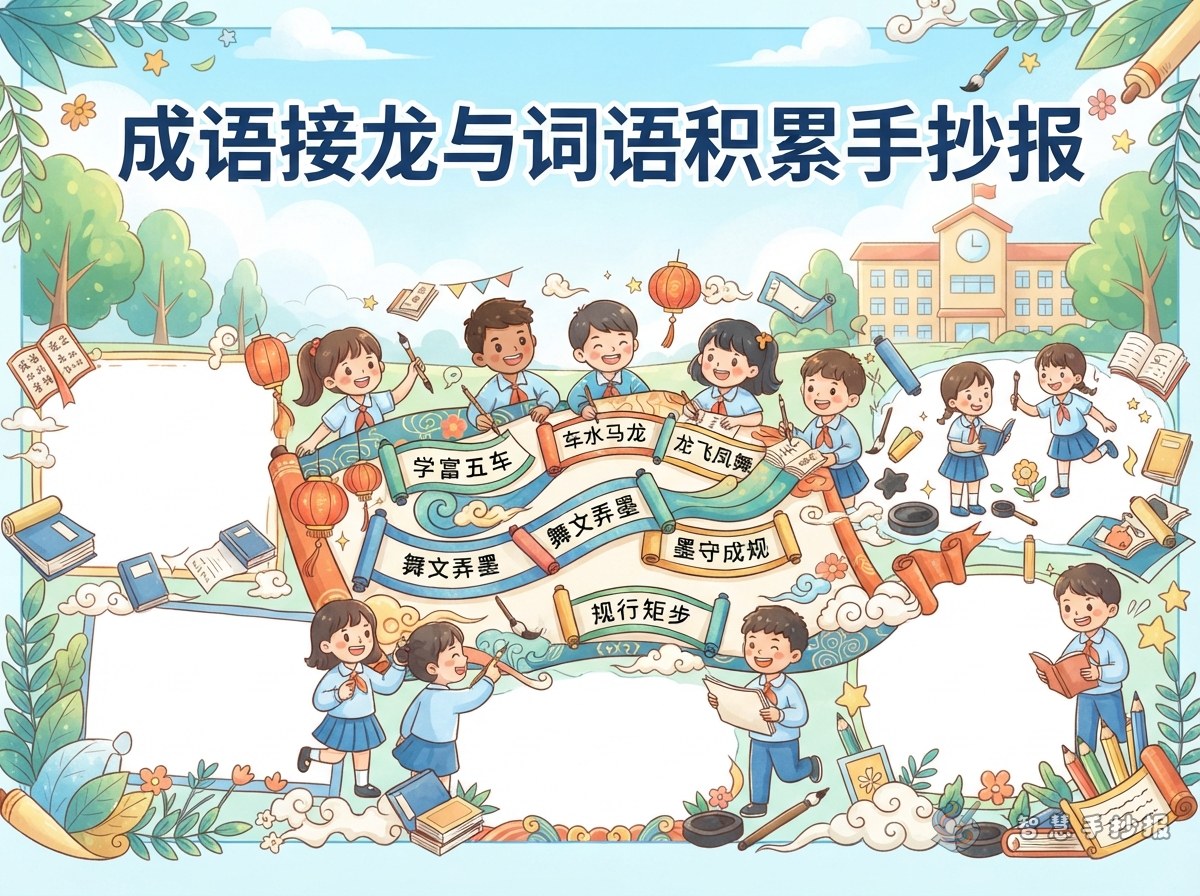
1. Choose a Set of Idioms That Share a Similar Meaning
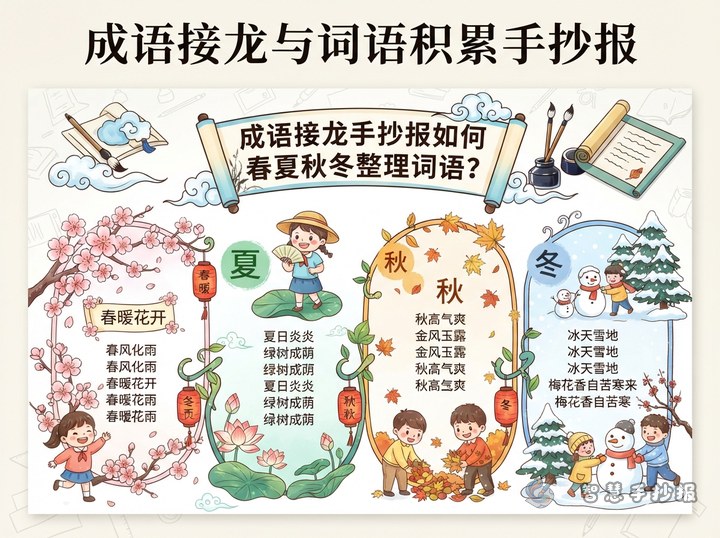
A synonym idiom chain is different from a regular chain because the linked idioms should have similar or related meanings. This way, the handwritten newspaper is not just about connecting characters; it also shows how words are related.
- Look in textbooks: Pick idioms you have learned recently, such as “全神贯注”, “聚精会神”, and “专心致志”.
- Look in reading books: Write down idioms with similar meanings in a small notebook and choose one group for your newspaper.
- Look at daily life: For happiness, use “兴高采烈”, “欢天喜地”, and “眉开眼笑”. For crowds, use “人山人海”, “川流不息”, and “络绎不绝”.
2. Build the Chain with Tail-to-Head Links
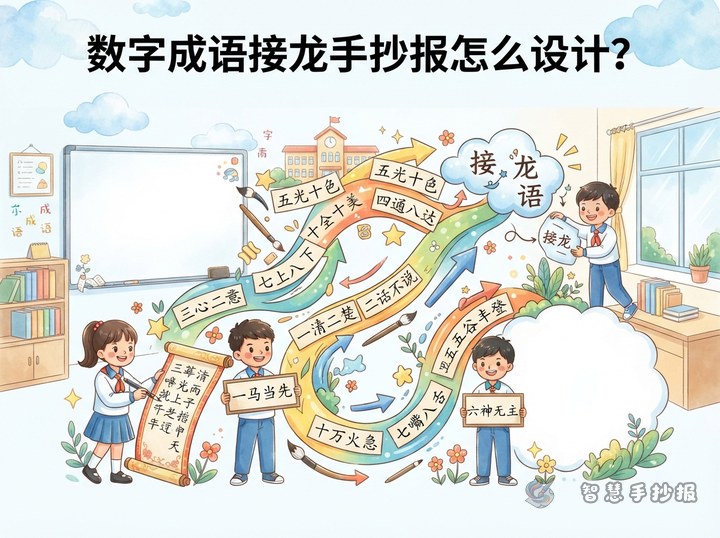
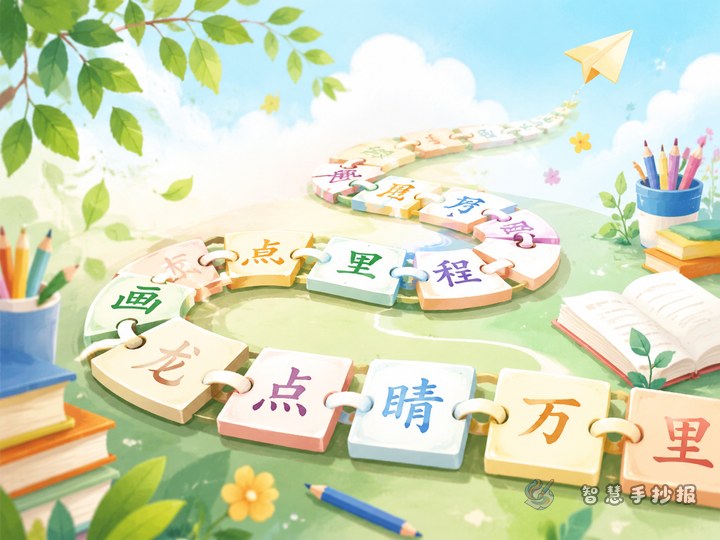
The basic rule is that the last character of one idiom becomes the first character of the next idiom. For a synonym chain, add a short note beside the chain to explain the shared meaning.
- Write the first idiom at the top and draw an arrow to the next one.
- Check whether the last character and the next first character match, such as “一举两得” to “得心应手”.
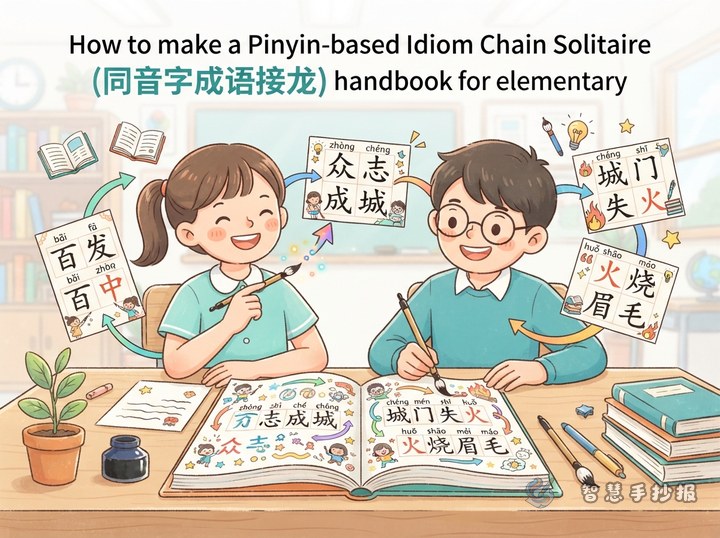
- If the last character is hard to link, prepare a homophone link and mark it clearly.
- After finishing each chain, write one sentence to summarize the meaning of the group.
3. Add Vocabulary Boxes for Deeper Learning
If the page only has one chain, it may look empty. Add a few small boxes to make vocabulary building clearer.
- Synonym file: Write two or three idioms and explain their shared meaning in one sentence.
- Opposite pair: Put antonyms together, such as “一心一意” and “三心二意”.
- Sentence corner: Choose two idioms and write a short sentence for each to show how to use them.
- Spelling reminder: Copy difficult characters separately, such as “聚” in “聚精会神” and “贯” in “全神贯注”.
4. Sketch the Layout and Keep Colors Simple
Draw a simple plan in pencil first: put the main chain in the middle or on the left, the vocabulary boxes on the right, and leave a strip at the bottom for the title or a short summary.
- Use large arrows to connect the main chain, moving from left to right or top to bottom.
- Put vocabulary boxes inside squares or cloud shapes to separate them from the chain.
- Choose two or three main colors, such as blue for idioms, green for explanations, and orange for arrows.
- Leave a little space between idioms so you can fix mistakes if needed.
5. Ready-to-Copy Synonym Idiom Groups
The following groups work well in a handwritten newspaper. You can use a whole group or split them to build a new chain.
- 兴高采烈—欢天喜地—眉开眼笑: all mean very happy.
- 一心一意—全神贯注—专心致志: all mean being very focused.
- 川流不息—络绎不绝—车水马龙: all describe many people or vehicles coming and going.
- 想方设法—千方百计—绞尽脑汁: all mean trying hard to find a way.
6. Final Check Before You Start Writing
Read along the chain to see whether each last character connects to the next first character. Then check that every explanation is clear. If you want to save time on layout, you can open the 智慧手抄报 WeChat mini program, choose an idiom chain template, and fill in your chosen words.