Choose a Clear Focus for the Kite Poster
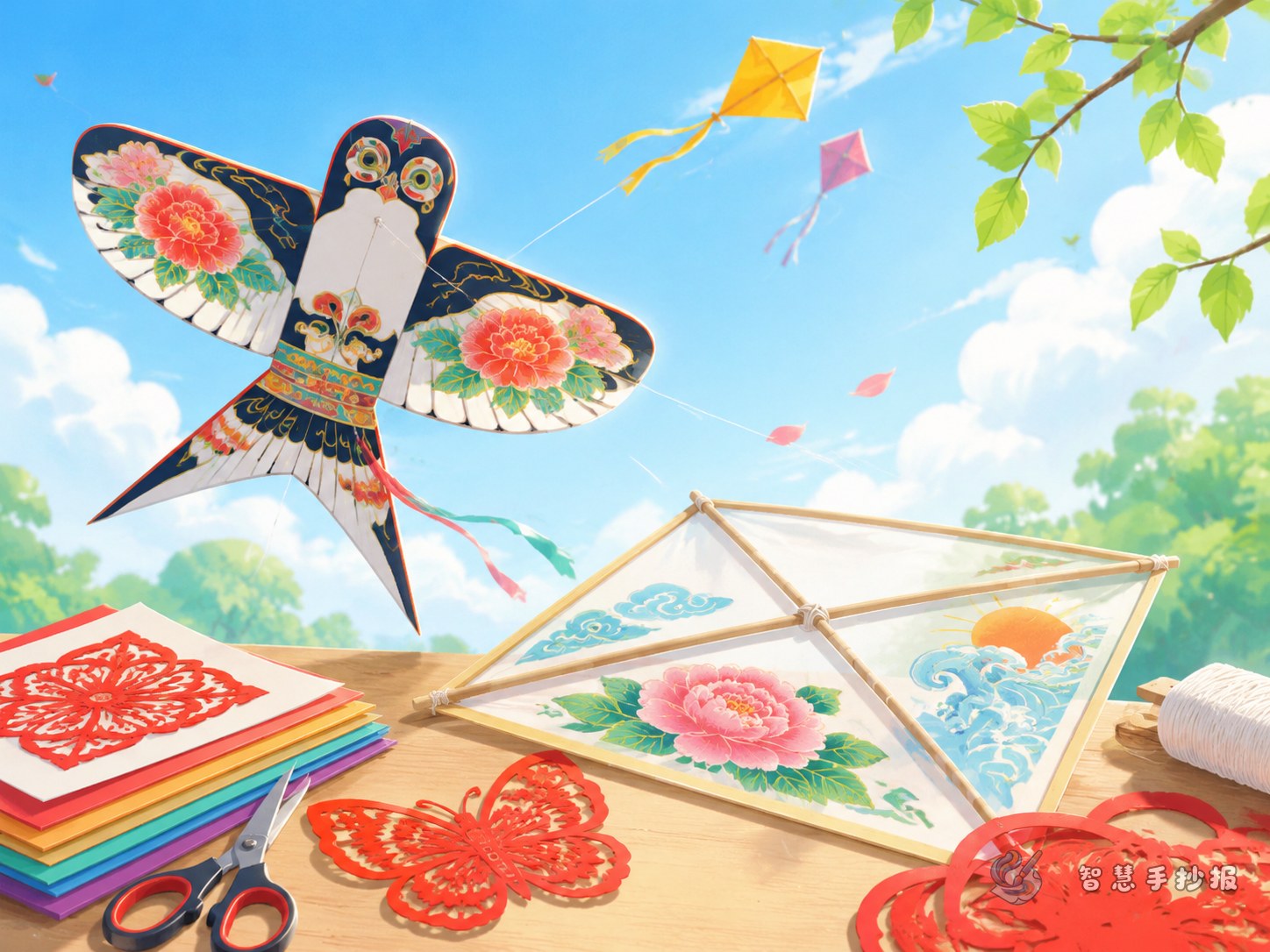
A traditional kite handwritten poster does not need to include every fact about kites. Select two or three useful angles, such as kite shapes, symbolic patterns, flight principles, and crafting skills. Younger students can feature familiar swallow, butterfly, or fish kites, while older students may add frame diagrams and a short making sequence.
Build the Page Around Useful Content Blocks
Parts of a Traditional Kite
A kite usually has a lightweight frame, a paper covering, and a flying line. The frame holds the shape, the paper carries colors and patterns, and the line helps control the kite. Labeling these parts beside a small drawing makes the information easy to understand.
Meanings Hidden in the Patterns
Bat motifs are often associated with good fortune, fish can suggest abundance, and swallows with flowers can express the energy of spring. Use careful phrases such as “often represents” or “can symbolize” instead of presenting every pattern as having one fixed story.
From Frame to Flight
- Sketch a balanced shape with roughly symmetrical sides.
- Build a light frame with bamboo strips or a child-safe substitute.
- Attach the paper covering and add patterns without making it too heavy.
- Fit the line and tail, then test the kite in a safe open area.
Let the Wind Guide the Layout
Place the title near the top and use curved lines to suggest moving air. Draw one large kite in the center as the main visual, then arrange three or four short text sections around it. Small clouds, spools, tails, and distant kites can fill awkward corners without crowding the page.
- Color: Use clear reds, yellows, blues, and greens with plenty of white space.
- Text: Keep body text on pale backgrounds and make section headings easy to scan.
- Hierarchy: The main kite should be largest, headings medium-sized, and decorations smallest.
Short Text Ready for the Poster
A paper kite rises with the wind and carries people's hopes for spring and a happy life into the sky. Its light frame, bright colors, and meaningful patterns reveal the distinctive beauty of traditional paper craft.
Making a kite requires balance and careful control of weight. A handwritten poster follows a similar idea: when pictures and text are evenly arranged, the page feels clear, stable, and attractive.
Finish the Project Safely
Divide the page lightly in pencil before writing, drawing, and coloring. Adults should supervise any work involving scissors or bamboo strips. Kites must be flown in open places away from roads, power lines, and water. After planning the sections, students and parents can continue in the Smart Handwritten Poster WeChat Mini Program to select a layout, organize the text, and complete the poster.