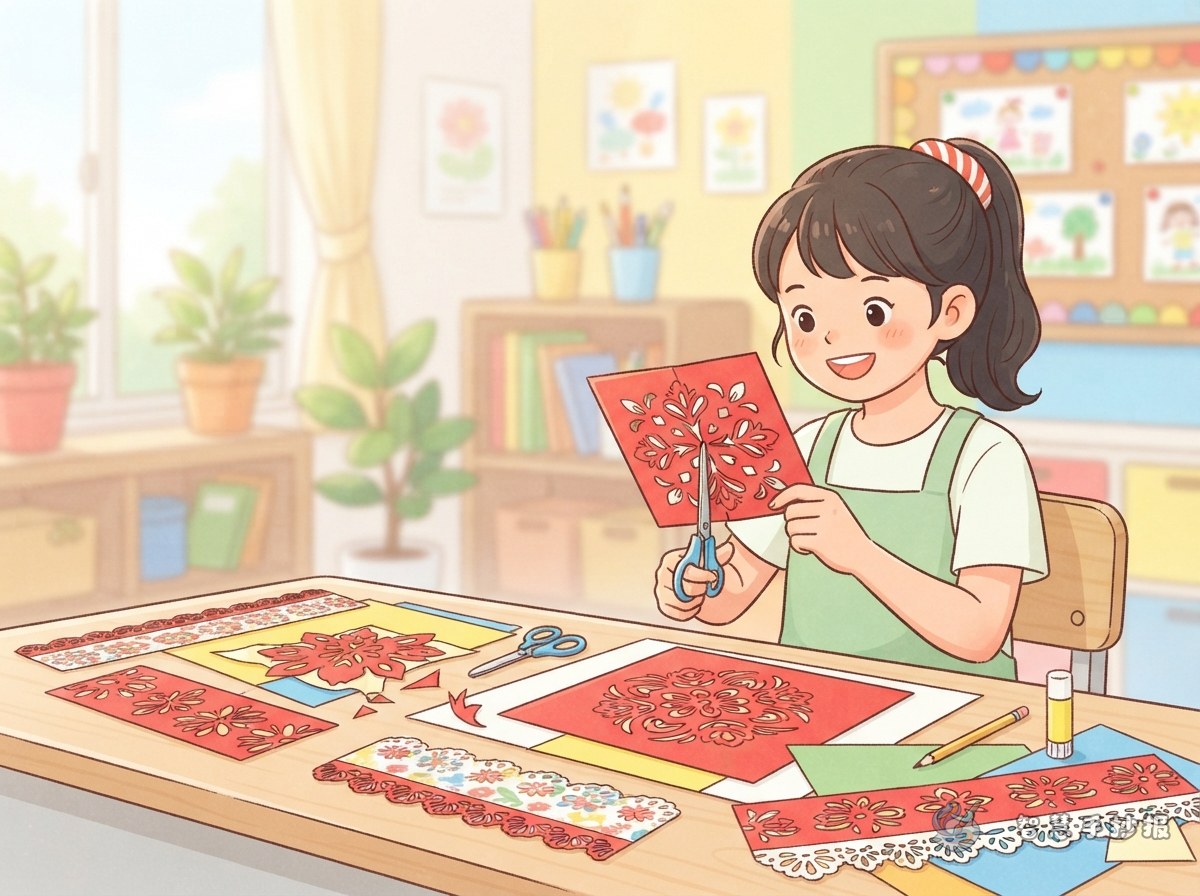
Borders and Corner Patterns Do Different Jobs
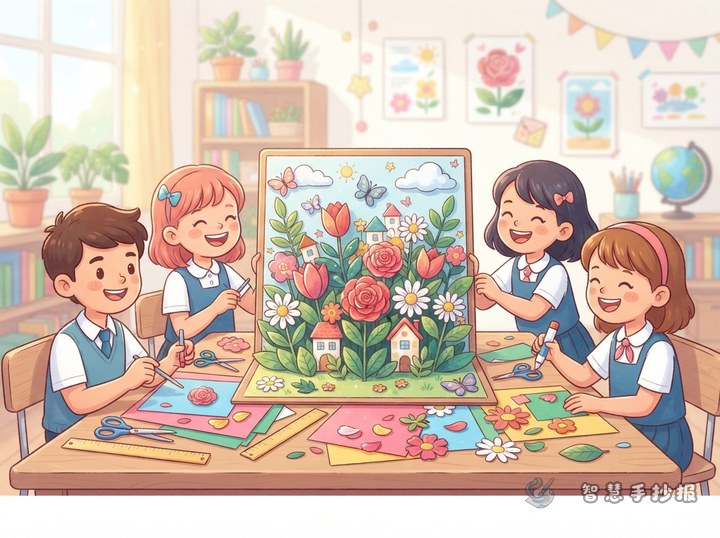
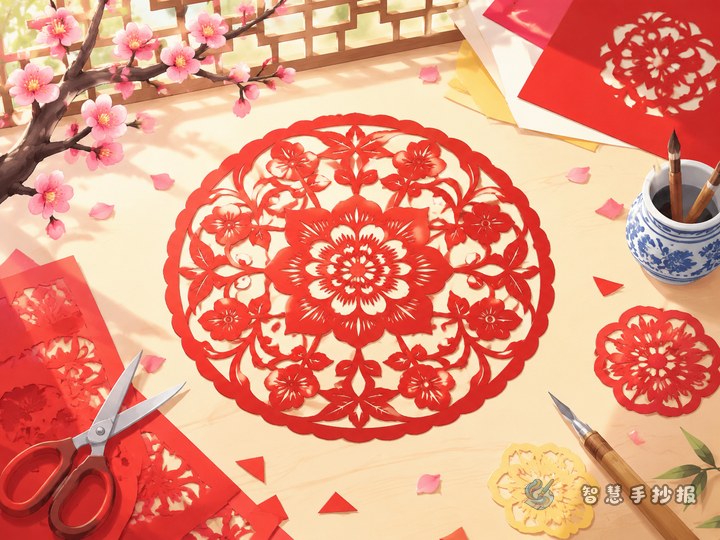
When students make a paper-cutting handwritten newspaper, the middle often looks fine while the edges stay bare. Traditional paper cutting already has an answer for this: a continuous border strip runs along a whole side, and a corner flower anchors each of the four corners. Used together, they give the page a frame.
Neither has to be complicated. If the folding is neat and the motif is simple, the unfolded result still looks good, and it takes far less time than copying an elaborate design.
Cutting a Continuous Border Strip
The trick is neat folds and enough paper left at the joins.
- Cut a strip about 3 cm wide, roughly as long as the side of your page. If the paper is short, work in two sections.
- Fold the strip back and forth three or four times into a small square, pressing each crease flat.
- Draw half a motif on the square, such as half a teardrop, half a petal, or a single zigzag.
- Cut along the line, but leave a little paper connecting the two sides; these are the hinges that hold the strip together.
- Open it slowly and the repeating border appears.
Motifs that work well for beginners
- Teardrop: rounded and stable, the easiest first try.
- Zigzag: quick to cut and good for a bold border.
- Dots and half circles: light and tidy under a title.
- Small grass shapes: alternate left and right for a nature theme.
Folding a Corner Flower
Corner flowers usually sit in the four corners of the page or beside a title box. Symmetry is what makes them look right.
- Take a small square and fold it diagonally into a triangle, then fold once more into a smaller triangle.
- Draw half a motif along the long edge: a leaf, a small butterfly, or a piece of cloud pattern.
- Leave the folded edges connected, cut, then open it into a four-way symmetrical flower.
To give it a more folk feel, cut a small circle or crescent in the middle; when unfolded, it becomes a radiating hollow pattern.
How big should it be?
A corner flower works best at roughly one tenth of the page's short side. If it is too small it disappears; too large and it crowds the text. Keep all four the same size by marking light pencil dots first.
Fitting the Cutouts into the Layout
- Divide first, decorate second. Sketch three or four columns and their titles, then decide which edges get a border.
- Do not frame all four sides. Three bordered edges and one open edge feel lighter.
- Keep borders near the outside. Leave about 1 cm to the paper edge and 1 to 2 cm inside for writing.
- Limit the colours. One main colour for borders, a darker shade of the same family for corner flowers.
- Reuse a short strip under a heading as an instant decorative line.
Notes You Can Write in the Newspaper
- Repeating motifs are the most common decorative form in folk paper cutting, designed to link from top to bottom and echo left to right.
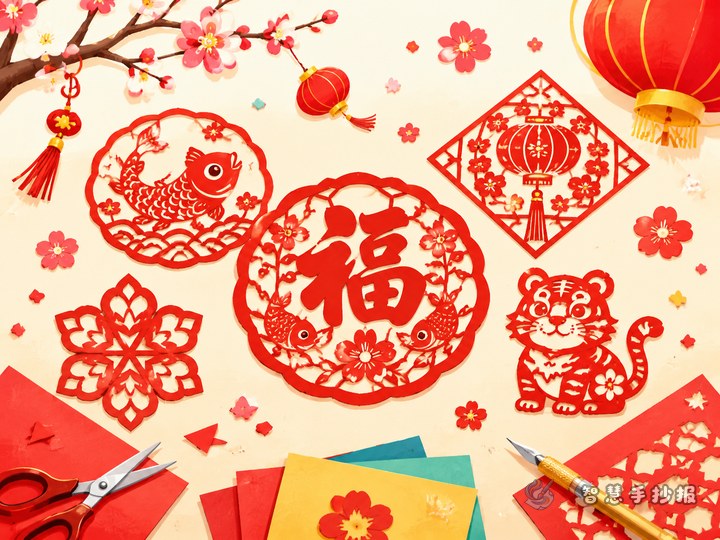
- Corner flowers appear on window decorations and door streamers, where they finish an edge and add detail.
- Paper cutting depends on staying connected; leaving joins in a border keeps it from falling apart into separate pieces.
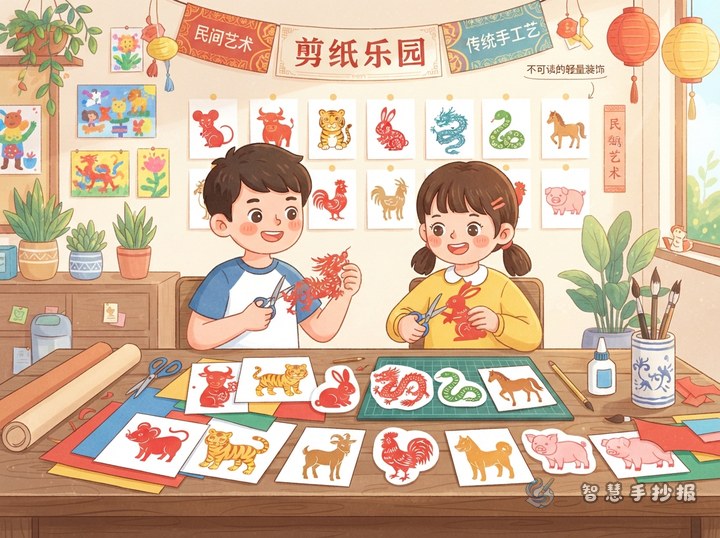
- The tools are simple, a pair of scissors and a sheet of red paper, and neat folding matters more than fancy drawing.
For ready-to-use layouts and more text you can copy, open the Wisdom Handwritten Newspaper mini program in WeChat and pick a template by category.
Before You Start Cutting
- Use child-safe scissors and cut slowly where the paper is thick.
- Test the fold and cut on scrap paper first to check the motif holds together.
- A glue stick is cleaner than liquid glue and will not wrinkle the page.
- Keep the offcuts for small dot decorations instead of throwing them away.