Start with a Window-Cut Pattern Theme
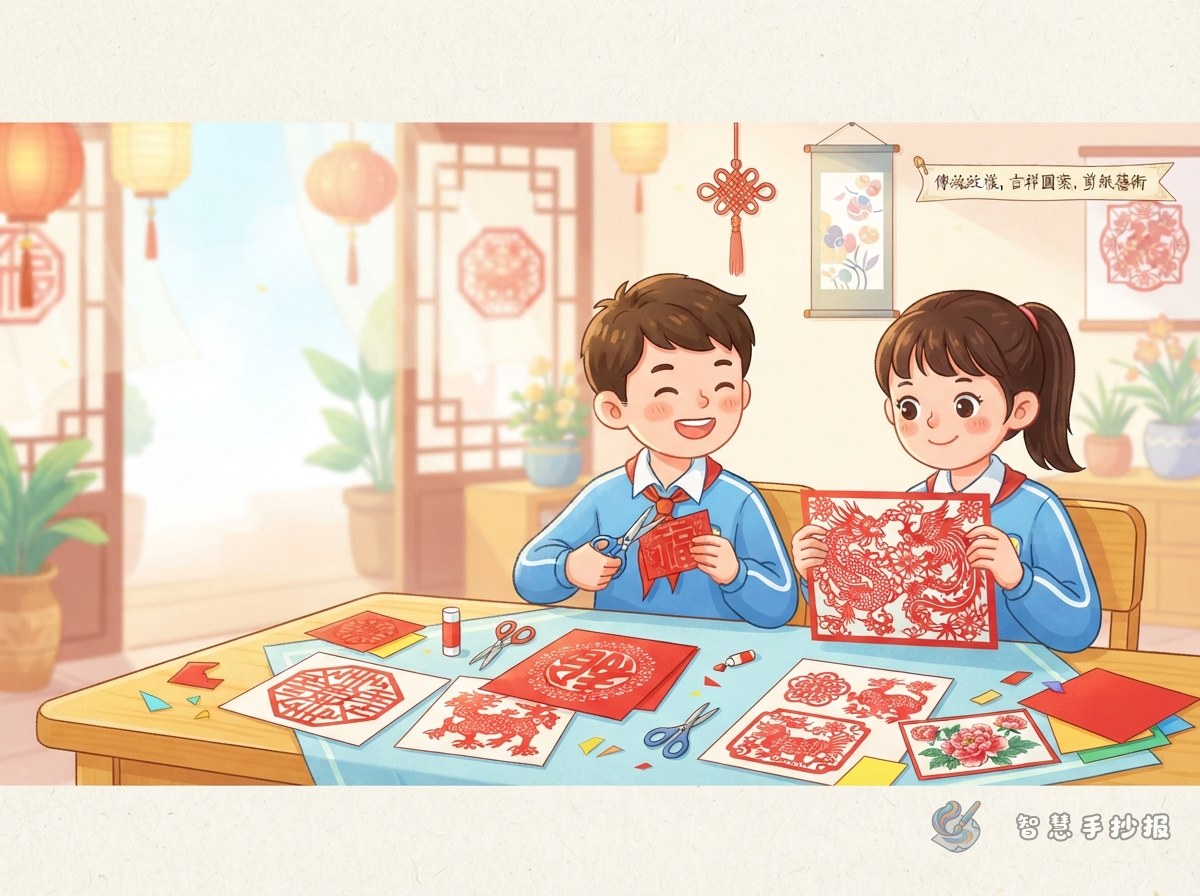
Paper-cut motifs are a strong choice for a Chinese traditional pattern handwritten newspaper because their lines are clear and their shapes are easy to organize. A useful theme is “Good Wishes in a Pair of Scissors”, built around window decorations, circular paper cuts, and symmetrical designs. You do not need a complicated drawing. Place one large motif in the center and surround it with short pieces of information.
The central design can combine familiar auspicious elements such as a fish, pomegranate, peony, bat, or ruyi. Redraw them with simple lines instead of filling the page with unrelated pictures. Small scissors, paper scraps, and folded paper shapes near the title can make the craft theme more recognizable.
Useful Text for the Newspaper
A Short Introduction to Paper Cutting
Paper cutting is a traditional decorative art made by cutting or carving patterns into paper. It is often seen on windows and during festivals and special occasions. Many designs express wishes for reunion, harvest, long life, and happiness. A child-friendly explanation can say that paper-cut patterns emphasize outlines, connections, and symmetry. The open spaces in the paper create lively designs with very simple materials.
Meaning Cards for Auspicious Motifs
- Fish: expresses the wish for abundance year after year.
- Pomegranate: suggests prosperity and a flourishing family because of its many seeds.
- Bat: is associated with good fortune because its Chinese name sounds like the word for blessing.
- Peony: represents beauty, prosperity, and a flourishing life.
- Ruyi: expresses the wish that everything will go smoothly.
These ideas can become five small sections. Add one simplified icon to each section so the reader can understand the motif and its meaning at a glance.
Arrange the Page Like an Open Window Decoration
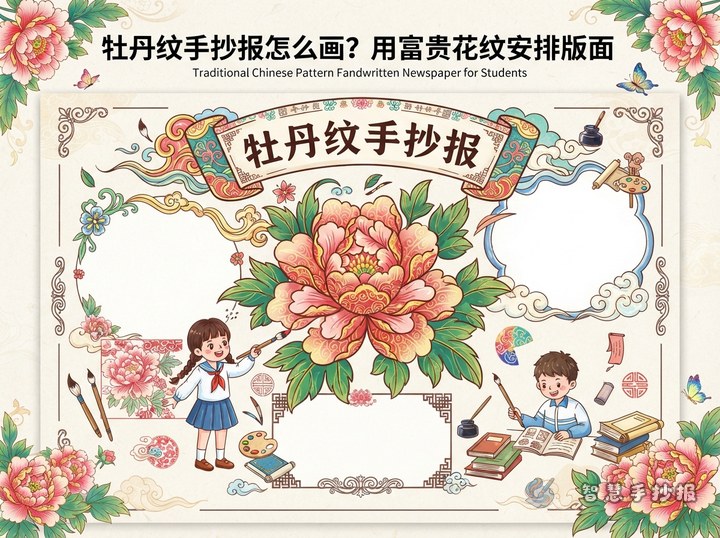
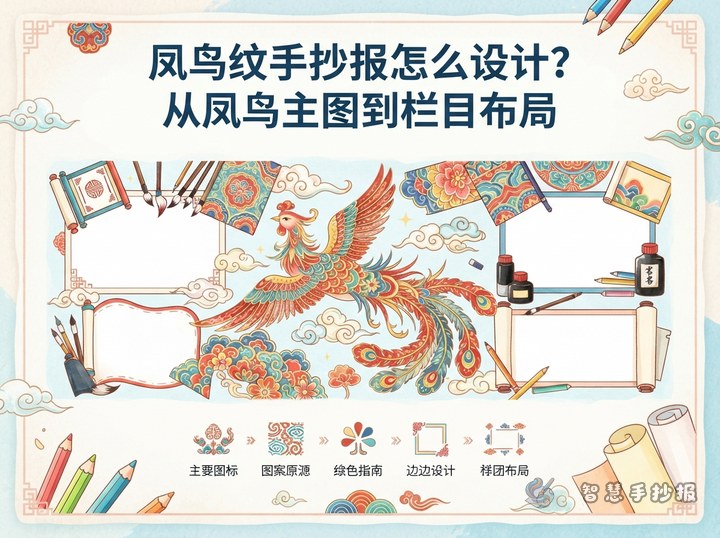
Try a central round or square paper-cut design with four information areas around it. Put the main title or a symmetrical motif in the center. Use the upper-left area for paper-cut features, the upper-right for motif meanings, the lower-left for making steps, and the lower-right for personal observations. Connect the areas with thin lines, jagged borders, or a repeated floral band.
For a narrow sheet, use a vertical structure instead. Draw a horizontal paper-cut border at the top, place the title and main motif in the middle, and divide the bottom into “Motifs,” “Meanings,” and “What I Discovered.” Leave some open space around the cut-paper shapes so the design feels light rather than crowded.
Choose Colors and Follow a Clear Drawing Order
- Lightly sketch the title, central motif, and section positions with a pencil.
- Choose one or two main colors, such as vermilion with black or red with gold.
- Draw the outer shape of the central design before adding flowers, leaves, and dots inside it.
- Use continuous lines for the border and keep the pattern pieces connected.
- Write the final text, strengthen the title, and erase unnecessary pencil marks.
The key qualities of a paper-cut style are neatness, symmetry, and continuity. If detailed drawings feel difficult, repeat simple flowers, leaves, and drops to create a decorative rhythm.
Add a Personal Design Section
After completing the main information, add a section called “My New Window Decoration.” First choose a wish such as peace, reunion, or diligent study. Then combine two or three motifs into an original pattern. You can add a sentence such as, “I placed the fish beside the water waves to express a wish for a plentiful life.” This makes the handwritten newspaper show your own thinking instead of only displaying traditional symbols.
Parents and teachers can suggest drawing half of a motif on draft paper first and completing the other half along a center line. When you need help organizing the title, sections, and decorative layout, continue making the project in the WeChat Mini Program Zhihui Shouchaobao and adjust the content to fit your paper size.