Why this pattern works well for a handwritten poster
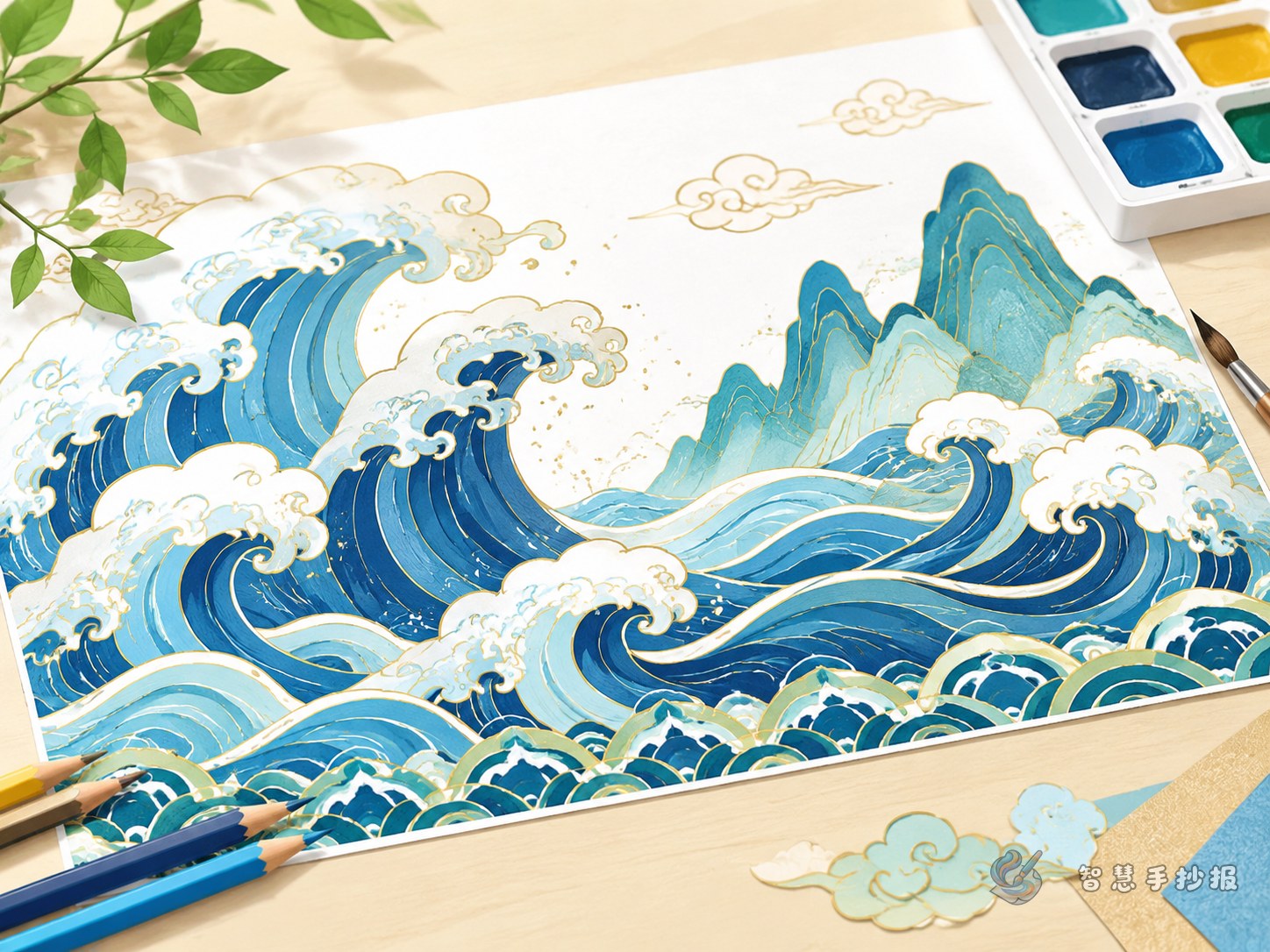
The Haishui Jiangya pattern is a highly recognizable traditional Chinese motif. It usually combines rolling waves, firm cliffs, and flowing cloud-like lines. On a handwritten poster, these elements can become borders, corner decorations, or a main illustration, giving the page a sense of grandeur, balance, and cultural beauty.
Compared with tiny repeated motifs, this pattern is easier to turn into a bold page design. Students only need to capture three key elements: waves, cliffs, and clouds. Even a simplified version can look impressive and meaningful.
A clear page layout idea
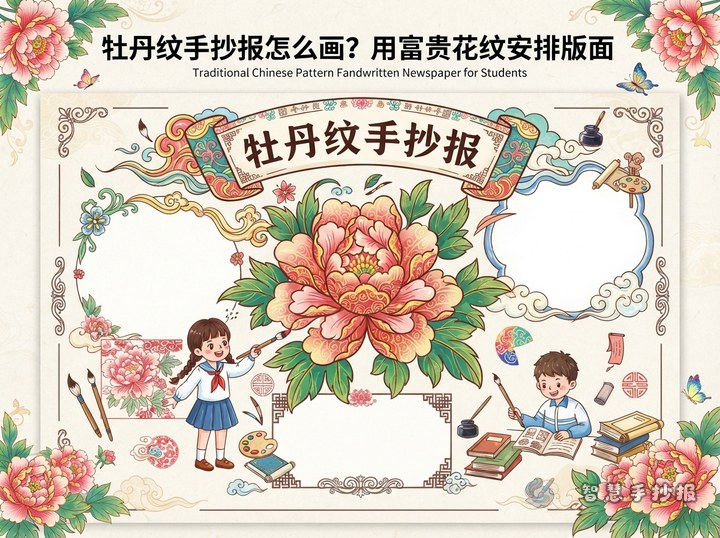
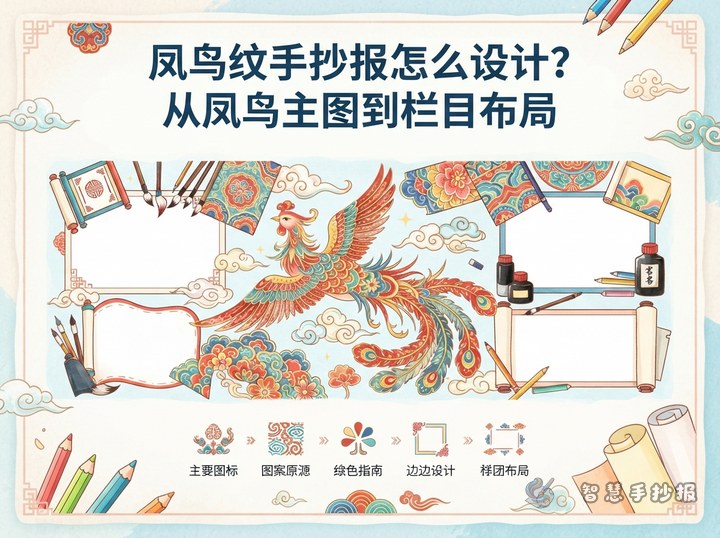
Imagine the poster as an open scroll of traditional patterns. Put layered waves at the bottom, cliffs on both sides, the main writing blocks in the middle, and a strong title at the top. This structure feels stable and keeps the page easy to read.
- Title area: Use titles such as “Haishui Jiangya Pattern,” “Mountains and Waves in Traditional Motifs,” or “The Beauty of Chinese Patterns.” Add small cloud lines beside the title.
- Illustration area: Draw three or four layers of waves at the bottom with different shades of blue. Add ochre or grey-green cliffs on the sides.
- Writing area: Divide the center into two or three short sections with enough blank space.
- Border area: Repeat small waves, curved strokes, and cloud shapes around the edges to unify the style.
Text sections students can use
Section 1: Pattern profile
The Haishui Jiangya pattern combines waves, rocks, and cloud forms into a powerful decorative design. It is not only beautiful but also carries wishes for stability, lasting happiness, and good fortune.
Section 2: Elements I can observe
- Waves: Curves, curls, and water lines create movement.
- Cliffs: Angular lines and solid shapes suggest strength and steadiness.
- Cloud forms: Soft curved lines make the design more lively.
- Traditional colors: Blue, teal, ochre, and gold work especially well together.
Section 3: Meaning in one paragraph
The waves keep moving, while the cliffs stand firmly. The Haishui Jiangya pattern brings motion and stillness together, expressing hopes for a stable homeland, a lasting life, and auspicious days.
An easy drawing method
If the pattern feels difficult, break it into three steps. First, draw several large curves near the bottom of the paper to set the direction of the waves. Second, add small curls and short water lines between the curves. Third, draw cliff outlines on the left and right sides, then add short texture lines.
For coloring, begin with light blue and outline with darker blue to make the waves clearer. Do not fill the cliffs too heavily; leaving small white spaces will make the page feel lighter. A little gold or orange near the title can add a festive traditional touch.
Small details that improve the design
- Do not cover the whole page with patterns: Let the motif support the theme while keeping the writing area clean.
- Keep the wave direction consistent: Waves rolling in the same direction make the poster look orderly.
- Use a seal-like label: Small red square labels for section headings can strengthen the traditional style.
- Keep the text short: Three to five sentences for each section are enough for a neat student poster.
After planning the draft, students and parents can continue in the Smart Handwritten Poster WeChat mini program to choose layouts, adjust sections, and add suitable text materials for classroom display or homework.