Build the Poster Around a Journey of Growth
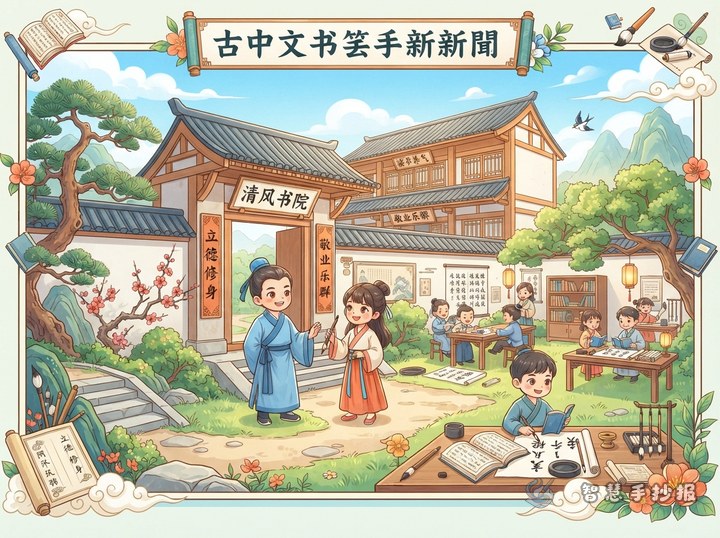
Instead of filling the page with dates, organize the handwritten poster around the idea of moving from diligent study to responsible action. Yingtian Academy was an influential center of learning during the Northern Song period. Fan Zhongyan studied and later taught there, so his experience can connect the academy setting, disciplined study, teaching, personal goals, and public responsibility.
Possible titles include “The Light of Learning at Yingtian Academy,” “Study with Purpose,” and “From a Scholar's Desk to Service.” A short subtitle can highlight diligence, aspiration, and responsibility.
Choose Four Clear Content Panels
A Quick Guide to Yingtian Academy
Briefly explain the academy's connection with education in the Northern Song period. Note that an academy was not simply a place for reading; it was also a setting for teaching, discussion, and character development. Keep this section to five or six handwritten lines.
Fan Zhongyan as Student and Teacher
Describe how Fan Zhongyan's experience at the academy reflects respect for learning and purposeful study. Focus on the lesson his life offers rather than adding dramatic details that may be difficult to verify.
Four Learning Values
- Diligence: Use time well and build knowledge steadily.
- Self-discipline: Maintain good habits even when circumstances change.
- Purpose: Give study a meaningful direction.
- Responsibility: Use knowledge to help others and contribute to society.
What I Can Do Today
Add a practical checklist beside the history panels: finish one reading task carefully, review mistakes, ask a thoughtful question, or follow a study plan for one week. This turns the poster from a story about the past into a guide for the student's own life.
Short Text Ready to Adapt
Opening paragraph: In the academies of ancient China, learning meant more than gaining knowledge. It also involved developing character and setting worthwhile goals. The story of Yingtian Academy reminds us that meaningful study requires both daily persistence and a willingness to take responsibility.
Reflection: Diligence is not one sudden burst of effort. It means completing small goals day after day. Purpose is more than a slogan, too; it grows as we read, think independently, ask questions, and build the ability to help others.
Closing line: The lamps of the old academy belong to history, but the values of learning, character, and responsibility can still light our path today.
Shape the Page Like an Academy Entrance
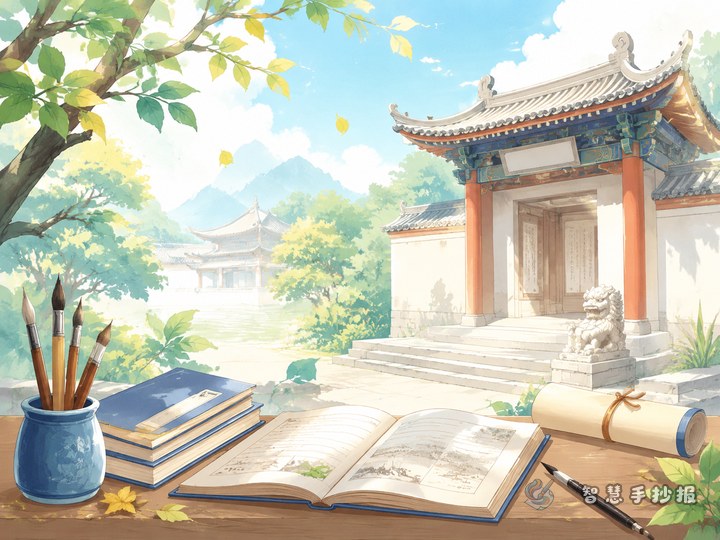
Place a plaque-shaped title at the top, then draw a simple academy doorway or an open scroll in the center. Arrange the four panels on both sides. Thin window-lattice, scroll, and book-page borders can create a historical mood without taking space away from the writing.
- Use warm ivory, light brown, and blue-black as the main colors, with a small amount of red for seals or key words.
- Put historical information on the left and learning values plus the action checklist on the right.
- Use simple symbols such as a reading silhouette, desk, books, or lamp instead of a complicated portrait.
- Mark all content areas in pencil first, write the text second, and add color and borders last.
Keep the Historical Style Easy to Read
A classroom poster should be clear before it is decorative. Use an old-style look only for the main heading and write body text in neat, regular lettering. Limit each paragraph to a few lines and mark important words with small color blocks or seal shapes. After planning the content, students and parents can open the Smart Handwritten Poster WeChat Mini Program to explore layouts and organize the Yingtian Academy poster more efficiently.