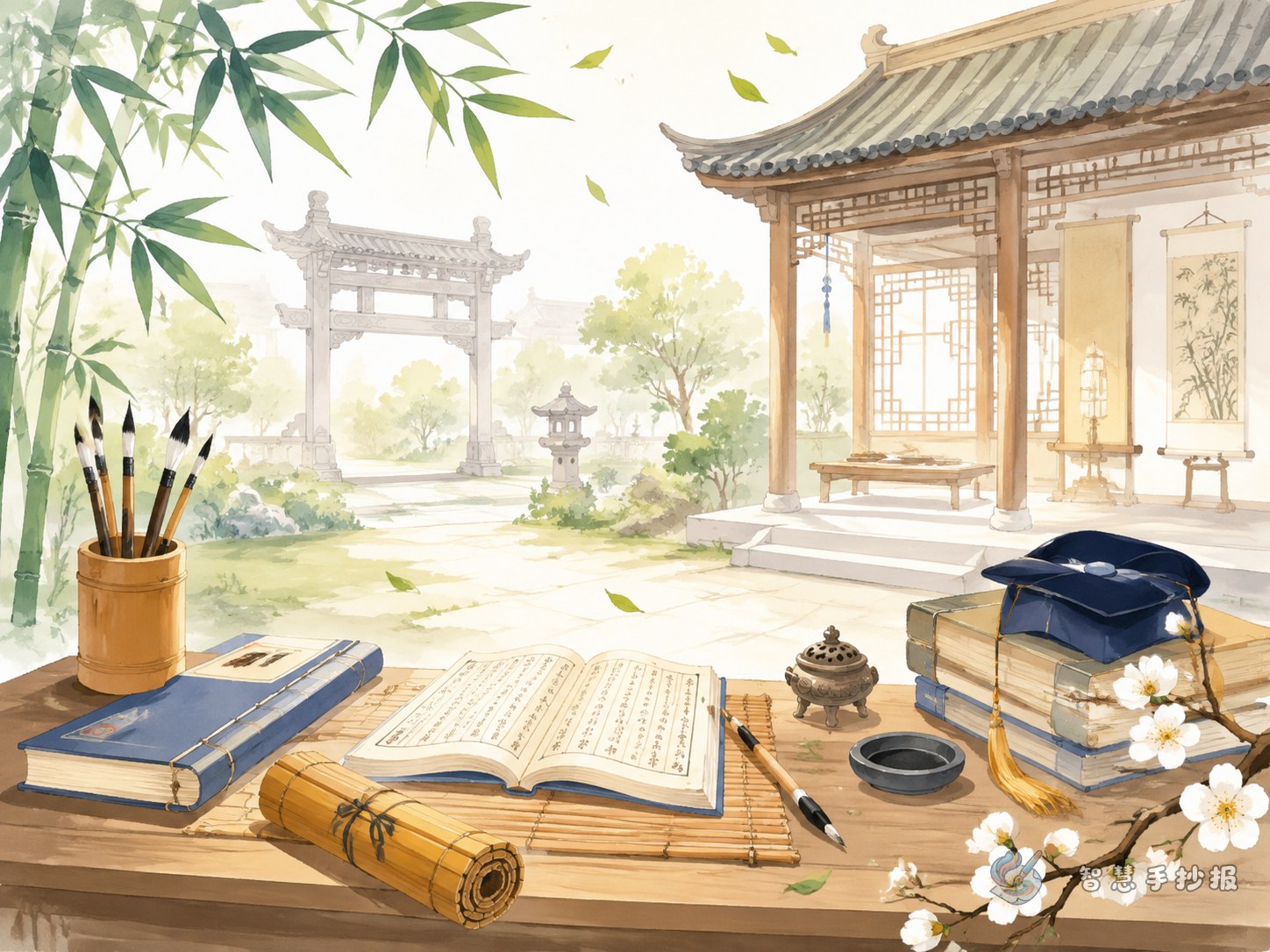
Turn the Poster into a Lesson in an Ancient Academy
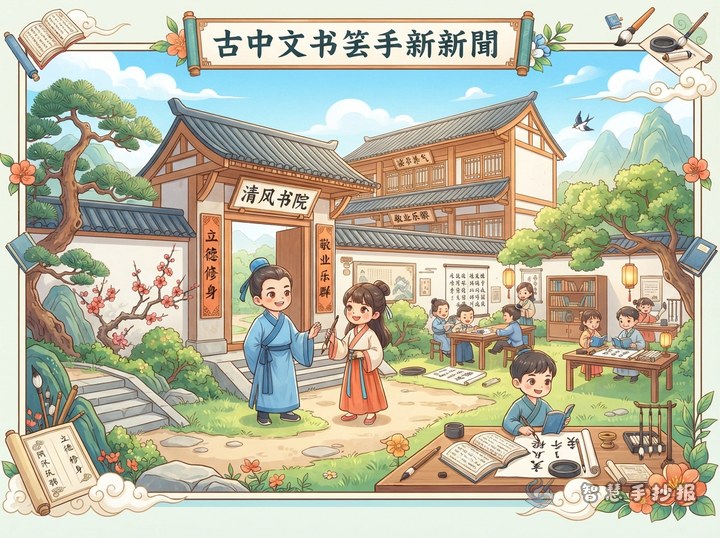
Instead of listing many academy names, build the handwritten poster around one lesson. A student enters the academy with respect, listens carefully, asks questions, discusses ideas with classmates, and finally puts learning into practice. This storyline shows both the atmosphere of an academy and the spirit of learning.
Place a guiding sentence below the title: “Enter with respect, seek knowledge through questions, and live out what you learn.” It can lead the reader from learning manners to everyday action.
Five Small Sections for Learning Etiquette
Entering with Respect
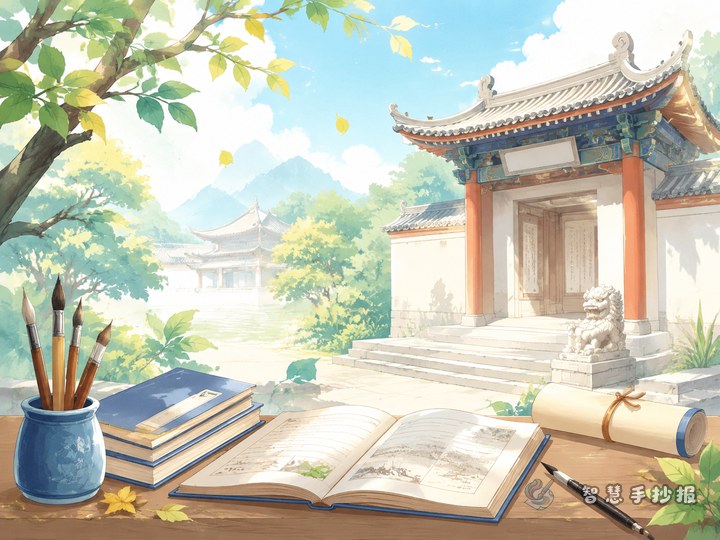
Write about respecting teachers, caring for the academy, and valuing every chance to learn. Draw a student standing at the academy gate and greeting the teacher. The picture does not need complicated historical rituals; the important idea is a sincere attitude toward teachers and knowledge.
Listening and Thinking
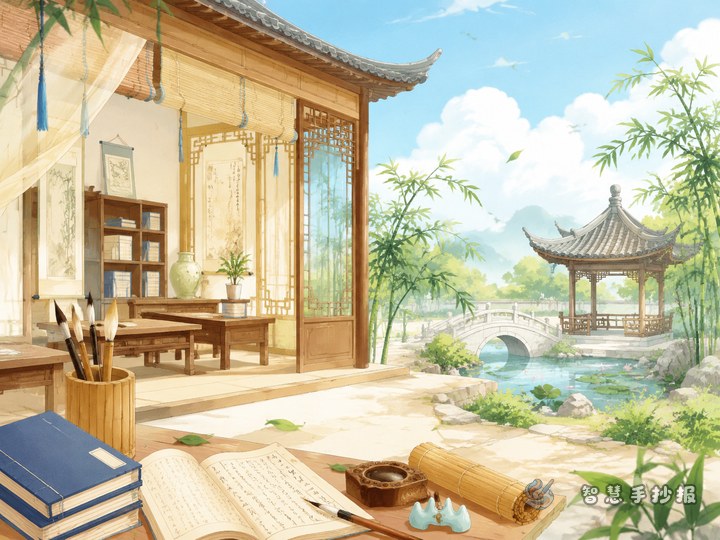
Use three short phrases such as “listen calmly, take notes, and think carefully.” Add a wooden desk, scrolls, an inkstone, and students listening in class. A small question card can say, “Do I understand it? Can I explain it another way?”
Asking Questions
Make this section a teacher-and-student dialogue box. Let the student ask why and the teacher explain how to understand the idea. Add the sentence “Questions help learning become real understanding.” Keep the exchange short and clear so it highlights the courage to seek truth.
Learning Through Discussion
Ancient academies valued lectures and discussion. Draw two or three classmates sitting together and sharing ideas. Useful phrases include “listen to one another, express your view, and learn from others.” Discussion is not about winning; it helps everyone see the question more clearly.
Putting Learning into Practice
Create an “Action for Today” box at the bottom. Suggestions may include finishing homework carefully, reading independently, helping a classmate, or keeping one small promise. This connects the spirit of ancient learning with a child’s daily life.
Ready-to-Use Text for the Handwritten Poster
Topic introduction: An ancient academy was not only a place for reading. It was also a place where teachers and students gave talks, exchanged ideas, and developed good character. True learning means more than remembering facts; it also means showing respect, thinking deeply, asking questions, and taking action.
Key words: respect for teachers, eager inquiry, independent thinking, thoughtful discussion, learning through action, and persistence.
Short lines: “Careful learning begins with a focused heart.” “Learn to be a good person as well as a knowledgeable one.” “When you have a question, ask bravely.” “Conversation can make an idea clearer.”
If the page feels crowded, keep one short introduction, five key words, and three short lines. Small icons of a gate, scroll, question mark, speech bubble, and footprints can replace long explanations.
Build the Layout as a Learning Route
- Top area: Design the title with a scroll, academy plaque, or roofline. Add a small lamp to represent knowledge and persistence.
- Middle area: Arrange the five sections from left to right or from top to bottom. Connect them with a path, stone steps, or bamboo slips so the reading order is clear.
- Center: Draw a simple lecture hall with a teacher, students, and desks. This becomes the visual focus of the poster.
- Bottom area: Add an “I Can Do This” action card and a closing line such as “Turn today’s learning into tomorrow’s action.”
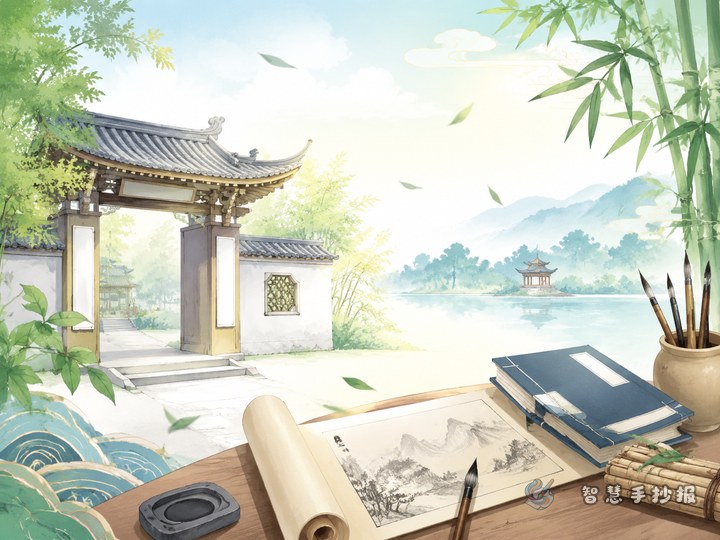
Try ivory, light brown, bamboo green, and a little vermilion. Ivory can suggest old paper, bamboo green works well for borders and plants, and vermilion can highlight only the title or a seal. The result feels traditional without becoming too dark for a primary-school project.
Three Details That Improve the Final Result
- Draw only the key features of an academy, such as the roof, wooden posts, and window patterns. Leave enough space for the text instead of pursuing complicated perspective.
- Use body positions to support the meaning: face the teacher while listening, raise a hand when asking, and face classmates during discussion.
- Keep each section to two or three sentences. Use larger lettering for important words so the page does not become a dense history summary.
After sketching, you can continue in the WeChat mini program with “Zhihui Shouchaobao” to organize sections, adjust the layout, and refine the colors, making the lecture-etiquette theme easier to complete and present.