Start by separating the two main ideas
Many students mix up moon phases with solar and lunar eclipses. They are related to the Sun, Earth, and Moon, but they are not the same thing. Moon phases explain why the Moon seems to change shape. Eclipses explain what happens when these three bodies line up and one blocks the light. If the report explains this difference first, the whole page will feel much clearer.
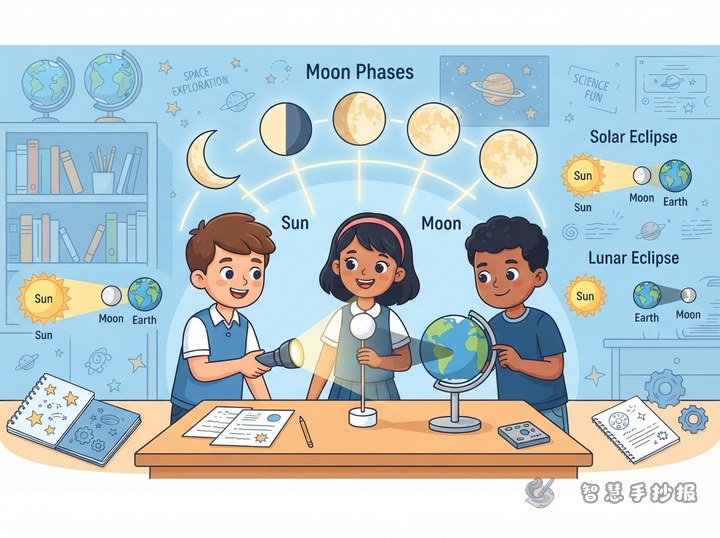
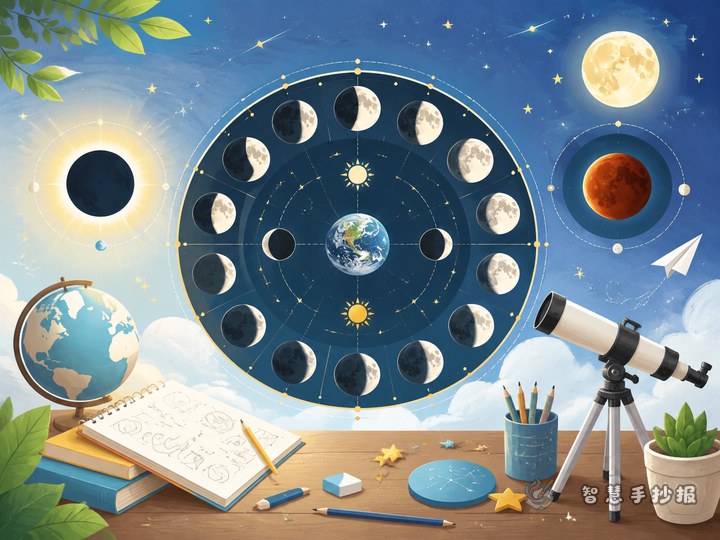
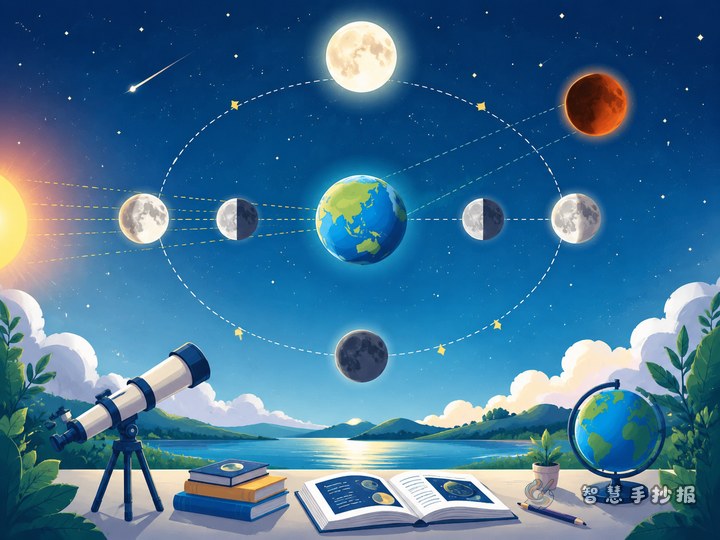
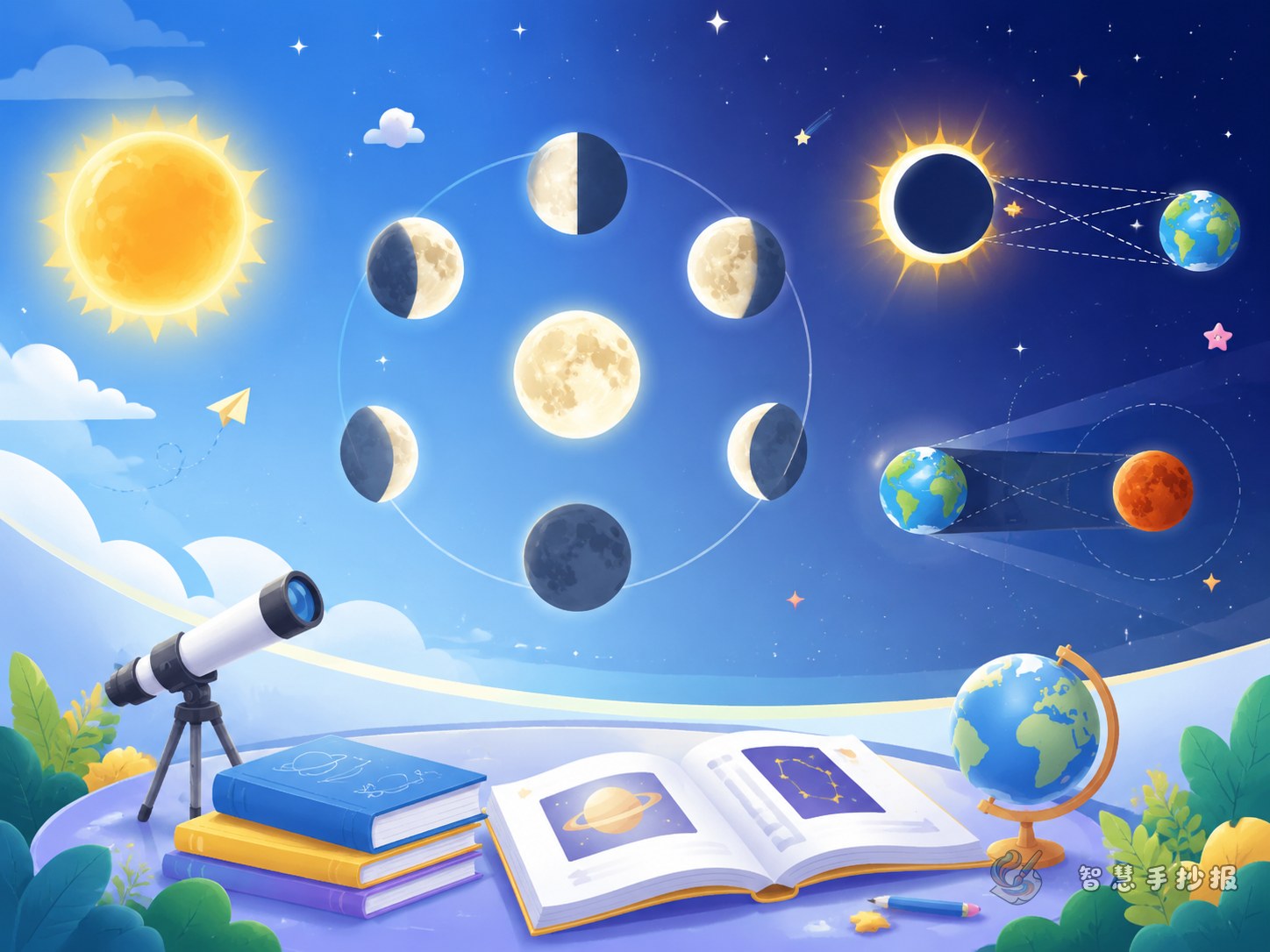
- Moon phases: the lit part of the Moon looks different from Earth over time.
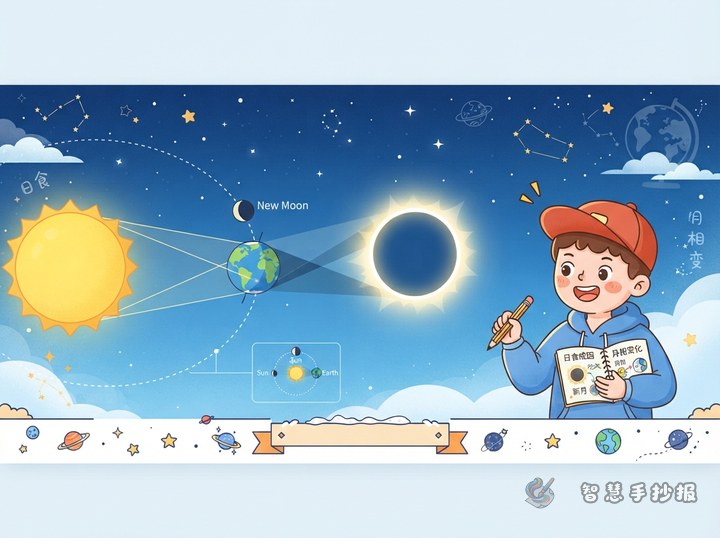
- Solar eclipse: the Moon moves between the Sun and Earth and blocks sunlight.
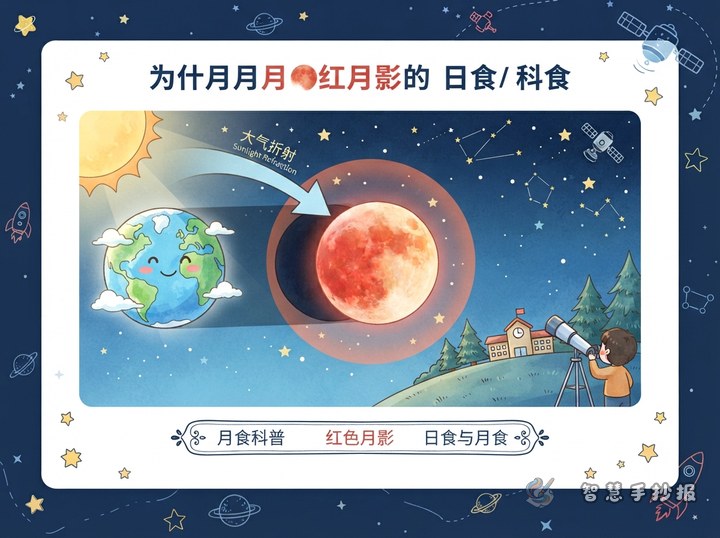
- Lunar eclipse: Earth moves between the Sun and Moon and casts a shadow on the Moon.
Easy sections students can use in the report
Section 1: Why does the Moon seem to change shape?
A simple sentence works well here: the Moon does not make its own light. We see sunlight reflected from its surface, and as the Moon moves around Earth, the bright part we can see changes.
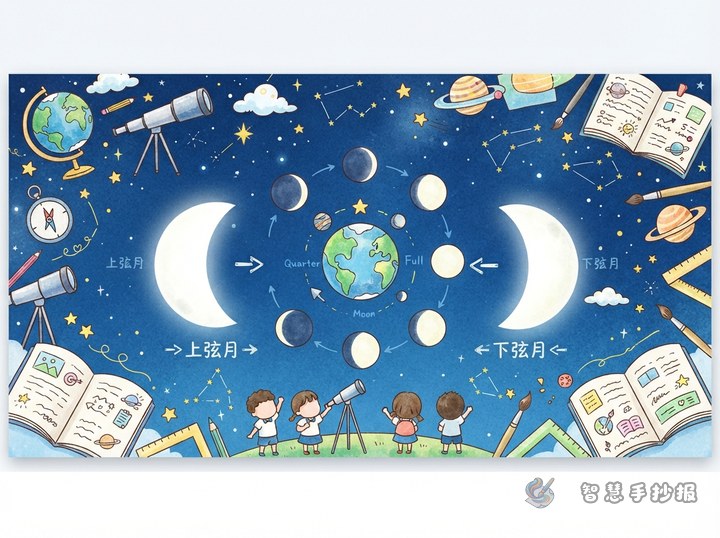
Section 2: Common moon phase order
- New Moon
- Crescent Moon
- First Quarter
- Waxing Gibbous
- Full Moon
- Waning Gibbous
- Last Quarter
- Waning Crescent
If the page is small, students can focus on just four main phases: new moon, first quarter, full moon, and last quarter.
Section 3: Solar eclipse and lunar eclipse differences
- Different positions: one is caused by the Moon blocking the Sun, the other by Earth blocking sunlight from the Moon.
- Different object to observe: a solar eclipse involves the Sun, while a lunar eclipse involves the Moon.
- Different safety rules: never look directly at the Sun during a solar eclipse.
Short science notes that fit well on a page
Moon phase fact: The Moon is not changing shape by itself. What changes is the part of the sunlit surface we can see from Earth.
Solar eclipse fact: During a solar eclipse, the Moon covers part or all of the Sun, and daytime may become darker for a short time.
Lunar eclipse fact: During a lunar eclipse, the Moon moves into Earth’s shadow and may appear dim or reddish.
Key conclusion: Moon phases are regular changes, while eclipses are special alignment events. Both are connected to the positions of the Sun, Earth, and Moon.
Layout ideas that make the project look better
This topic looks great with designs that show movement and space, so students do not have to use a plain box layout.
- Circular layout: place the Sun, Earth, and Moon idea in the center and arrange moon phases around it.
- Split-page layout: use the left side for moon phases and the right side for solar and lunar eclipses.
- Timeline layout: show the moon phase order across the page and add eclipse notes below.
Dark blue, pale yellow, white, and a little silver can create a clean night-sky style. Small stars, orbit lines, and circular borders also work well.
Helpful tips for a student-friendly handwritten report
- Use a question-style title such as “Why does the Moon change shape?” to catch attention.
- Keep each paragraph short so it is easy to copy by hand.
- Add labels to every drawing so the science meaning is clear.
- Include a safety reminder in the eclipse section: never look directly at the Sun.
If there is not much time, first decide the title, sections, and colors, then add short text blocks. After the draft is ready, students and parents can also continue polishing the layout in the Smart Handwritten Report WeChat mini program.