Build the page around comparison
This topic works best as a comparison-style handwritten newspaper because many students confuse solar eclipses, lunar eclipses, and moon phases. The whole page becomes clear if you center it on three key ideas: a solar eclipse is the Moon blocking the Sun, a lunar eclipse is Earth blocking sunlight from the Moon, and moon phases are the changing shapes of the Moon’s bright side as seen from Earth.
A question-style title makes the page feel more natural and searchable. You can use a main title like “What Is the Difference Between a Solar Eclipse and a Lunar Eclipse?” and add a smaller subtitle about moon phases.
Simple sections that make the page easy to read
Section 1: Three sky events in one minute
- Moon phases: the visible bright part of the Moon changes as it moves around Earth.
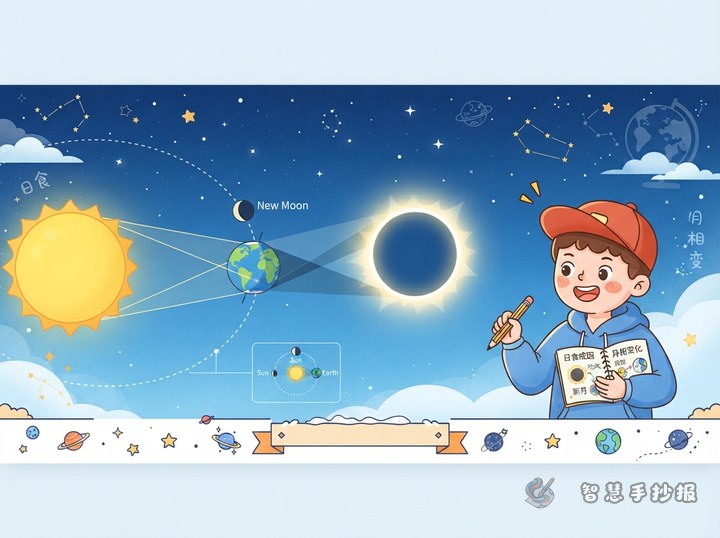
- Solar eclipse: the Moon moves between the Sun and Earth and blocks part of the Sun.
- Lunar eclipse: Earth moves between the Sun and Moon, so the Moon enters Earth’s shadow.
Section 2: Solar eclipse vs. lunar eclipse
- What blocks what: the Moon blocks the Sun in a solar eclipse; Earth blocks sunlight in a lunar eclipse.
- When it happens: solar eclipses usually occur near a new moon, while lunar eclipses happen near a full moon.
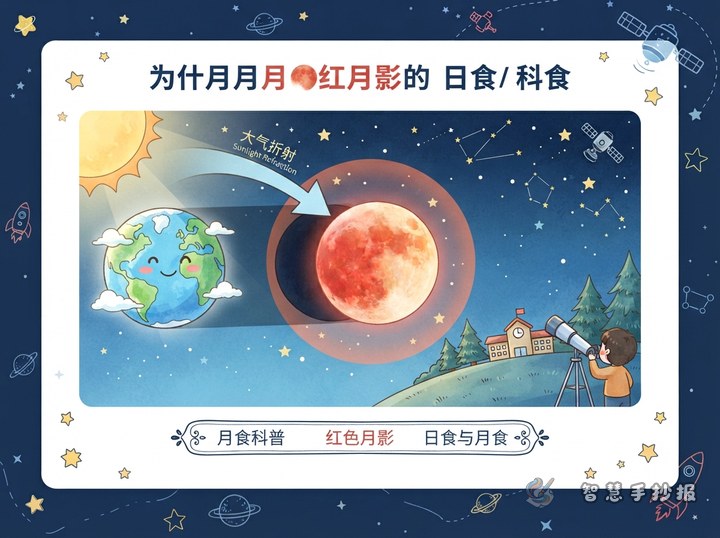
- What people see: the Sun looks partly or almost fully covered during a solar eclipse, while the Moon may look dark or reddish during a lunar eclipse.
Section 3: Moon phases are not eclipses
This is an important reminder. Use a short sentence in bold, such as The Moon’s changing shape is not usually an eclipse. Most of the time, moon phases happen because we see different portions of the Moon’s sunlit half.
Ready-to-use text materials
You can place these short facts in side boxes, captions, or note bubbles:
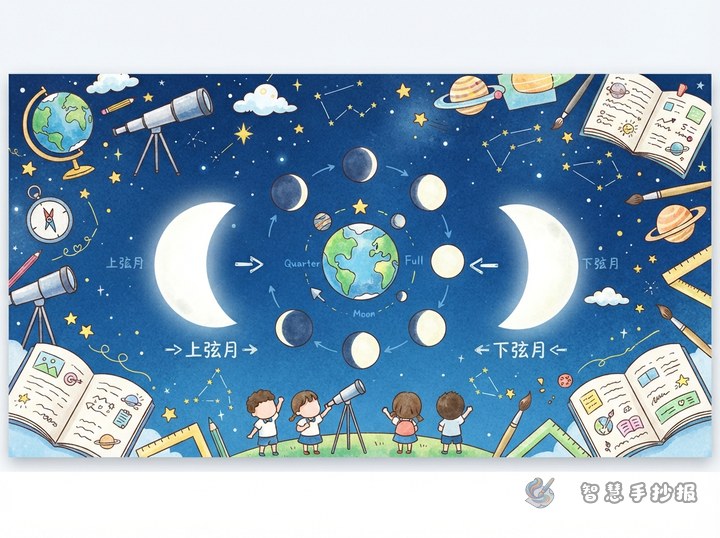
- Common moon phases include new moon, first quarter, full moon, and last quarter.
- Moon phases follow a regular cycle and are different from eclipse events.
- During a solar eclipse, daytime may suddenly look dimmer.
- During a lunar eclipse, the Moon can appear dark red.
- Never look directly at the Sun during a solar eclipse without proper protection.
If your page has limited space, keep the definition, key differences, and safety reminder first.
Drawing ideas that look clear and scientific
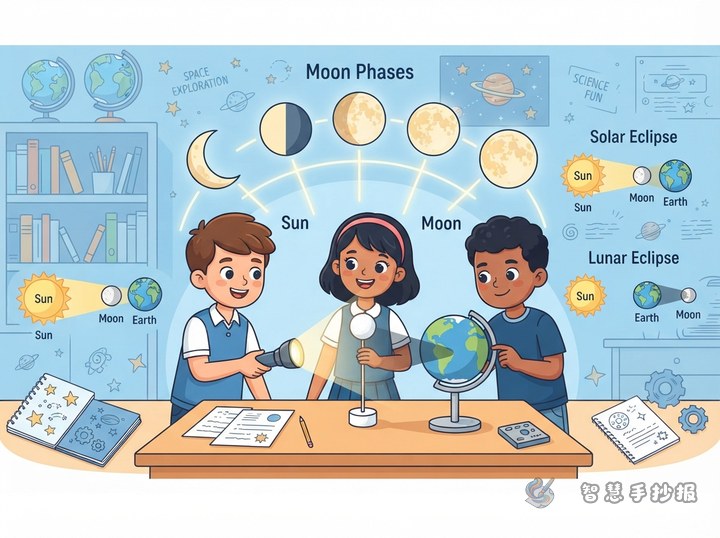
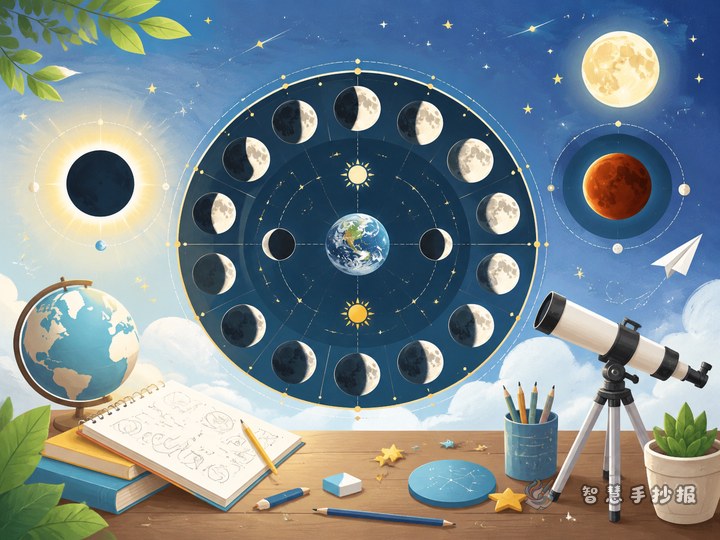
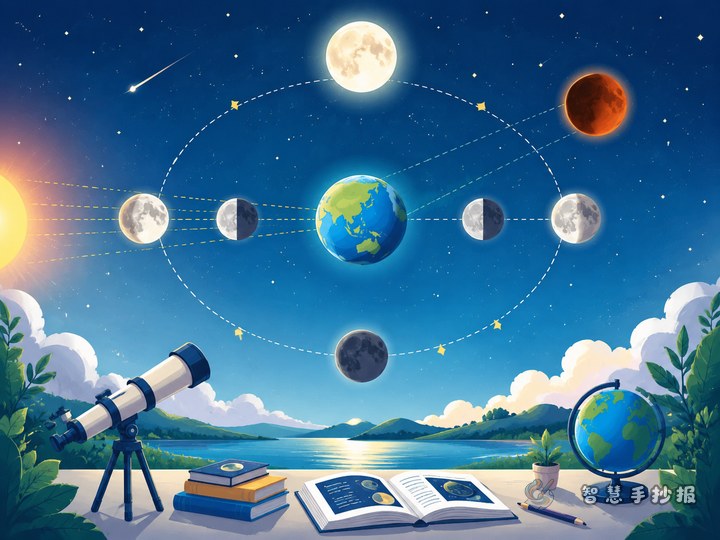
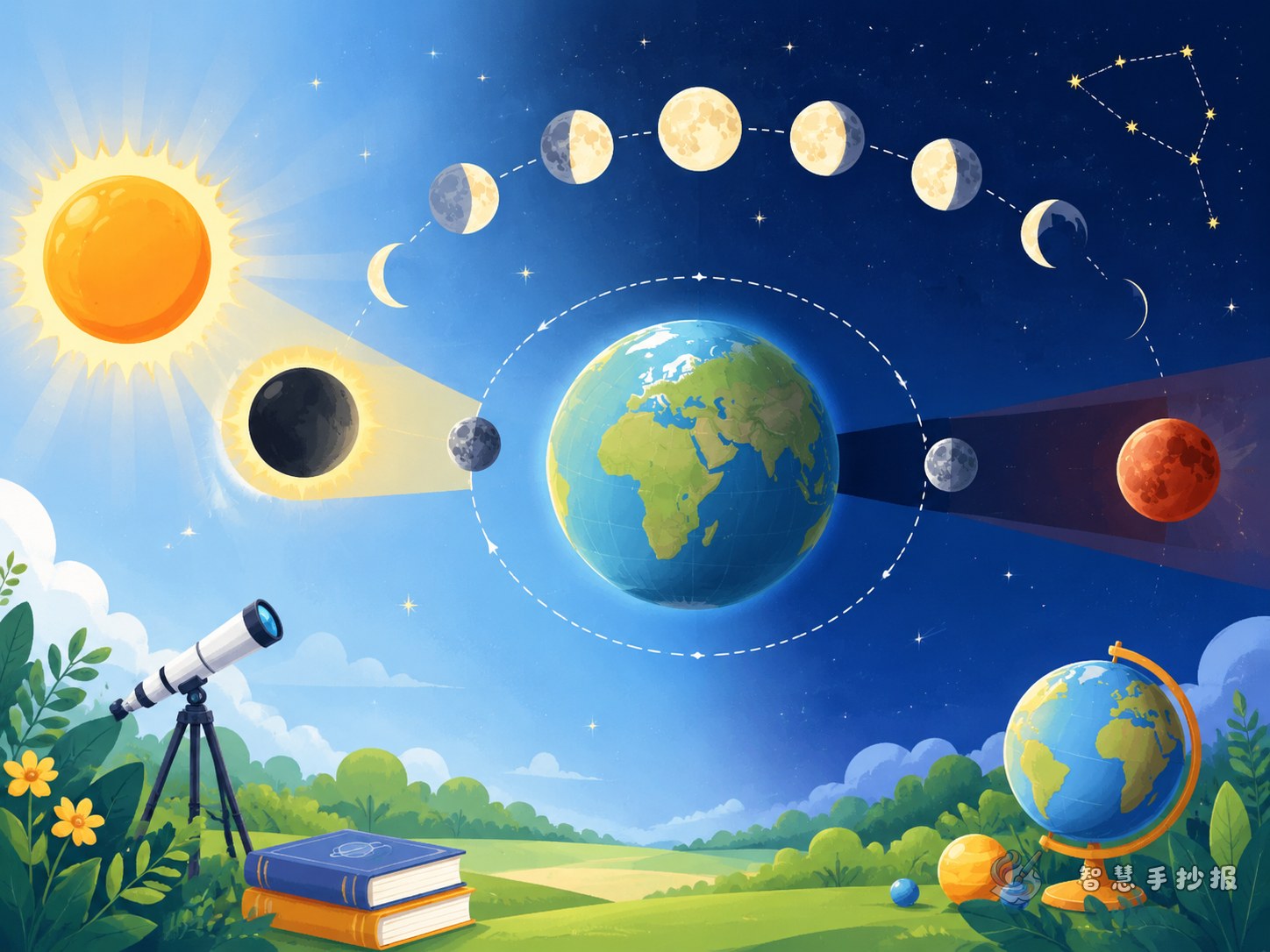
This theme is perfect for simple diagrams. Put the Sun, Earth, and Moon in a line diagram and use arrows to show positions. Then add a separate moon phase circle around the side of the page.
- Solar eclipse diagram: Sun-Moon-Earth in a line.
- Lunar eclipse diagram: Sun-Earth-Moon in a line.
- Moon phase diagram: eight small Moon shapes arranged in a circle.
For colors, dark blue, pale yellow, and silver gray make the page feel like a sky science project without looking too heavy.
Add one interactive corner
To make the handwritten newspaper feel more lively, include a small “Think About It” box with questions such as “Why don’t eclipses happen every month?” or “Which moon phase have you seen most often?”
You can finish with a short conclusion saying that the sky looks mysterious, but its changes follow patterns. If you want to continue improving the title design, borders, and layout, you can also use the Zhihui Shouchaobao WeChat mini program to keep creating your page more neatly.