A practical theme: turn chopsticks into a clear and interesting poster topic
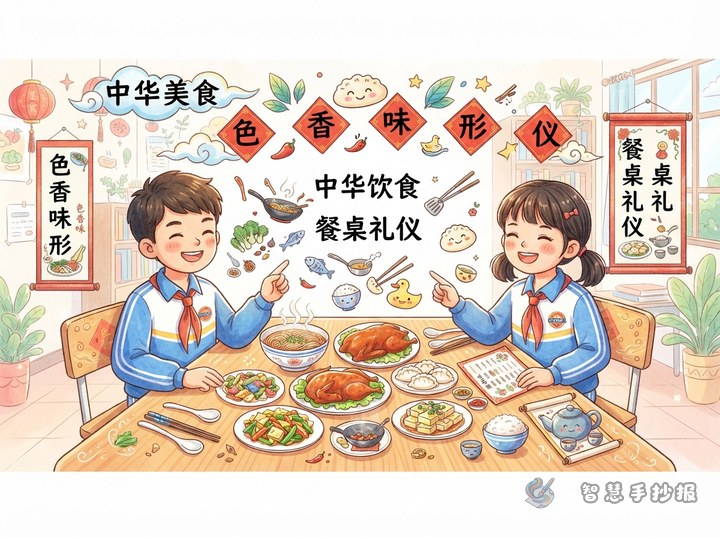
If you want a handwritten newspaper about Chinese food culture and table manners, “Chinese manners seen through chopsticks” is a smart choice. It is close to daily life, easy to explain, and suitable for students, parents, and teachers.
Your title can be The Manners Behind a Pair of Chopsticks, Chopsticks and Table Etiquette, or Chinese Food Culture Through Chopsticks. These titles sound natural and are easy for readers to understand.
What to include in the main content
1. Simple facts about chopstick culture
- Chopsticks are a common eating tool in China and show practical wisdom in daily meals.
- A small pair of chopsticks can reflect family habits, hospitality, and respect at the table.
- In Chinese dining culture, chopsticks are not only tools for eating but also part of polite behavior.
2. Common chopstick manners
- Do not tap bowls with chopsticks during meals.
- Do not stick chopsticks upright into a bowl of rice.
- Do not search through shared dishes again and again when picking food.
- Be polite when serving food to elders or guests.
- Place chopsticks neatly after finishing the meal.
3. Civilized behavior at the table
- Invite elders to begin first when appropriate.
- Do not shout or run around while eating.
- Value food and avoid waste.
- Respect others’ tastes and eating habits.
How to organize the layout
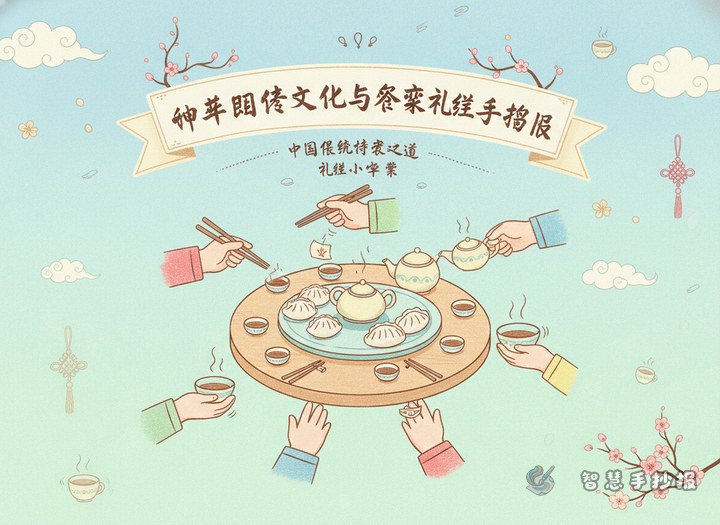
This topic works well with a center title and four surrounding sections. It looks tidy and helps readers find information quickly.
- Center: Put the main title with simple drawings of chopsticks, bowls, or a family meal.
- Top left: Brief notes on the cultural meaning of chopsticks.
- Top right: A list of chopstick etiquette tips.
- Bottom left: “What I can do at the table” as a student promise list.
- Bottom right: Short reminders or polite table phrases.
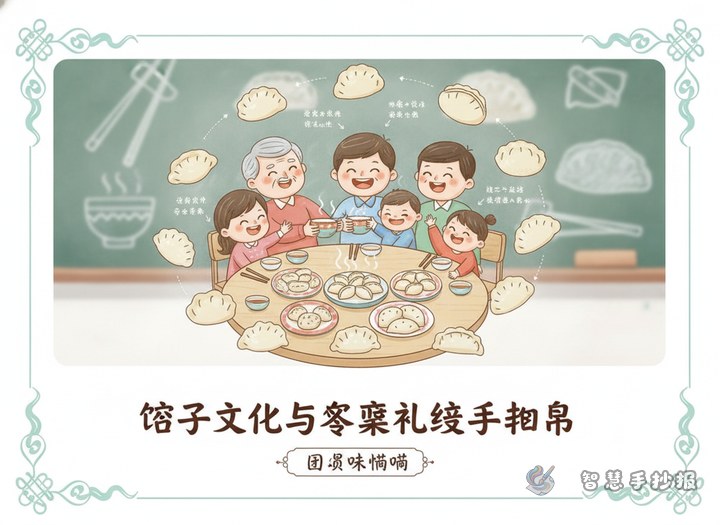
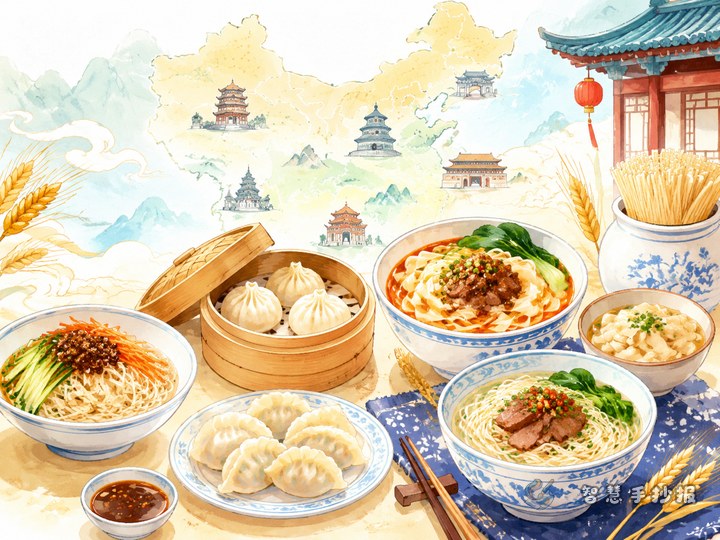
You can decorate the border with dumplings, noodles, cloud patterns, or traditional Chinese motifs to make the page more lively.
Ready-to-use writing materials
Text 1: Chinese food culture has a long history, and table manners are an important part of it. A pair of chopsticks is more than a dining tool. It reminds us to respect elders, care about hygiene, and cherish food. Civilized dining begins with small actions.
Text 2: At family meals and festival gatherings, people sit around the table and share food together. Chinese table culture values harmony, politeness, and consideration for others. Waiting for elders, serving food properly, and speaking gently all show good manners.
Text 3: Good habits should start early. Do not tap bowls, wave chopsticks carelessly, or waste food. Put tableware in order after eating. These simple actions help us practice traditional virtues in everyday life.
Color ideas and illustrations
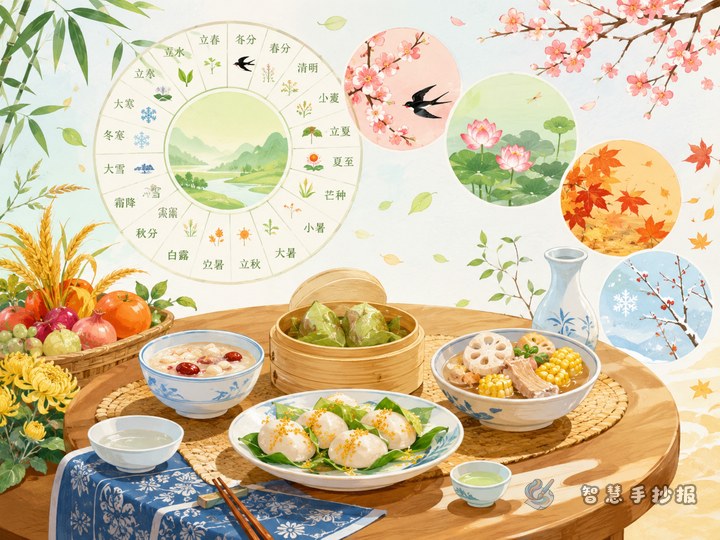
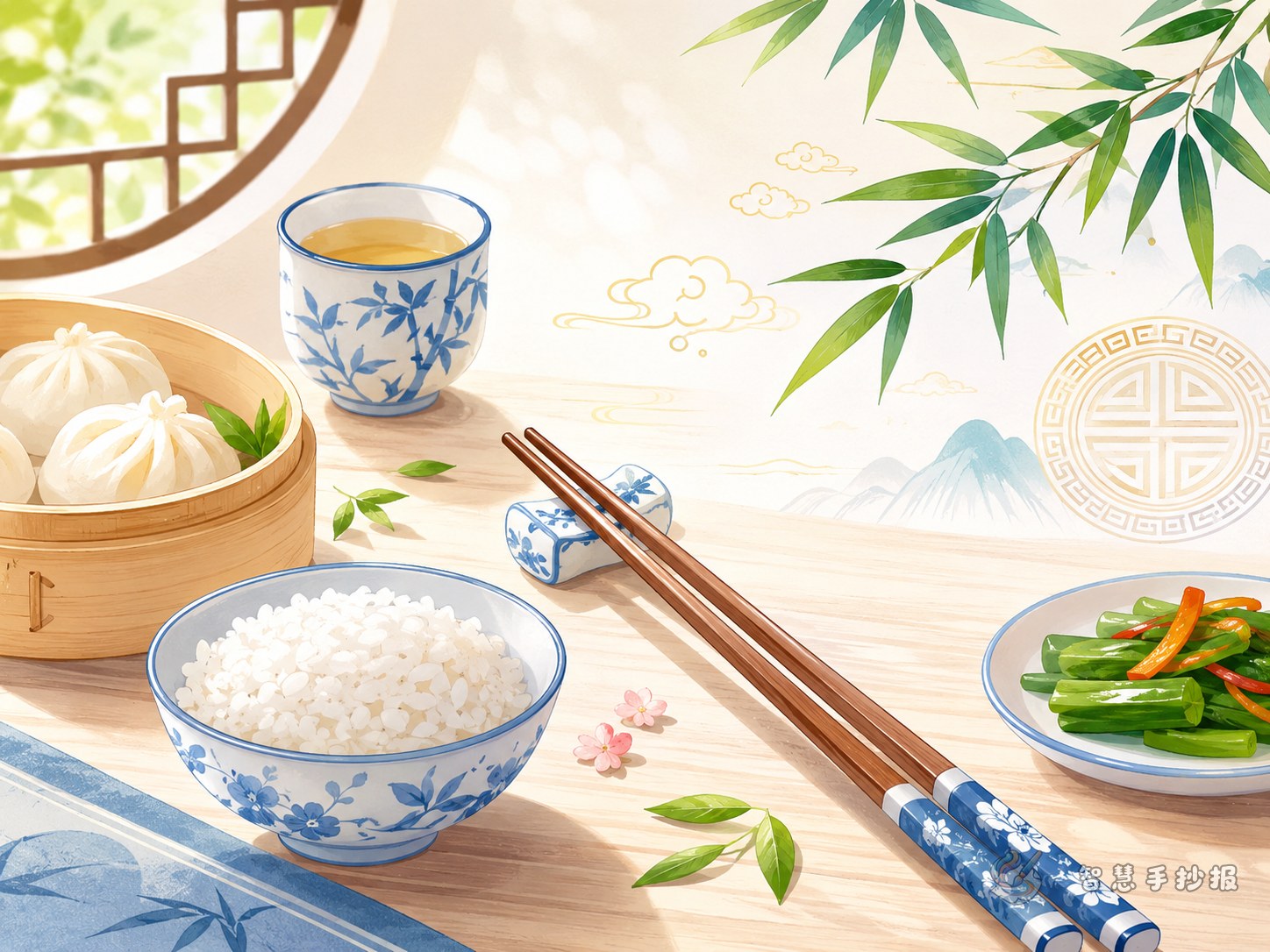
Warm colors such as red, beige, and light brown match this topic well. You can draw chopsticks, bowls, dumplings, or a round dining table. Traditional borders and simple Chinese-style patterns can make the page feel more connected to Chinese culture.
Make the title bold, keep body text in short points, and highlight key words with soft color circles. This will make the handwritten newspaper easier to read.
How to make the work feel more complete
Do not stop at facts only. Add your own thoughts, such as what you should do at home during meals or which bad habits you want to improve. This makes the work more personal and more suitable for a student project.
If you want to keep improving the layout, add more text blocks, or try different styles, you can continue creating in the Zhihui Shouchaobao WeChat mini program.