Begin with a map of folk-music sounds
Build the handwritten newspaper around four easy-to-understand groups: wind, bowed strings, plucked strings, and striking instruments. Place a small stage or a musical staff in the center and write the main title Hearing the Sounds of Chinese Folk Music. The four sections will make the page feel like a guided folk-music concert.
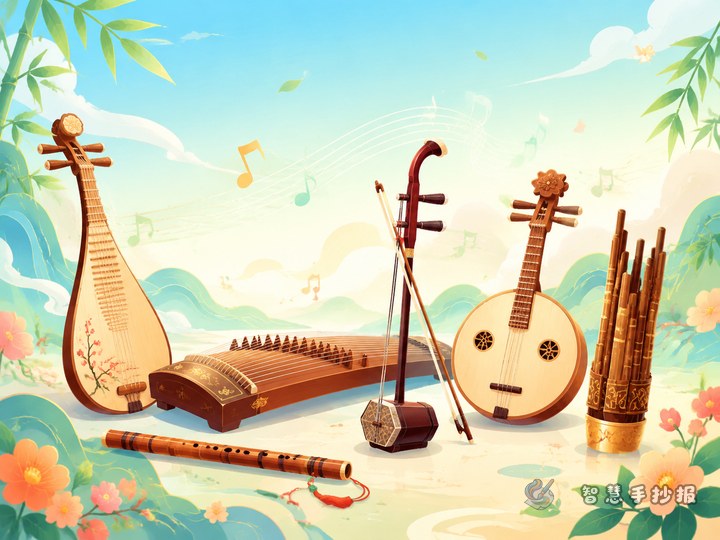
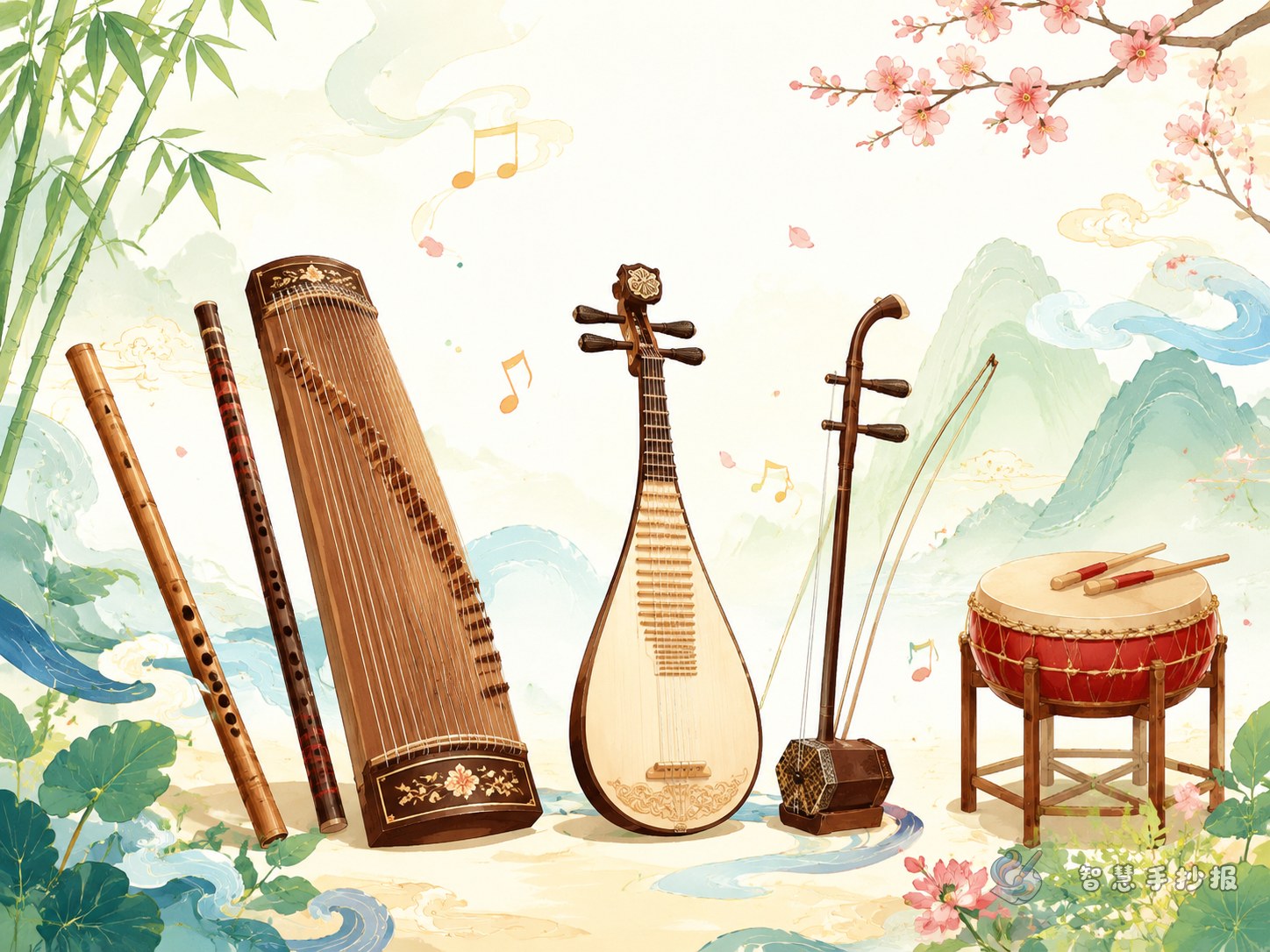
This four-part grouping is a practical way for children to organize a poster, not a complicated professional classification. Choose two to four representative instruments for each section and focus on how they are played, what they sound like, and what kind of feeling they create.
Give each corner its own musical character
Wind instruments: draw the movement of air
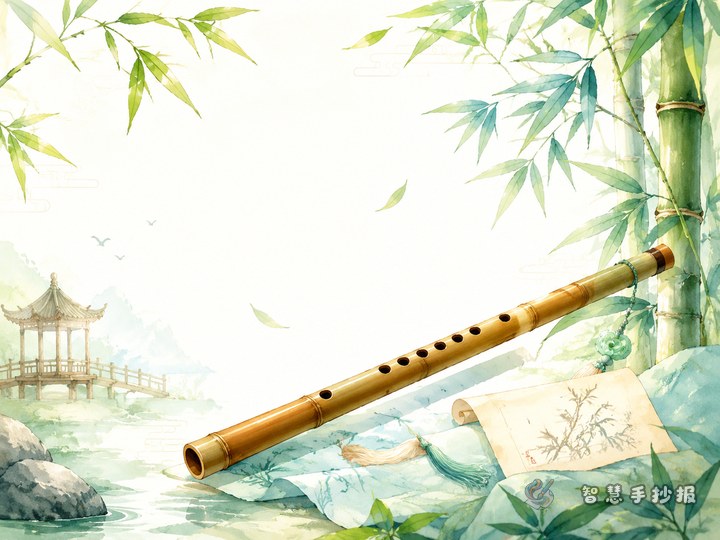
Introduce the dizi, xiao, sheng, and suona. A short text could say: Wind instruments produce sound through moving air. The dizi is bright, the xiao is gentle, the sheng is harmonious, and the suona is powerful and festive. Bamboo joints, flowing air lines, and music notes make good decorations.
Bowed strings: let the bow tell a story
Erhu, gaohu, and banhu fit this section. You may write: Bowed instruments use a bow to rub the strings. Their voices can sound close to human singing, expressing tenderness, longing, or lively emotion. Draw a bow and curved strings to add movement.
Plucked strings: melodies from the fingertips
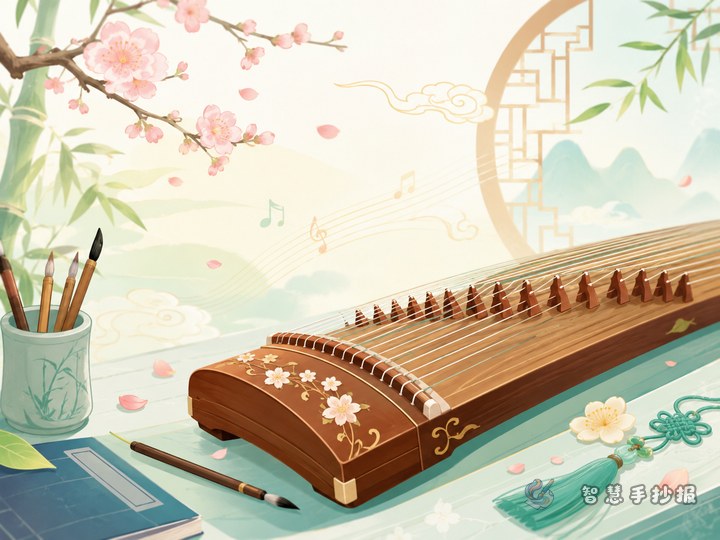
Guzheng, pipa, and ruan are suitable choices. A simple introduction is: Plucked instruments are played with the fingers, creating bright, crisp, or warm tones. Guzheng melodies can feel like flowing water, while pipa music can sound both lively and rhythmically strong.
Striking instruments: give the music a strong beat
Use drums, gongs, cymbals, and yangqin as examples. Write: Striking instruments are sounded by hitting, clashing, or striking strings. They emphasize the beat and shape the mood of a performance. Yangqin may be noted as a struck-string instrument so the classification remains clear and thoughtful.
Make small appreciation cards
Useful card format: instrument name + playing method + sound impression + imagined scene. For example:
- Dizi: played by blowing air, with a clear and bright sound like a breeze in the hills.
- Erhu: played with a bow, with a warm and emotional tone that feels like singing or storytelling.
- Guzheng: played by plucking the strings, with a flowing tone like rings spreading across water.
- Drum: struck with drumsticks, creating a strong beat and a powerful stage atmosphere.
Add a small section called My Folk-Music Impression at the bottom. Children can complete three sentences: My favorite instrument is ____; its sound reminds me of ____; I would give it the color ____. Personal responses make the poster more lively than copied definitions alone.
Turn the page into a mini concert
Try a centered, radiating layout. Put the title and a round stage in the middle, then arrange the wind, bowed-string, plucked-string, and striking sections in the four corners. Bamboo green, lake blue, warm yellow, and vermilion can distinguish the areas while keeping a traditional yet cheerful feeling.
Decorate the title with a banner, seal-shaped frame, or lattice pattern. Connect the sections with notes, cloud motifs, strings, and wave lines. The instrument drawings can stay simple: outline the shape first, add recognizable details such as holes, strings, or a drumhead, and then trace them with a dark pen. Leave enough blank space so the writing remains easy to read.
A five-step finishing plan
- Use a pencil to mark the title, four sections, and outer border.
- Choose the instruments for each section and avoid repeating the same one.
- Copy short paragraphs of two or three lines, emphasizing key words with color.
- Finish the instrument outlines and decorations before coloring the page.
- Check the title, categories, wording, and signature, then add the final details.
After preparing the four short texts, you can enter the WeChat mini program and continue arranging the page with Smart Handwritten Newspaper. It can make it easier to combine the folk-music information, drawings, and colors into a complete layout.