Start with one clear idea: how bridges cross rivers and valleys
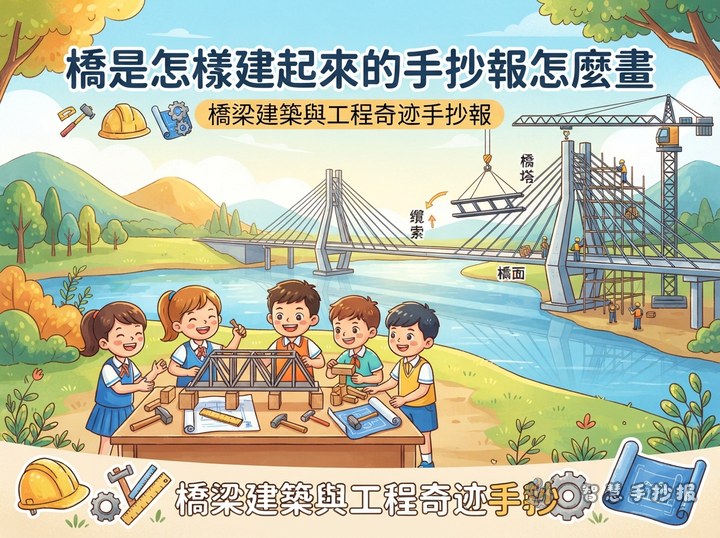
For a bridge and engineering wonders poster, you do not need to include every bridge you know. A better plan is to focus on three simple questions: how bridges are built, why bridges stay stable, and what makes famous bridges impressive. This keeps the poster easy to read and suitable for school use.
You can use a main title such as Bridge Architecture and Engineering Wonders and add a subtitle like “Understanding bridge structure and human creativity.” A short introduction can explain that bridges make travel easier and also show the power of design, materials, and teamwork.
A layout idea that looks organized at first glance
A strong layout is a center illustration with content blocks on both sides. Draw one large bridge in the middle, then place short knowledge sections around it.
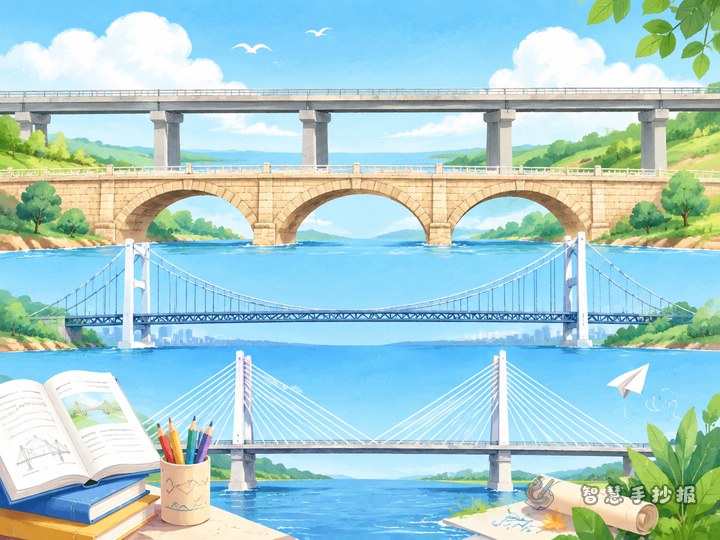
- Main picture area: draw an arch bridge, cable-stayed bridge, or suspension bridge, and label parts such as tower, deck, cables, and piers.
- Left section: types of bridges, including beam bridges, arch bridges, cable-stayed bridges, and suspension bridges.
- Right section: why bridges are strong, with short notes on structure, materials, and support.
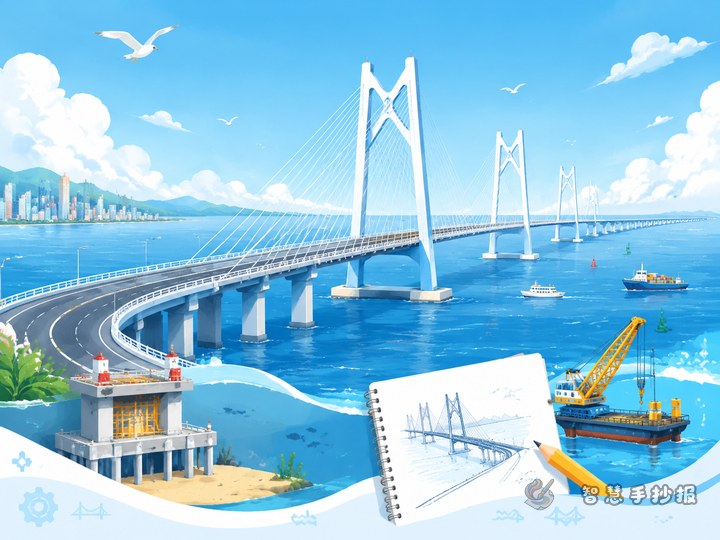
- Bottom section: short introductions to famous bridges in China or around the world.
Decorations can include water lines, road patterns, steel-beam shapes, or simple geometric borders to match the engineering theme.
Ready-to-use text materials for the poster
Bridge types in simple words
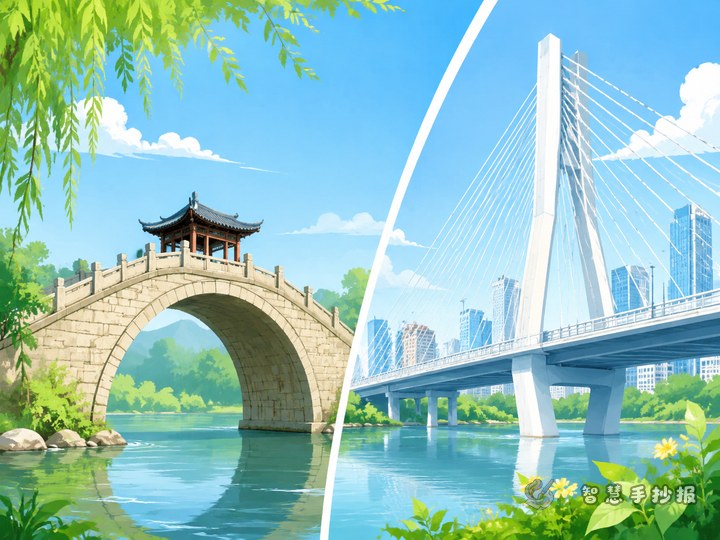
A beam bridge is one of the simplest bridge forms and works well for shorter spans. An arch bridge uses its curved shape to send weight toward both sides, making it strong and beautiful. A cable-stayed bridge uses cables connected to towers to hold the deck. A suspension bridge hangs the deck from main cables and is useful for very wide crossings.
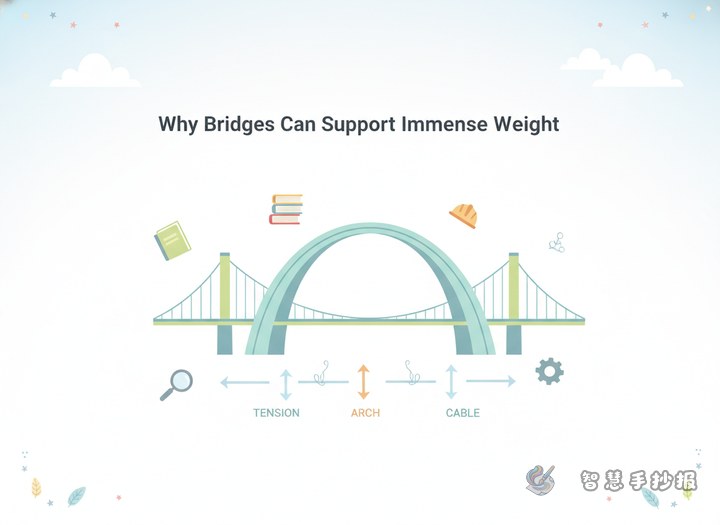
Why can a bridge carry so much weight?
Bridges can carry people, cars, and trains because engineers design them carefully according to span, landform, wind, water, and materials. Piers and foundations provide support, while steel and concrete help bear loads. A good structure spreads force to different parts of the bridge, making it safer and more stable.
What makes a bridge an engineering wonder?
A bridge is often called an engineering wonder not only because it is long or tall, but because it solves difficult problems. Some bridges cross deep water, strong winds, or complex terrain. Their construction requires surveying, planning, lifting, transport, and long-term maintenance, all completed through teamwork.
Section titles children can use
- Bridge Facts for Kids
- Bridges I Know
- The Wisdom of Engineers
- Bridge Structure Explained
- Amazing Bridges Around the World
- What Future Bridges May Look Like
If you still have empty space, add a small “Bridge Fun Facts” box. For example, some bridges are only for trains, some carry both roads and railways, and some become especially beautiful when lit at night.
Color and drawing tips for a bridge-themed poster
Blue, gray, and orange work very well for this topic. Blue represents water and sky, gray gives a modern construction feel, and orange helps important words stand out. Your drawing does not need many tiny details. If the bridge towers, deck, piers, and water are clear, the page will already have a strong visual center.
You can also add small icons such as a hard hat, ruler, gear, or rolled blueprint in the corners. Use title lettering that looks neat and steady rather than overly playful, so the poster matches the engineering theme.
A simple ending for the poster
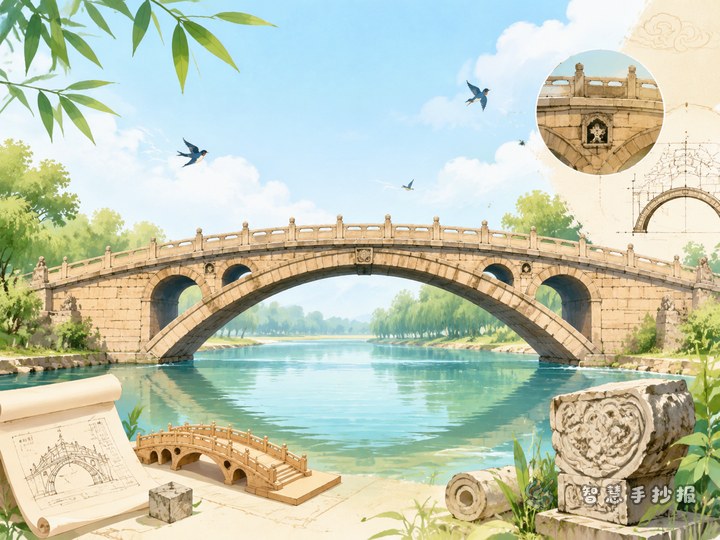
You may end with a sentence like this: bridges connect more than roads. They also connect cities, people, and ideas. From ancient stone bridges to modern sea-crossing bridges, each one shows wisdom, courage, and hard work. Through this poster, we can learn both bridge knowledge and the greatness of engineering.
If you want to keep improving your layout, wording, or color plan, you can continue your project in the Zhihui Shouchaobao WeChat mini program.