Turn the page into a small opera stage
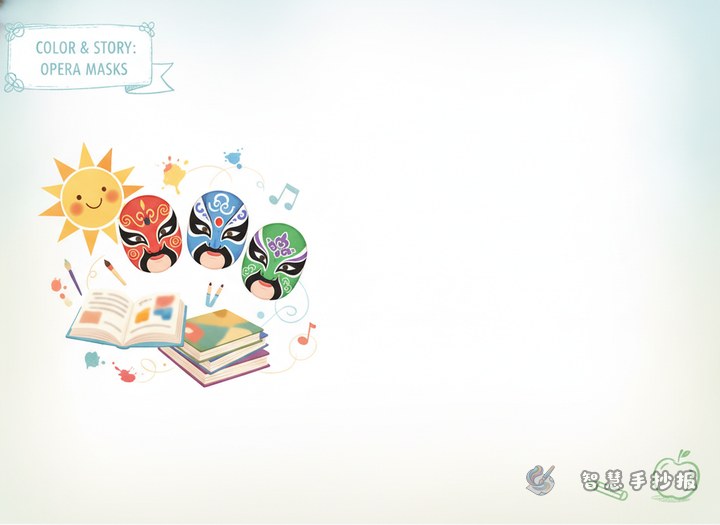
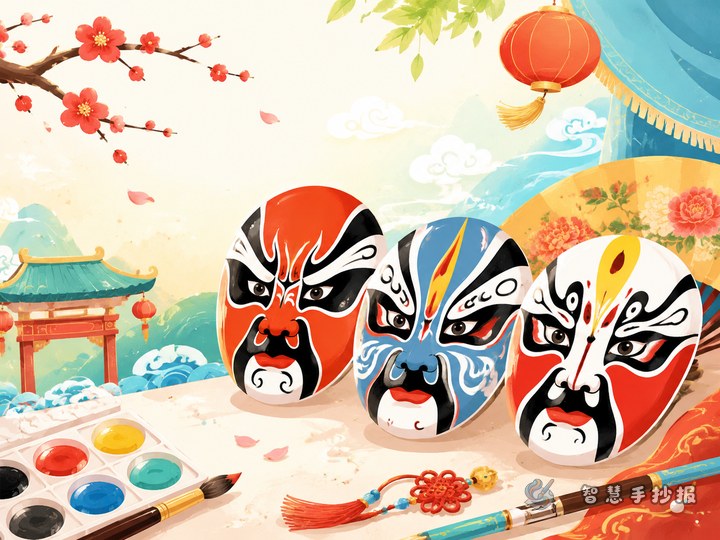
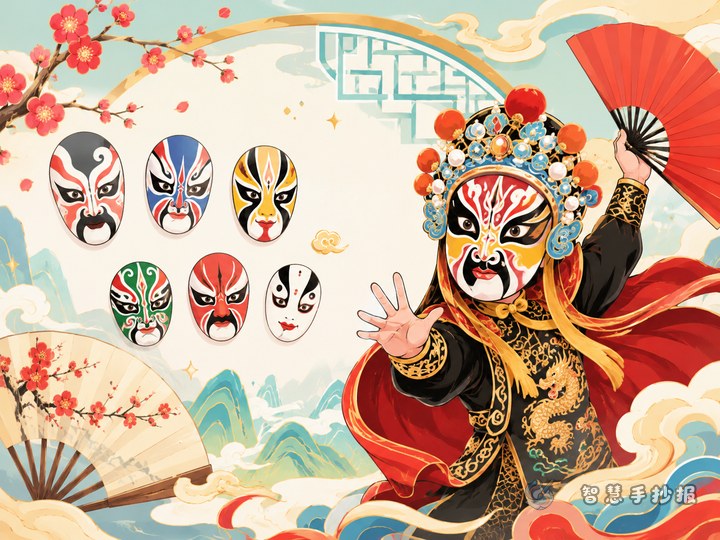
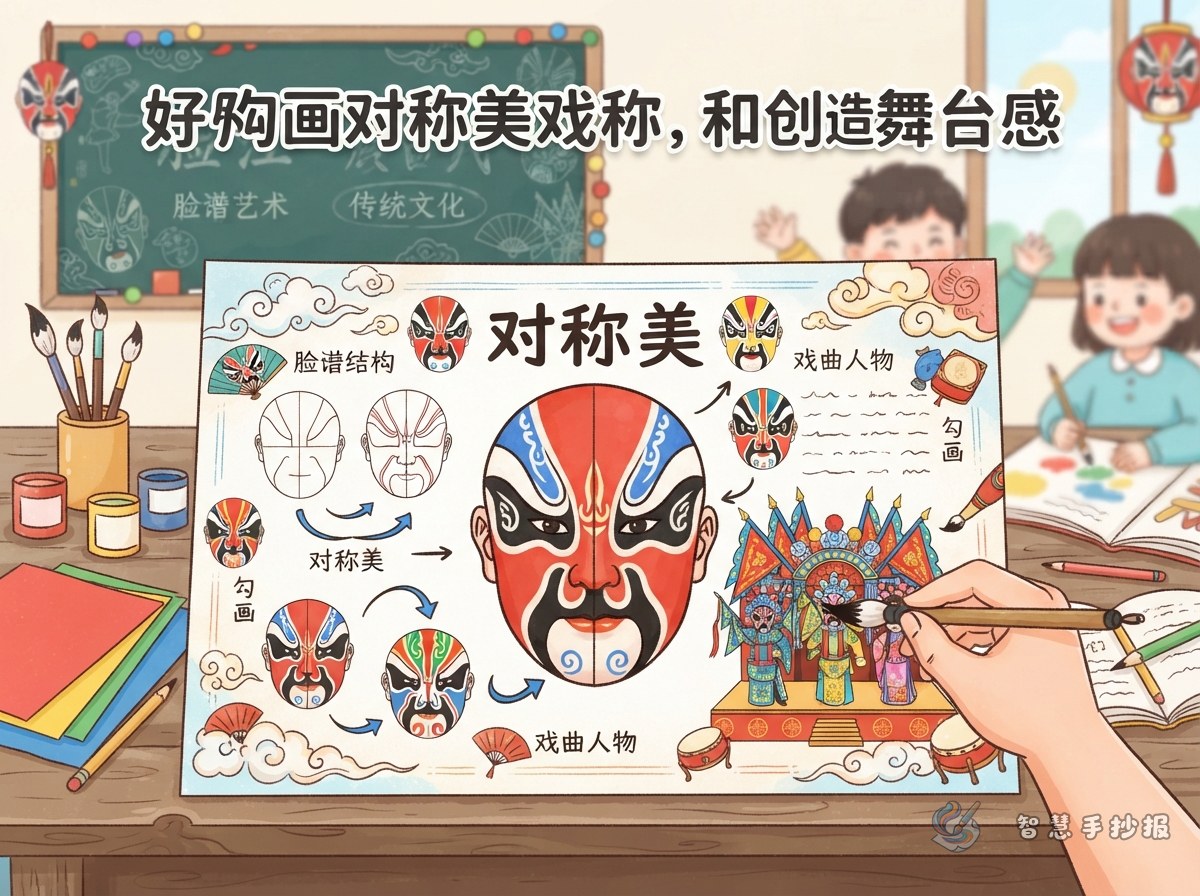
This poster can be built around a symmetrical opera mask with a stage background. Place the title at the top center, make the mask the largest image, and add small curtains, drums, sleeves, or cloud patterns on both sides. The theme will be clear without making the page feel crowded.
Use a pencil to divide the page into a title area, a main drawing area, and text areas. Let the mask take up about half of the page, while leaving a little space between the title and the drawing for clean outlines and writing.
Use one center line to build a balanced mask
A simple drawing order
- Draw a light vertical guide line in the center of the main area to set the mask height and width.
- Sketch the outside shape first, then place the eyebrows, eyes, nose, and mouth on both sides of the guide line.
- Add decorative lines around the forehead, eye corners, and cheeks, making the shapes on both sides respond to each other.
- Trace the final outline with a black pen, erase the extra pencil marks, and fill the mask with two or three coordinated colors.
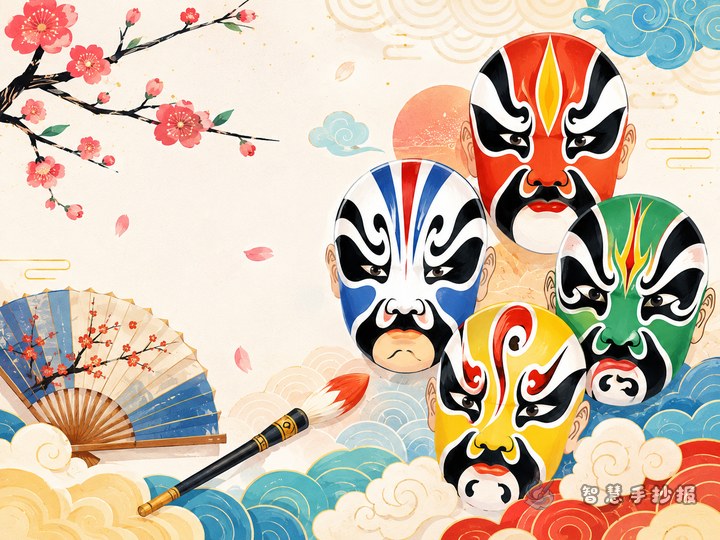
Elementary students do not need to copy complicated professional makeup patterns. A front-facing mask is easier to balance. If the two sides look uneven, draw one half first, use the center line as a reference for the other half, and use small details to soften minor differences.
Add short text blocks that support the main drawing
Instead of writing a long encyclopedia-style paragraph, create three short sections. They are easier to read and help fill the empty spaces around the mask.
- Mask fact: An opera mask is a form of stage makeup and design. Exaggerated lines and color blocks make a performer’s face easier to recognize from a distance.
- Three drawing steps: Set the center line, draw the outline, and fill the color blocks. A dot or small icon can be placed beside each step.
- My impression: I like the bold lines and balanced composition of opera masks because they give traditional characters a strong stage presence.
If you need one more small section, write about stage props. Briefly explain how drums, curtains, and long sleeves help create the atmosphere of a performance. One or two sentences for each item are enough, so the words do not compete with the main drawing.
Create a stage effect with foreground, background, and space
The mask should be the foreground focus. Place curtains in the upper left and right corners to form the edges of an open stage. Small drums or sleeves can go in the lower corners to balance the composition. Use pale arcs, dots, or cloud patterns in the background, but keep them away from the text.
Choose one title color and one outline color first, then add one or two colors for the mask. Keep the background light and the main image clear and bright. This gives the page a decorative opera feeling while keeping the title and information cards easy to read.
Check these four details before finishing
- Is the title the largest and clearest element, with no decoration covering it?
- Is the center line clear, and do the main eyebrows, eyes, and outlines balance each other?
- Does each text block have a small heading and only a few lines?
- Is there enough blank space around the edges, so the page feels like a complete poster rather than scattered drawings?
Once the idea is settled, you can use the 智慧手抄报 WeChat mini program to organize the title, sections, and layout. Adjust the mask to fit your paper size, then finish a handwritten poster with a clear traditional opera atmosphere.