Why the Baoxiang Flower Suits a Color Project
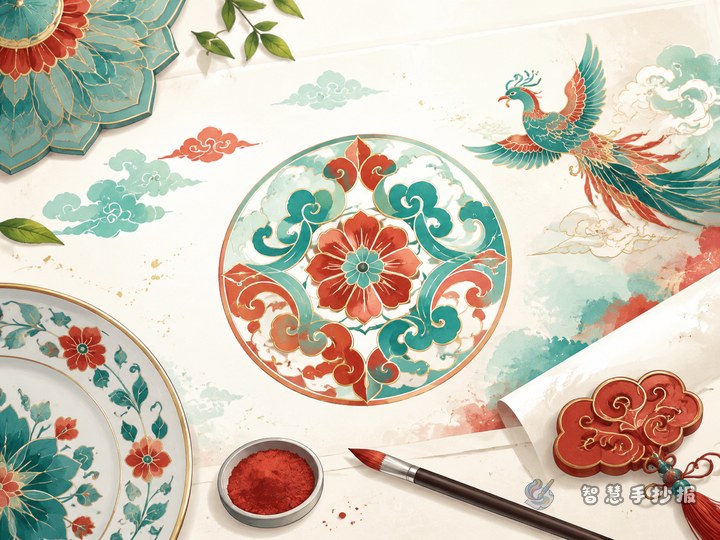
The baoxiang flower is not one real blossom. It is a decorative motif built by reshaping and combining lotus, peony and chrysanthemum forms, and it appears on Tang dynasty textiles, murals and ceramics. Its petals open ring by ring in balanced symmetry, so a single motif can carry the whole page without needing dozens of extra patterns.
It is also forgiving to draw. Once the center and the guide lines are in place, every ring of petals can follow the one before it, which keeps young students from losing the shape.
Drawing the Main Motif in Three Steps
- Set the center: trace a circle with a compass, a bottle cap or a cup, and draw one vertical and one horizontal guide line through the middle.
- Add the inner petals: place four small petals on the guide lines, then four more on the diagonal directions to complete the first ring.
- Grow two or three more rings: each outer ring gets larger petals, and you can switch between pointed, rounded and peach-shaped petals as you go.
If a petal goes wrong
Do not erase it right away. Treat the oversized petal as part of the outermost ring and balance it with the others. A handwritten newspaper is not a drawing contest, so a full shape with roughly matching sides already reads well.
Color Palettes That Stay Rich, Not Muddy
Baoxiang flowers are meant to look luxurious, but too many colors turn muddy. Choose one main family plus one or two accents.
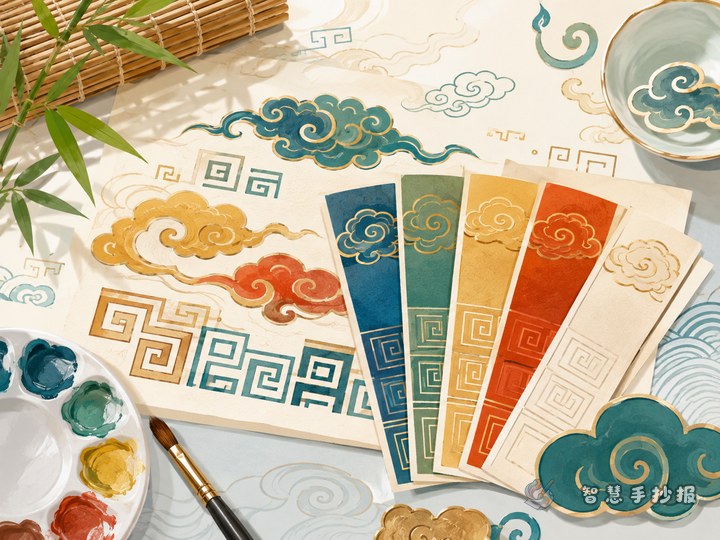
- Vermilion with gold: red as the base, gold for the flower center and outlines. Bold and festive.
- Azurite with malachite: alternate the two across the petals and ring the outside with gamboge for a calm, elegant look.
- Rouge, orange-red and pale yellow: arrange one ring from dark to light so the petals seem to catch the light naturally.
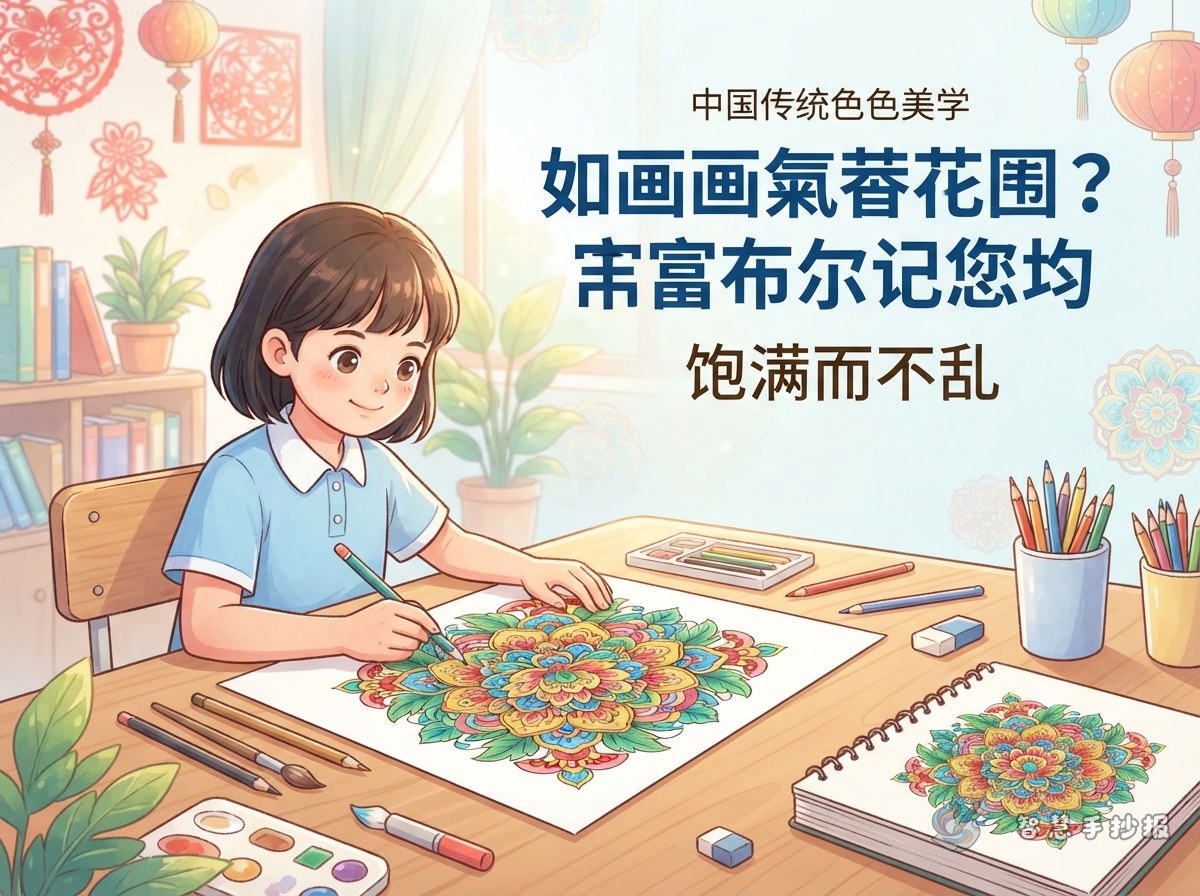
Fill with light tones first, press darker tones along the edges, and finish with tiny white or pale yellow highlights. Keep the page to four or five colors and it will stay clean.
Planning the Layout: Title, Motif, Text Blocks
Because the motif is round and wide, reserve space before you start.
- Title area: across the top, in bold letters, with a few small petals as decoration.
- Main motif: in the upper left or the middle right, about one third of the page in diameter.
- Text boxes: three or four rectangles or cloud shapes, outlined with simple fret or scroll patterns.
Leave a narrow gap between boxes, or separate them with a pale patterned strip, so the page stays easy to read.
Facts and Notes You Can Copy
- About the motif: the baoxiang flower is a decorative pattern built from lotus, peony and similar flower forms, common in Tang dynasty textiles and objects.
- Traditional color names: cinnabar, rouge, azurite, malachite, gamboge, indigo and moon white are great written along a border.
- Auspicious meanings: the peony stands for prosperity, the lotus for purity, and layered petals for completeness.
- Your own note: one sentence on why you chose those colors sounds more honest than copied text.
A Few Practical Tips Before You Start
Sketch the flower outline and text boxes on scrap paper first so the proportions work; let the color dry before going over it with a fine liner; and remember that empty space is part of the traditional aesthetic, so an unfilled corner is fine. If you want help arranging the motif, the fret border and the title lettering, open 智慧手抄报 in WeChat Mini Program, pick a pattern-themed template, type in your text, then copy the layout onto paper.