Build the Theme Around a Living Wetland
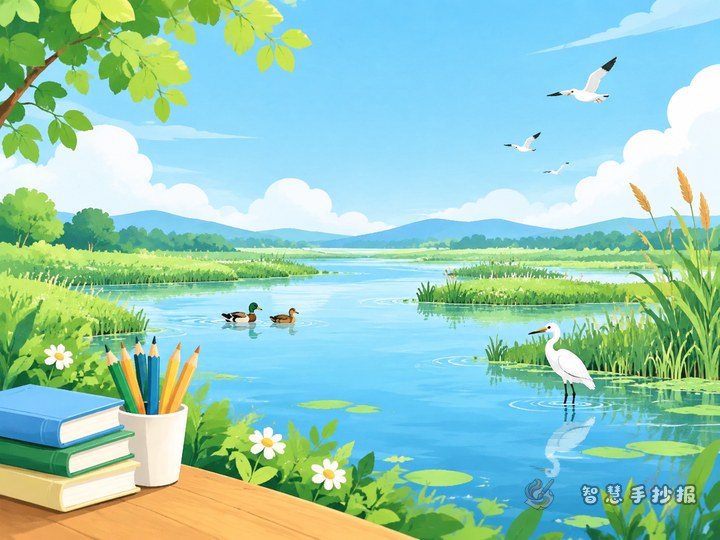
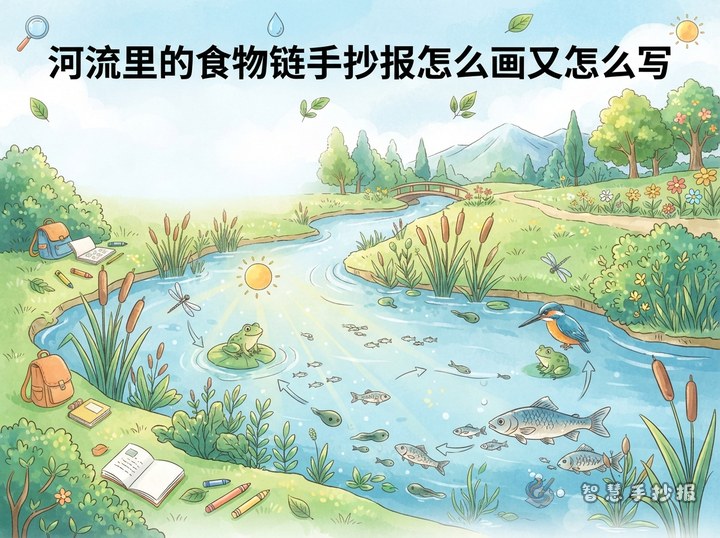
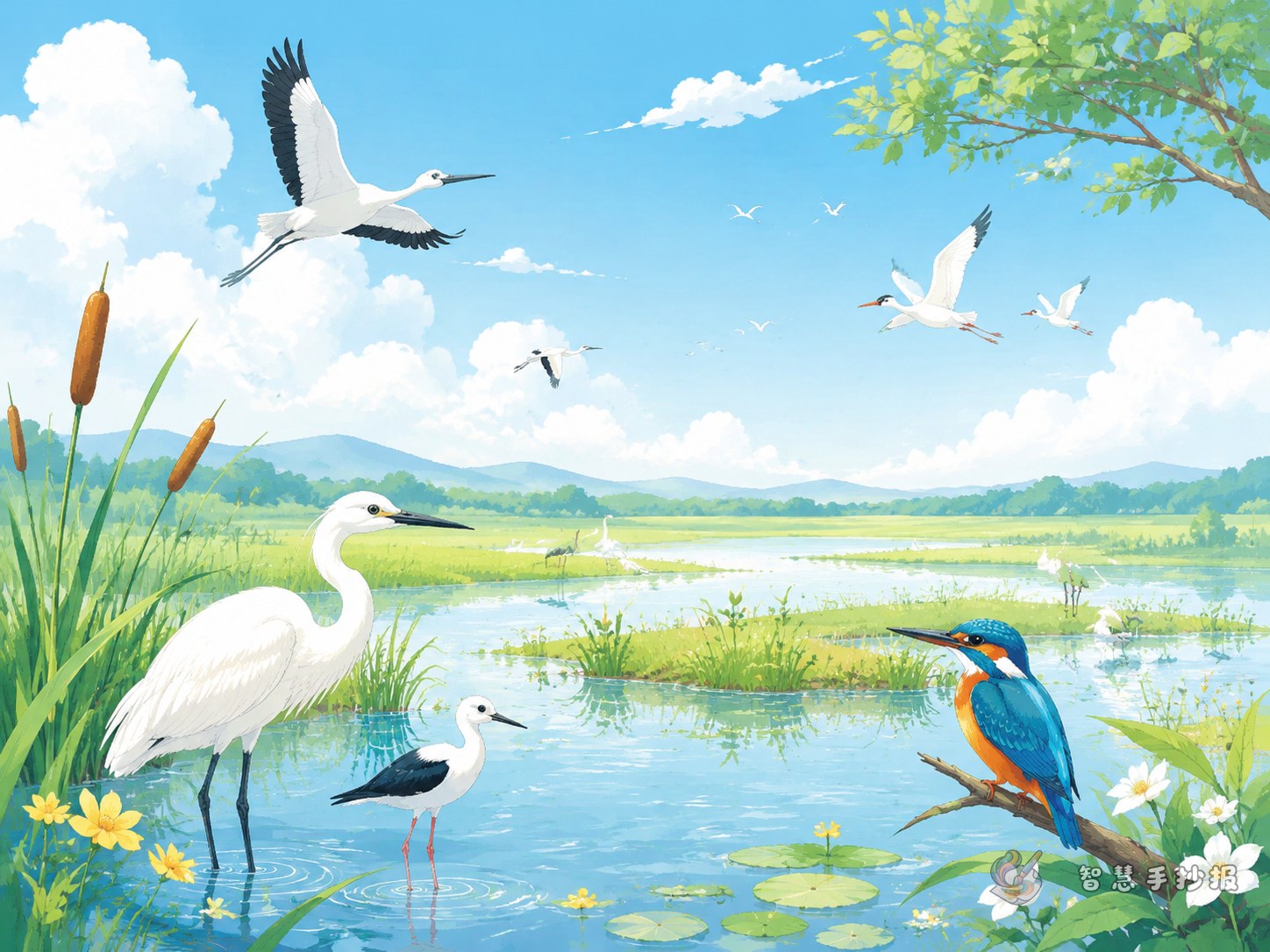
This poster can focus on more than a beautiful wetland view. A stronger idea is to show how migratory birds, reeds, aquatic plants, fish, shrimp, microorganisms, and clean water are connected. Children can draw birds in the sky, reeds along the bank, fish and plants under the water, and a student observing quietly nearby.
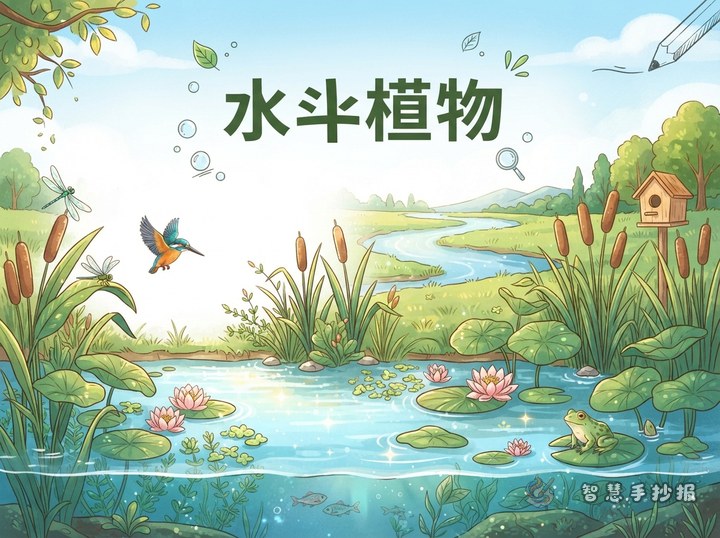
Good title ideas include “A Rest Stop for Migratory Birds,” “The Wetland Life Web,” and “Protect the Water Home of Birds.” These titles are simple, vivid, and closely related to river and wetland ecology.
What to Write on the Poster
Why Migratory Birds Need Wetlands
Wetlands provide shallow water, mudflats, aquatic plants, fish, and small animals. During long journeys, migratory birds need safe places to rest and find food. A healthy wetland is like an important service station on their migration route.
How Water Ecology Stays Balanced
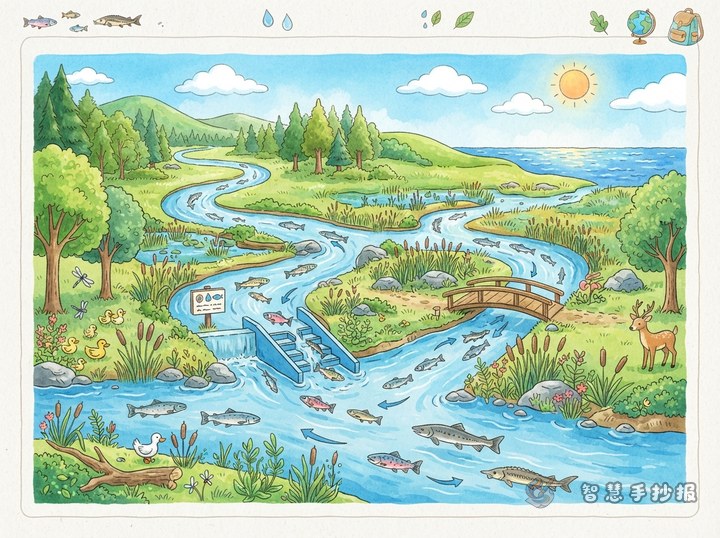
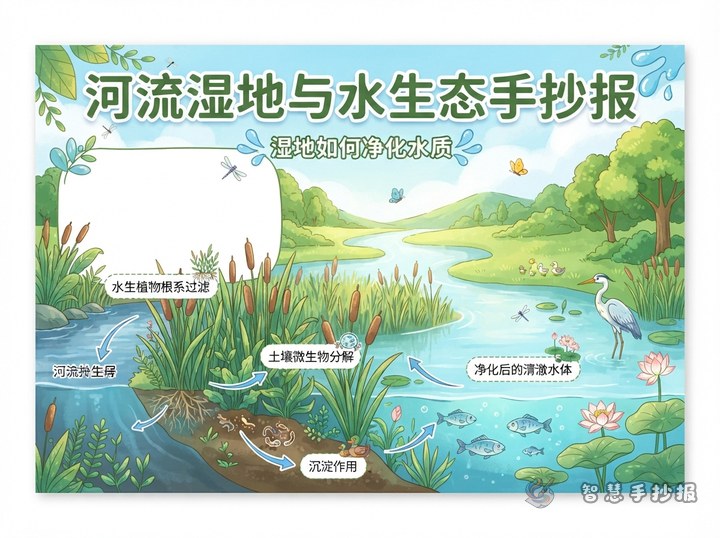
Aquatic plants offer shelter for small animals, fish and shrimp are part of the food chain, and reeds can slow water flow and hold soil. If the water becomes polluted or the wetland is damaged, aquatic life may decrease, and birds may lose their habitat.
Small Actions We Can Take
- Do not throw rubbish into rivers, ponds, or wetlands.
- Watch birds quietly without chasing or feeding them.
- Save water and reduce pressure on the water environment.
- Join school activities about river, lake, and wetland protection.
Short Sentences for Copying
- A wetland is like nature’s sponge, holding rainwater and supporting life.
- The arrival of a bird shows that clean water and safe habitats still exist here.
- Protecting wetlands means protecting fish, plants, birds, and our shared future.
- Let the river stay clear, the reeds stay green, and the birds return safely every year.
Layout Idea: From Sky to Underwater
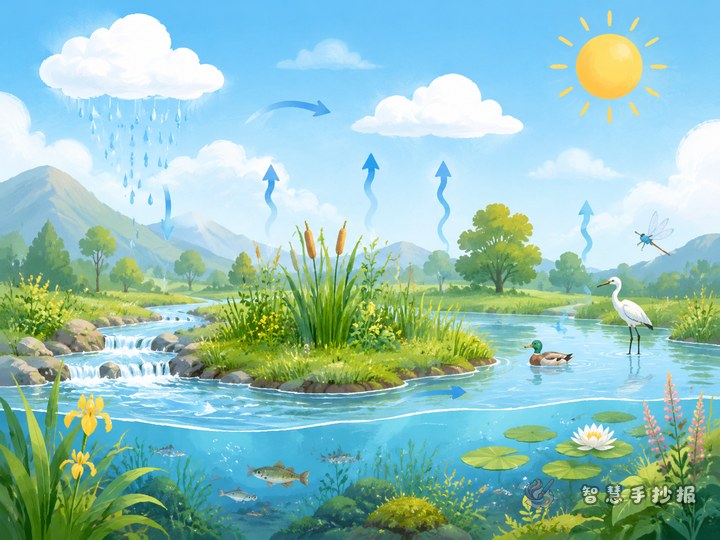
Divide the page into three visual layers. The top part can show blue sky, flying birds, and a migration route. The middle part can show reeds, lotus leaves, mudflats, and a small observation sign. The lower part can show the underwater world with aquatic plants, fish, shells, and tiny organism icons.
Suggested sections include “Why Birds Come,” “Small Lives Underwater,” “Wetland Protection Checklist,” and “My Observation Notes.” Use water-drop, feather, or lotus-leaf frames to make the page lively and easy to read.
Useful Making Tips
Use blue, green, and light yellow to show clean water, plants, and sunshine. Keep the title large and clear, and do not crowd the page with too much text. If you want to organize sections, titles, and writing materials faster, you can continue making your poster in the 智慧手抄报 WeChat mini program and then add your own drawings and observations.