Begin with a Milk Mystery
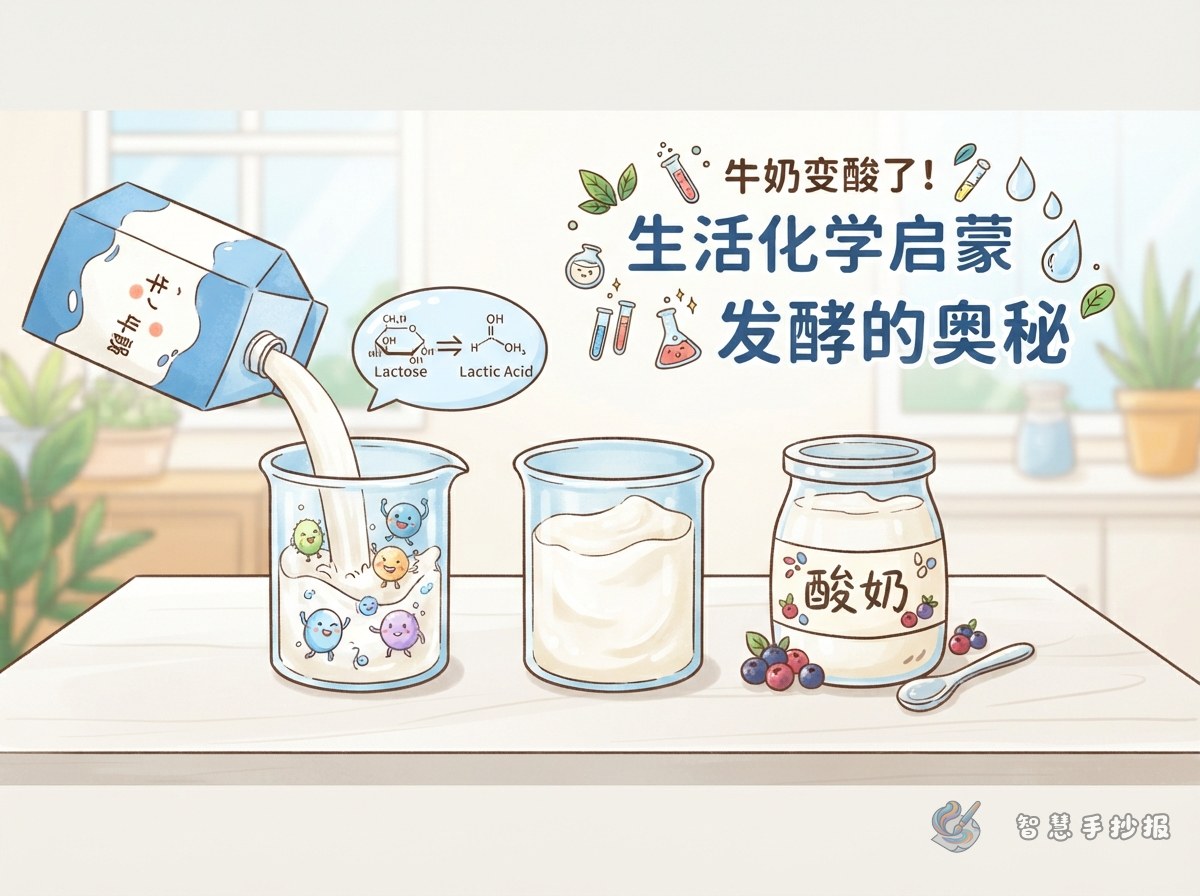
A handwritten newspaper does not need to begin with a difficult definition. Draw a glass of fresh milk first, then ask a question: why can milk develop a sour taste and lose its smooth texture after some time? This familiar scene gives the page a clear story and introduces the idea of chemical change.
Opening line: What happens inside a glass of milk as it changes from fresh to sour?
A suitable title is “The Secret of Sour Milk,” with the subtitle “Everyday Chemical Changes Seen Through Lactic Fermentation.” This makes the page feel interesting while keeping the science focus clear.
Show the Cause with a Change Trail
- Microorganisms take part: Under suitable conditions, lactic acid bacteria and other microorganisms use the lactose in milk.
- Lactic acid is formed: The process produces lactic acid, so the sour taste gradually becomes stronger.
- Proteins may clot: As acidity increases, milk proteins can gather together and create small curds.
- Identify the type of change: Since new substances are formed, souring is a chemical change rather than a simple change in shape.
A Short Science Note to Copy
Lactic fermentation changes both the taste and condition of milk. Observing its sour taste and curdling can help us notice chemical changes in everyday life.
Turn the Main Ideas into Four Mystery Cards
Instead of filling the page with one long paragraph, divide the information into four small cards:
- Fresh Milk Card: Describe the usual color, smell, and flowing state of fresh milk.
- Clue Card: Show the sequence: microorganisms take part, lactose changes, and lactic acid is produced.
- Discovery Card: Explain the stronger sour taste, possible curds, and change in texture.
- Safety Card: Remind readers never to taste sour or spoiled milk. Any observation should be guided by an adult or teacher.
Add simple icons beside the cards, such as a milk carton, magnifying glass, curved arrows, and question marks. These drawings provide decoration while making the reading order easy to follow.
Design the Page Like a Milk Adventure Route
- Draw a curved title banner at the top and write “The Secret of Sour Milk.” Use soft white, light blue, and pale yellow for a fresh feeling.
- Place a glass of fresh milk on the left and a cup marked with sourness clues on the right. Connect them with four arrows showing the change.
- Put “Why is this a chemical change?” in the center. A magnifying-glass or gear-shaped border can highlight the phrase “a new substance is formed.”
- Reserve the bottom for “What I Notice in Daily Life,” including reminders about proper refrigeration and checking food condition.
If space is limited, use a flowchart instead of long paragraphs. If there is more room, add a “How Would I Observe It?” section with three circles for looking, noting smell, and recording changes. Do not include tasting spoiled food as an observation step.
End with a Simple Safety Reminder
Sour milk should not be treated as safe to drink. The observation section should support scientific understanding, not encourage children to store or taste spoiled food. After finishing the text and rough sketch, continue in the WeChat mini program “智慧手抄报” to arrange the title, cards, and page layout into a clear and attractive handwritten newspaper.