Follow a Drop of Water
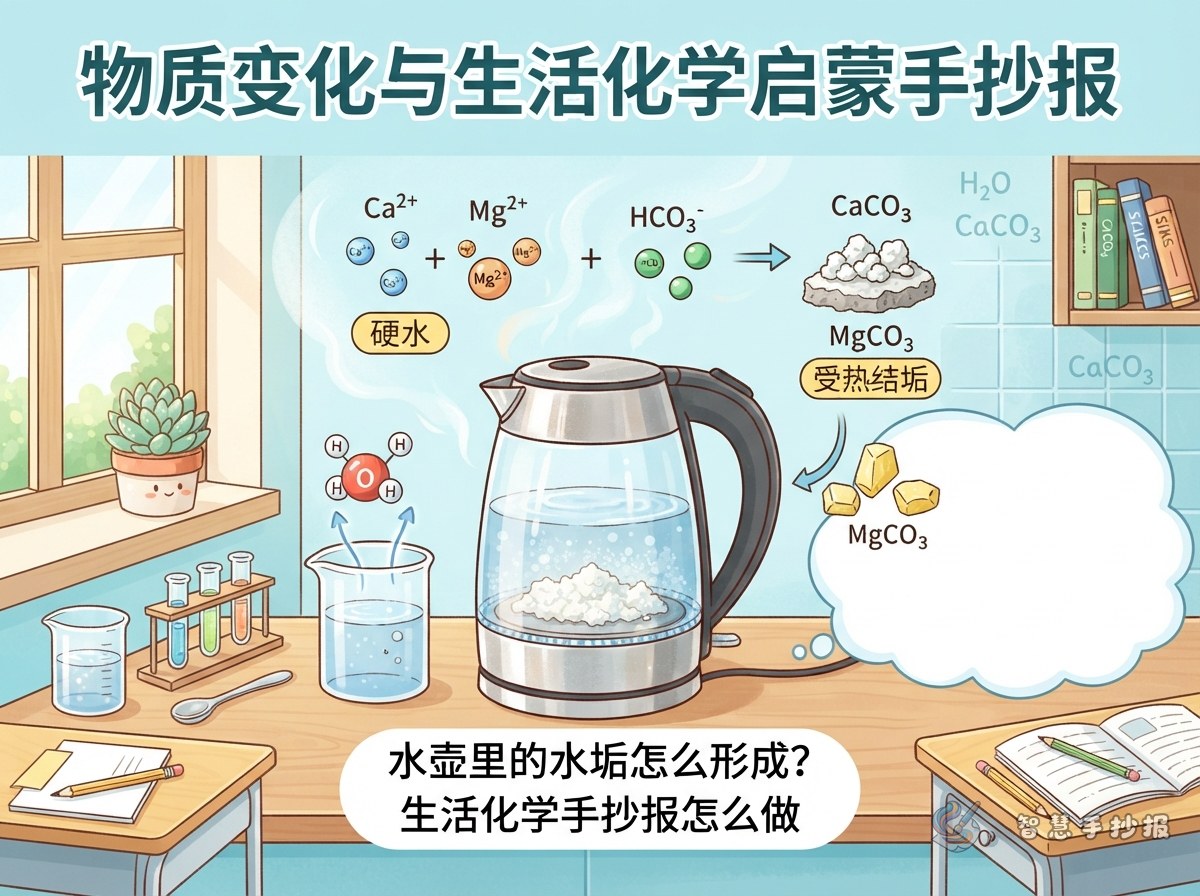
After a kettle has been used for some time, pale gray or white marks may appear on its inner wall. These marks are commonly called limescale. For a school poster, make the main idea a journey from clear water to a visible deposit. Water drops, a kettle, and a magnified patch of limescale can connect the whole design.
Water contains tiny amounts of minerals such as calcium and magnesium. When water is heated and some of it evaporates, certain minerals become more likely to come out of the water and stick to the kettle. Limescale is not dirt created by the kettle. It is a deposit left behind by substances that were already dissolved in the water.
Key Facts to Put on the Poster
- Where it comes from: Tap water may contain minerals that cannot be seen with the naked eye. Heating and evaporation can make them easier to deposit.
- What kind of change it shows: Water turning into vapor is a change of state. Minerals coming out of the water and forming a deposit show a visible material-change process in daily life.
- Why the bottom is often affected: The bottom of a kettle is close to the heating area. As water is heated and reduced, minerals can become more concentrated there.
- Why it matters: Limescale can make the inside of a kettle look rough and may reduce heating efficiency, so regular cleaning is useful.
A Short Paragraph to Copy
“Minerals that cannot be seen are dissolved in water. Heating and evaporation allow them to gather and leave a pale deposit on the kettle. Looking at limescale is one way to notice material changes in everyday life.”
Design the Poster as a Water-Drop Journey
- Draw a winding path of water drops across the top and label it “minerals in water, heating, less water, limescale appears.”
- Create a small “Limescale Profile” section on the left with its color, location, texture, and common places where it may be seen.
- Draw a transparent kettle in the center, with a magnified circle showing minerals gathering on the bottom or wall.
- Place a “Daily Reminder” box on the right with notes about keeping the kettle clean and following an adult’s instructions.
- At the bottom, add an “I Observe” section where students can record whether they notice similar pale marks on a kettle, showerhead, or glass.
Color Choices and Safe Making
Use light blue, white, and warm yellow-orange for water, deposits, and heat. Dark gray outlines can make the text boxes clear without making the page too heavy. A title such as “How Does Limescale Form?” works well with simple drawings of water drops, a thermometer, and a kettle.
For an observation section, students can record changes they see on a household kettle. They should not take apart appliances or use strong acids or bases on their own. Any cleaning should be done with an adult and a suitable method. After planning the draft, open the WeChat mini program Wisdom Handwritten Posters to continue arranging the sections, colors, and layout.