Begin with the mystery of oil and water
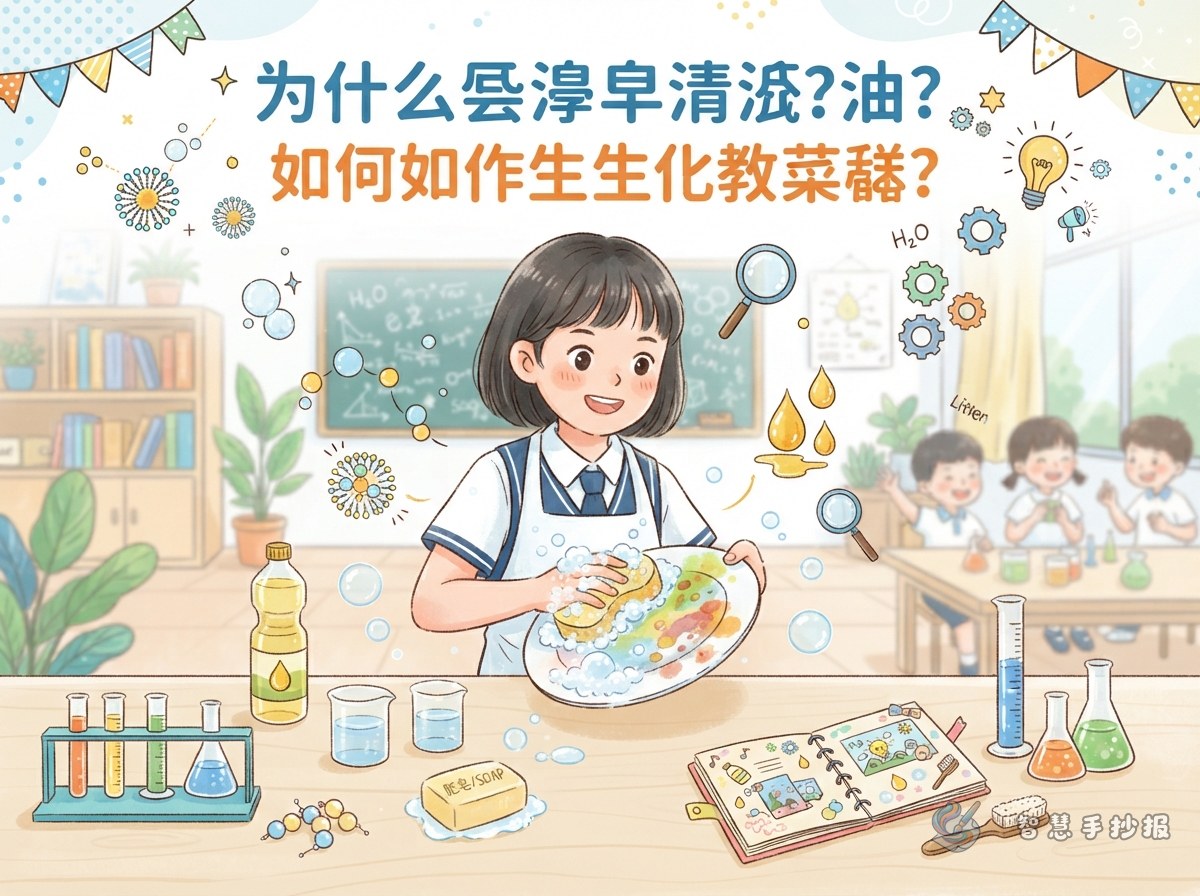
This science poster can start with a familiar kitchen scene: a greasy bowl is difficult to clean with water alone, but a little soap or dishwashing liquid helps the grease wash away. Draw a yellow drop of oil, a bar of soap, and a group of bubbles near the center. Then ask the key question: What does soap actually do?
A suitable theme is “Visible cleaning, hidden chemistry.” It helps readers move from an everyday observation to a simple introduction to chemistry.
Explain soap in three simple steps
Why oil and water do not mix easily
Oil tends to stay with oil, while water tends to stay with water. When oil enters water, the drops usually gather together again. That is why rinsing a greasy dish with water alone is not very effective.
Soap acts like a tiny bridge
One end of a soap molecule interacts easily with water, while the other end interacts easily with grease. Soap helps break grease into smaller droplets and surrounds them with parts that can be carried away by water. The grease can then leave the surface during rinsing.
More bubbles do not always mean more cleaning
Bubbles make the cleaning process visible, but effective cleaning also requires rubbing and thorough rinsing. Add this sentence to the poster: Cleaning depends on contact, separating the grease, and rinsing—not simply on making more bubbles.
Turn an everyday observation into a feature
Create a “Kitchen Observation” section near the bottom of the poster. With an adult’s help, place a small amount of water and cooking oil in a clear cup and observe the oil drops. Then add a small amount of dishwashing liquid and stir gently to compare the changes. The materials must not be tasted, hands should be washed afterward, and younger children should do the activity with adult supervision.
- Observation 1: Do water and oil mix immediately?
- Observation 2: What happens to the oil drops after stirring?
- Observation 3: How do the surface and oil drops change after dishwashing liquid is added?
- Everyday connection: Washing dishes, cleaning hands, and wiping a kitchen counter all require water and a cleaning product to work together.
Ready-to-copy text cards
Main sentence: Soap makes grease easier for water to carry away, so it is a familiar cleaning helper in everyday life.
Science note: Oil and water do not mix easily. One end of soap interacts with oil and the other with water, helping separate the grease so it can be removed by rinsing.
Safety reminder: Cleaning products are not food and should not be mixed carelessly. Use only a small amount during an observation activity and work with an adult.
Closing slogan: Notice small changes in the kitchen and discover big ideas in chemistry!
Build the layout around shrinking oil drops
- Write “Why Does Soap Remove Grease?” at the top or in the center, beside a bar of soap and several oil drops.
- Use the left side for an “Everyday Observation” section showing oil drops in water and explaining why they stay apart.
- Place a three-step diagram in the middle: soap touches the grease, separates the oil drops, and helps water carry them away.
- Use the right side for an “In Daily Life” section with small drawings of dishwashing, handwashing, and wiping a counter.
- Add observation notes and a safety reminder at the bottom to connect knowledge, practice, and daily life.
Try light blue, yellow, and white: blue for water, yellow for grease, and white bubbles as decorative dividers. Water-wave lines, bubbles, and droplets make useful borders. Leave enough space between sections and use larger colored lettering for key words. After sketching the content, you can continue arranging the page in the 智慧手抄报 WeChat mini program and make the everyday chemistry poster easier to complete.