Make the theme clear: not just leaves, but leaves with classification
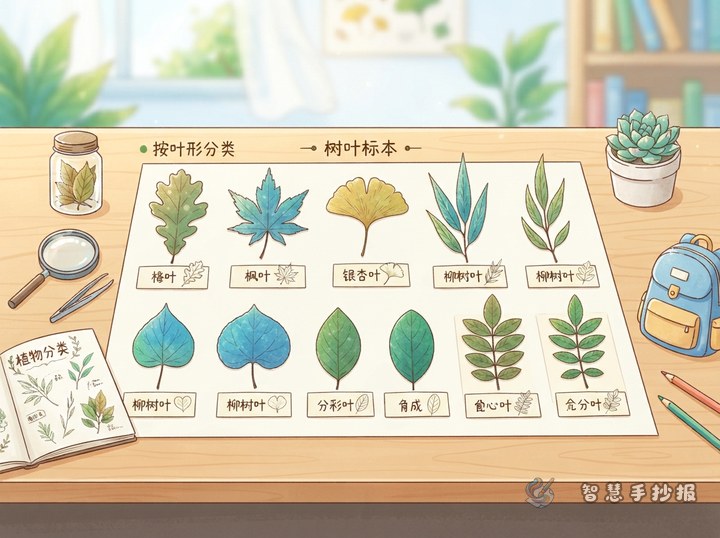
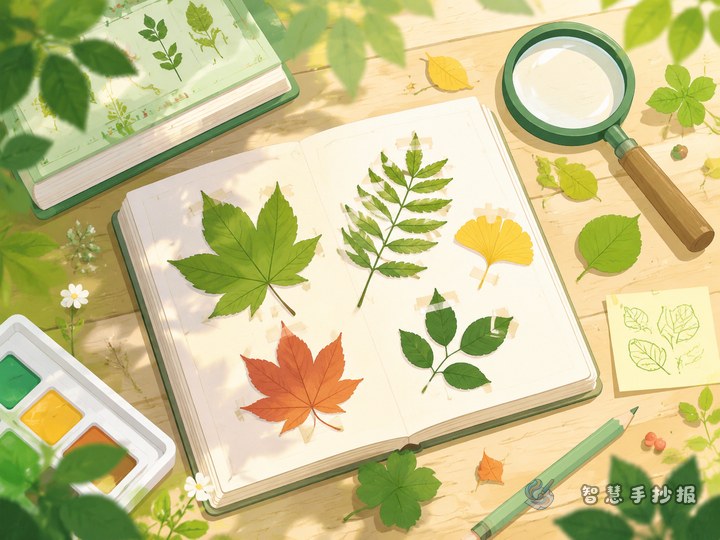
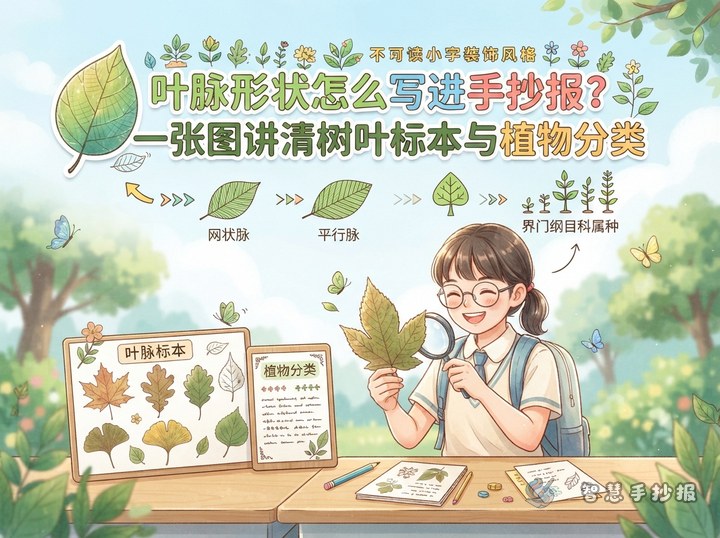
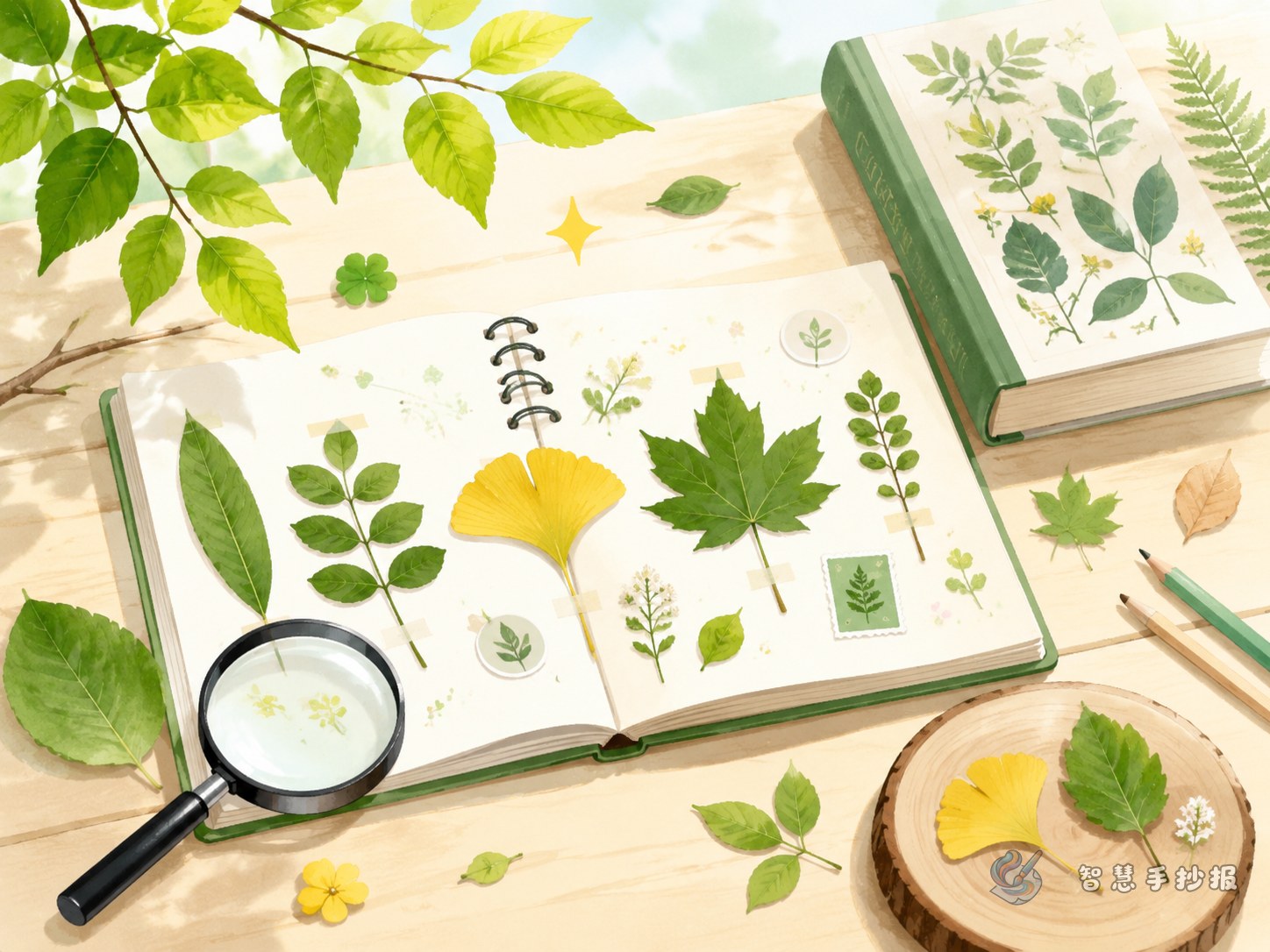
Many students make a leaf poster that looks pretty but does not clearly show the topic. To match a plant classification theme, each leaf should be treated like a small study sample. Add notes about the plant name, leaf shape, veins, margins, and color changes. This makes the poster look more scientific and complete.
You can use a title such as “Learning Plant Classification Through Leaves” or “Leaf Specimens and Plant Groups Around Us” so the topic is easy to understand at first glance.
Try a central layout with feature leaves and small study boxes
This topic works well with a center-focused design. Put the main title and one or two large representative leaves in the middle, then arrange small information boxes around them. This feels lively and less stiff than equal square sections.
- Center: title and main leaf specimen or large leaf drawing
- Top left: what a leaf specimen is
- Top right: basic leaf features
- Bottom left: simple plant classification ideas
- Bottom right: my observation notes
For decoration, use vine lines, small leaves, buds, and soft natural colors like green, light yellow, and brown.
Simple classification content you can write directly
1. Ways to describe leaves
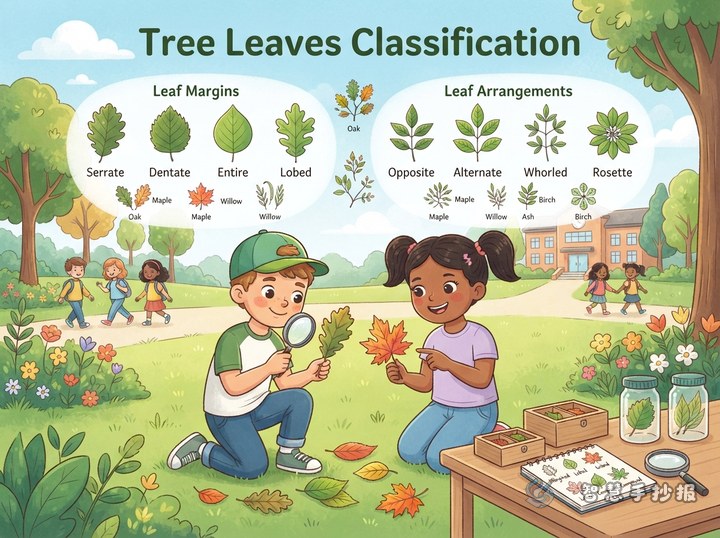
Start by looking at the leaf itself. Common leaf shapes include oval, heart-shaped, lance-shaped, and fan-shaped. Leaf margins may be smooth, toothed, or wavy. Veins are often parallel or net-like. These terms help your poster show real classification thinking.
2. Easy ways to group plants
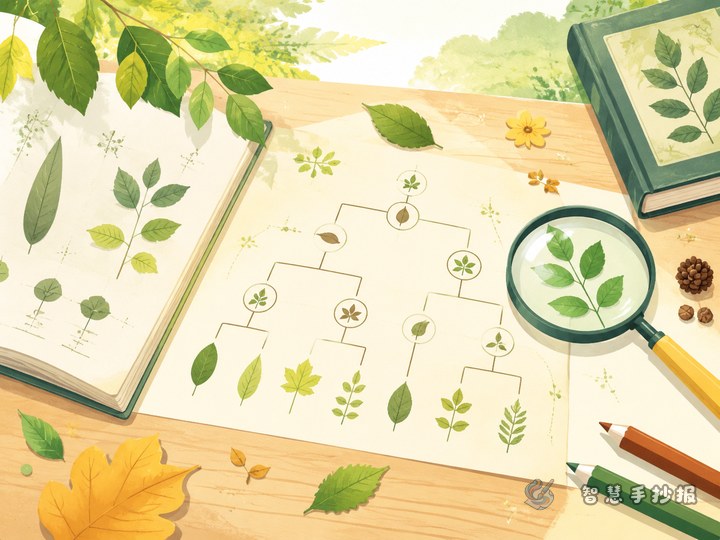
For an elementary school poster, keep the classification simple and clear:
- By habitat: land plants and water plants
- By stem type: trees, shrubs, and herbs
- By vein pattern: parallel-veined plants and net-veined plants
- By seasonal change: evergreen plants and deciduous plants
Add familiar examples such as willow, maple, ginkgo, bamboo, or lotus to make the content easier to understand.
3. Short ready-to-use writing material
Leaves are important parts of plants. Different plants have leaves with different shapes, sizes, colors, and vein patterns. By collecting and observing leaf specimens, we can learn to compare plants and understand simple classification methods.
Plant classification helps us organize what we see in nature. When we compare similarities and differences among leaves, we learn more about the rich variety of plants around us.
Turn specimen making into a step-by-step section
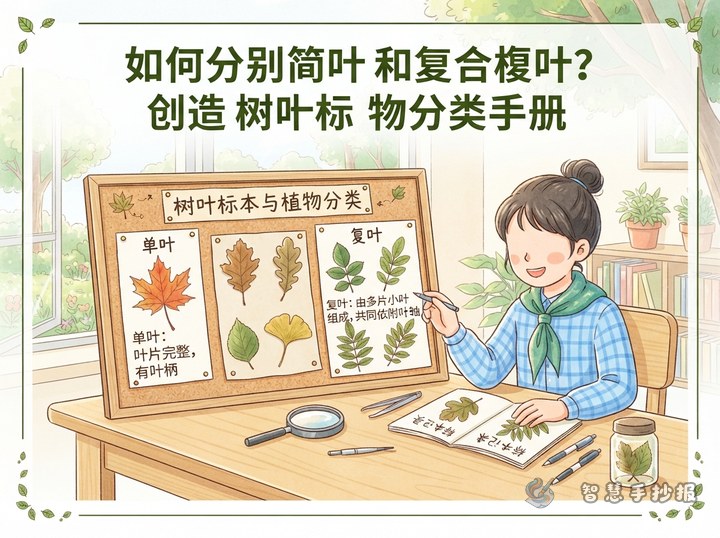
- Choose complete, clean leaves that are not damaged.
- Place the leaves between sheets of paper and press them inside a heavy book.
- Wait several days until the leaves become dry and flat.
- Attach the leaves carefully to the poster.
- Label each one with the plant name, where it was found, and key features.
If real leaves are limited, students can observe actual leaves first and then draw them neatly on the poster with classification notes beside them.
Add personality with observation cards
To make the poster feel more original, create a small “My Leaf Observation Card” for one or two leaves. Keep each one short and easy to read.
- Plant name: Ginkgo
- Leaf feature: fan-shaped leaf with spreading veins
- Color change: turns golden yellow in autumn
- My discovery: leaves from the same tree can still look slightly different
This kind of writing makes the poster feel more like a real science project while staying simple enough for children.
Finish with an eco-friendly message
A good ending can include a short reminder such as: do not damage trees, do not pick too many leaves, and try to collect naturally fallen leaves first. This gives the poster a thoughtful and responsible conclusion.
Before finishing, check whether the title stands out, the writing is arranged clearly, and each leaf matches the correct description. If you want to improve the layout or add more neat sections, you can continue your work in the Zhihui Shouchaobao WeChat mini program.