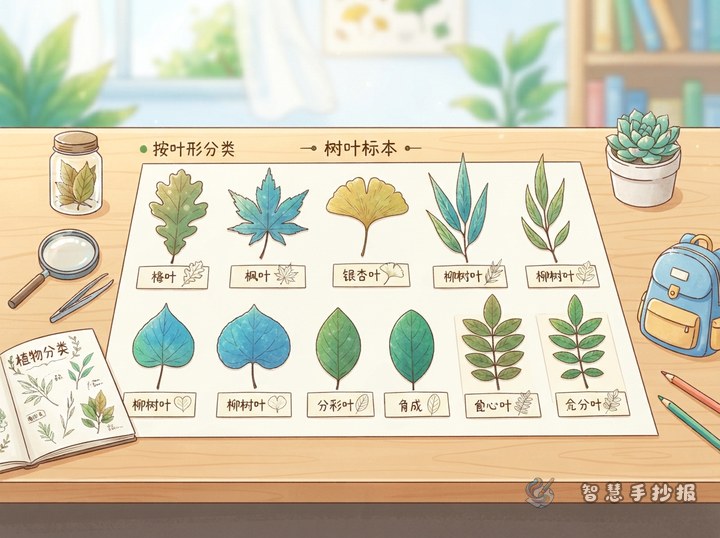
Start with a clear theme: a classification chart of common school leaves
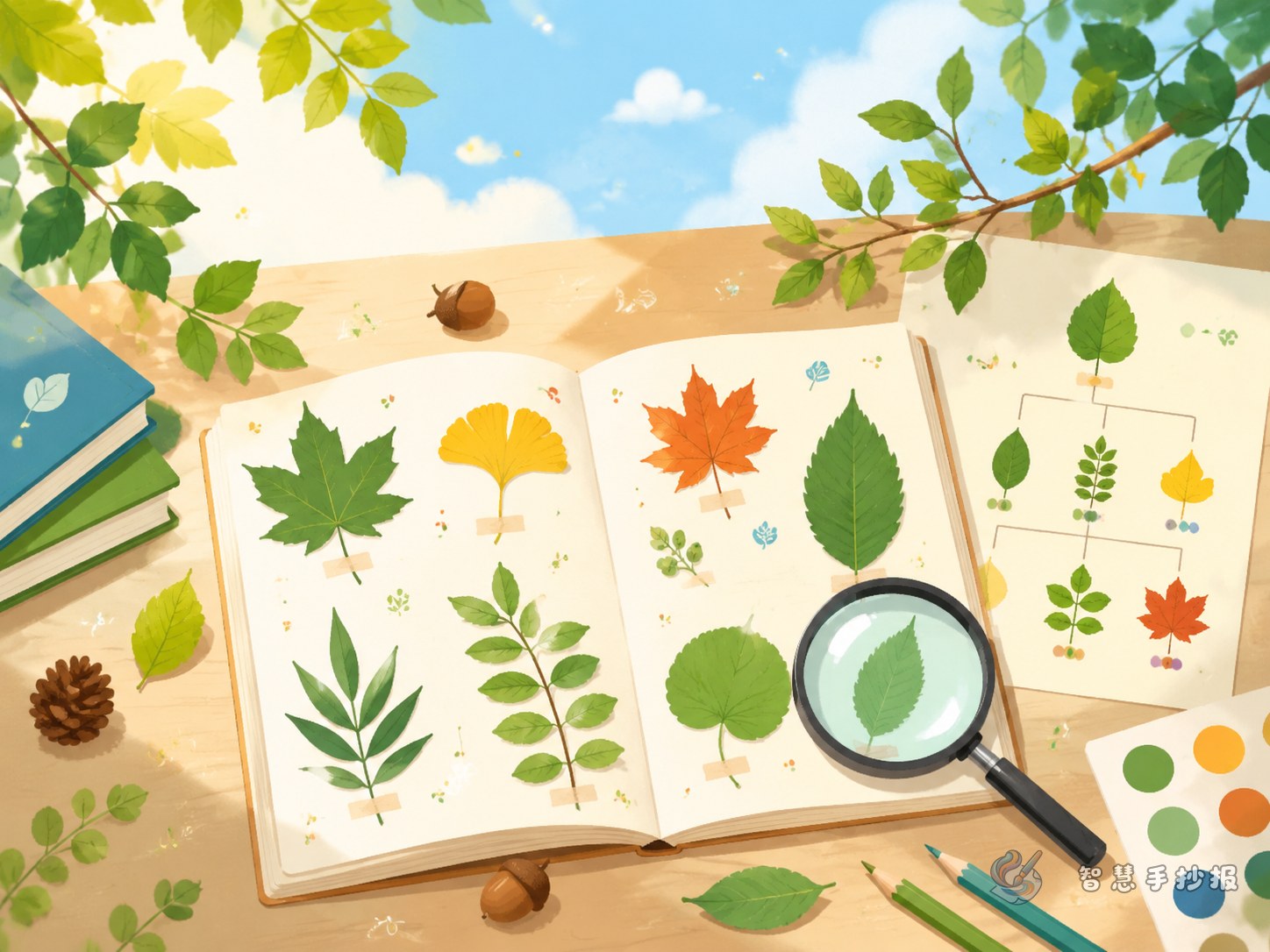
This kind of handwritten newspaper works best when it combines leaf specimens with simple plant classification. Instead of only pasting leaves, help readers understand why each leaf belongs to a group. A practical idea is to focus on leaves found around school, parks, or neighborhoods, such as ginkgo, camphor, maple, osmanthus, or plane tree leaves.
If space is limited, turn each sample into a small “leaf card” with the plant name, leaf shape, leaf edge, vein pattern, and color. This makes the page look organized and science-themed.
Four sections that fit this topic well
1. Leaf observation notes
Write short records about where and when the leaf was found. For example: “I found a fan-shaped yellow leaf beside the playground. Its veins spread like a small fan.” This style is simple and vivid for young students.
2. Easy plant classification facts
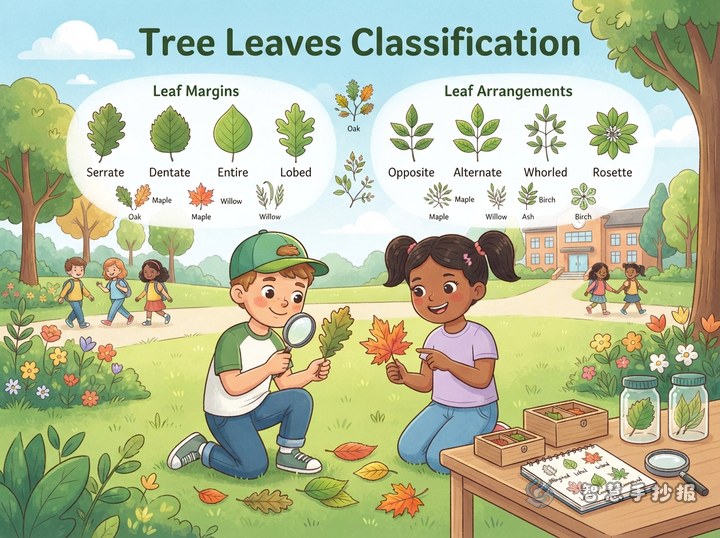
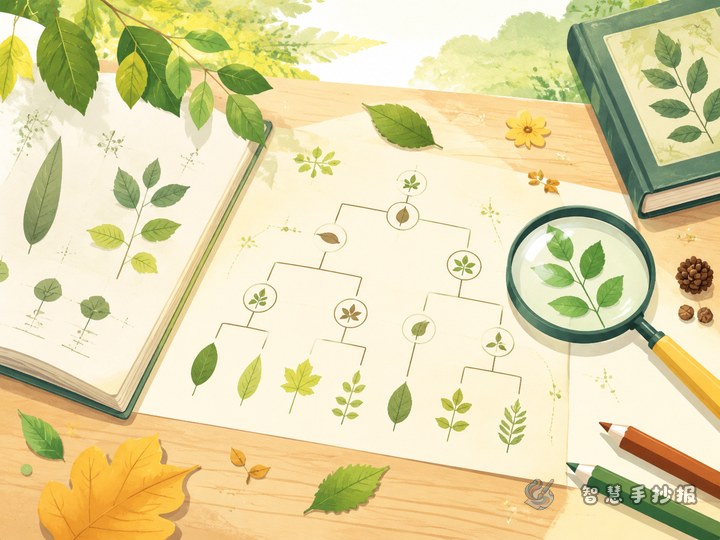
There is no need to make the science too difficult. Students can classify leaves by visible features such as shape, edge, and veins.
- Leaf shape: needle-shaped, fan-shaped, heart-shaped, palmate, oval
- Leaf edge: smooth, serrated, wavy
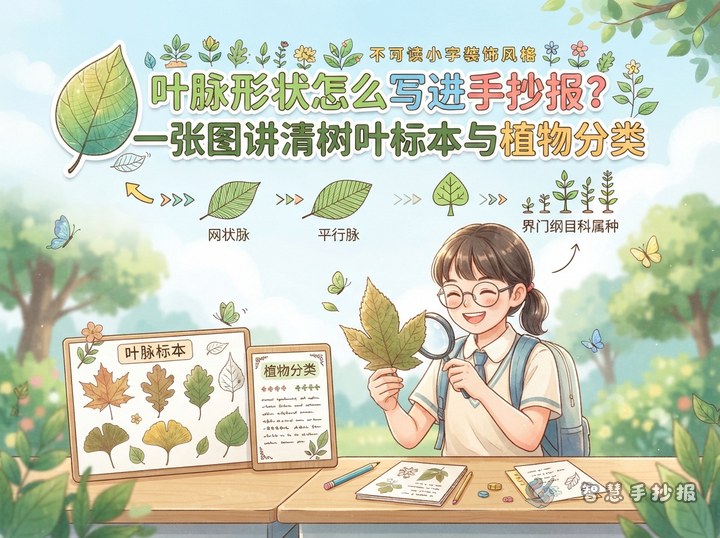
- Leaf veins: parallel veins, netted veins
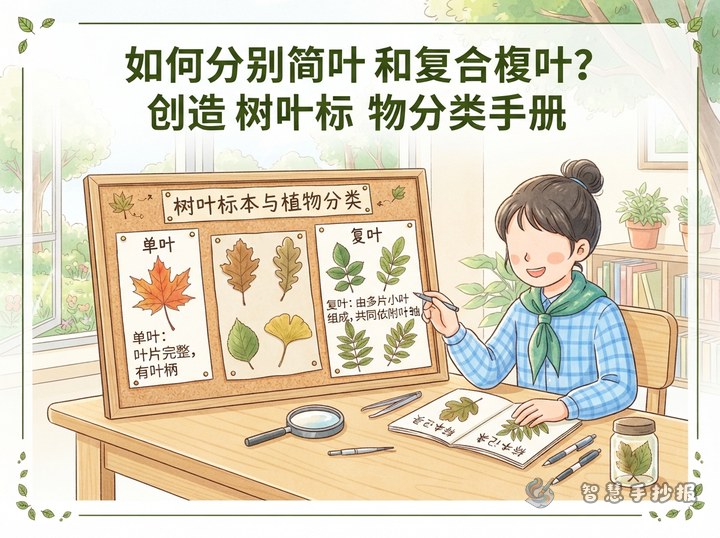
3. My leaf specimen display
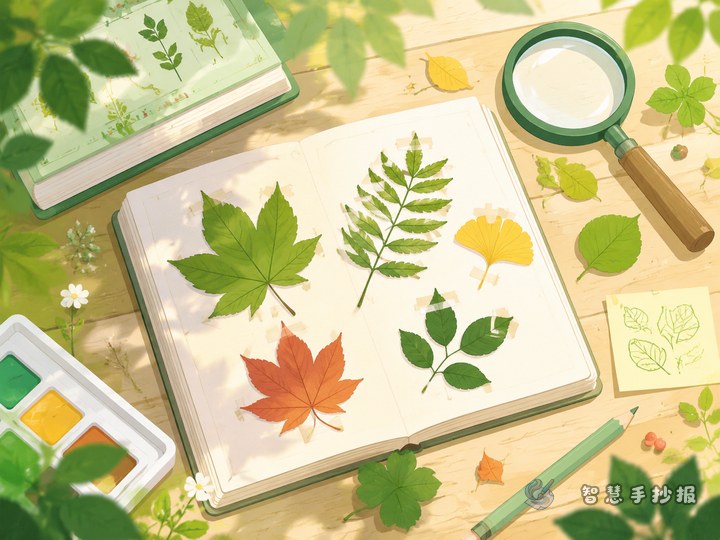
If real pressed leaves cannot be used, draw the outline of each leaf and label its features. If real specimens are included, make sure they are flat, dry, and neatly attached.
4. Protect plants reminder
Add a short message at the end, such as “Collect fallen leaves when possible” or “Do not break branches just for a project.” This makes the work more complete and meaningful.
Ready-to-use writing lines
These short sentences are useful for captions, bubbles, or small text boxes:
- Leaves are like tiny food factories for plants.
- Different leaf shapes help us identify different plants.
- Looking at the leaf edge and veins is a simple way to classify plants.
- Leaf specimens can also show changes in the seasons.
- A small leaf can reveal many secrets of nature.
You can also add a closing sentence such as: I learned to understand plants by carefully observing one leaf at a time.
A layout that looks neat and easy to read
A strong choice is a center title with sections around it. Put the main title at the top or center, classification facts on one side, observation notes on the other, and a specimen display area at the bottom. This structure feels both educational and attractive.
- Top: large title with leaf-shaped decoration
- Left side: simple classification facts
- Right side: observation notes
- Bottom: specimen display or leaf profile wall
For colors, use green, light yellow, and brown to match the natural theme. You can decorate with vines, grass, magnifying glasses, and leaf vein lines.
Small details that make the page better
To make the project stand out, keep each leaf label short, use different color boxes for different plants, and make the title artistic while keeping the body text clear. A clean and balanced page often looks better than one filled with too much text.
If you already know which leaves and sections to include, you can continue organizing the page in the Zhihui Shouchaobao WeChat mini program to refine the layout, add more text material, and finish your handwritten newspaper more efficiently.