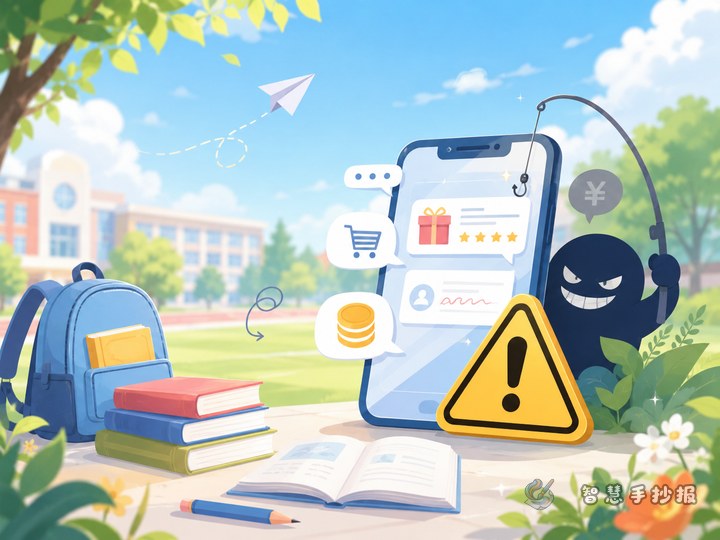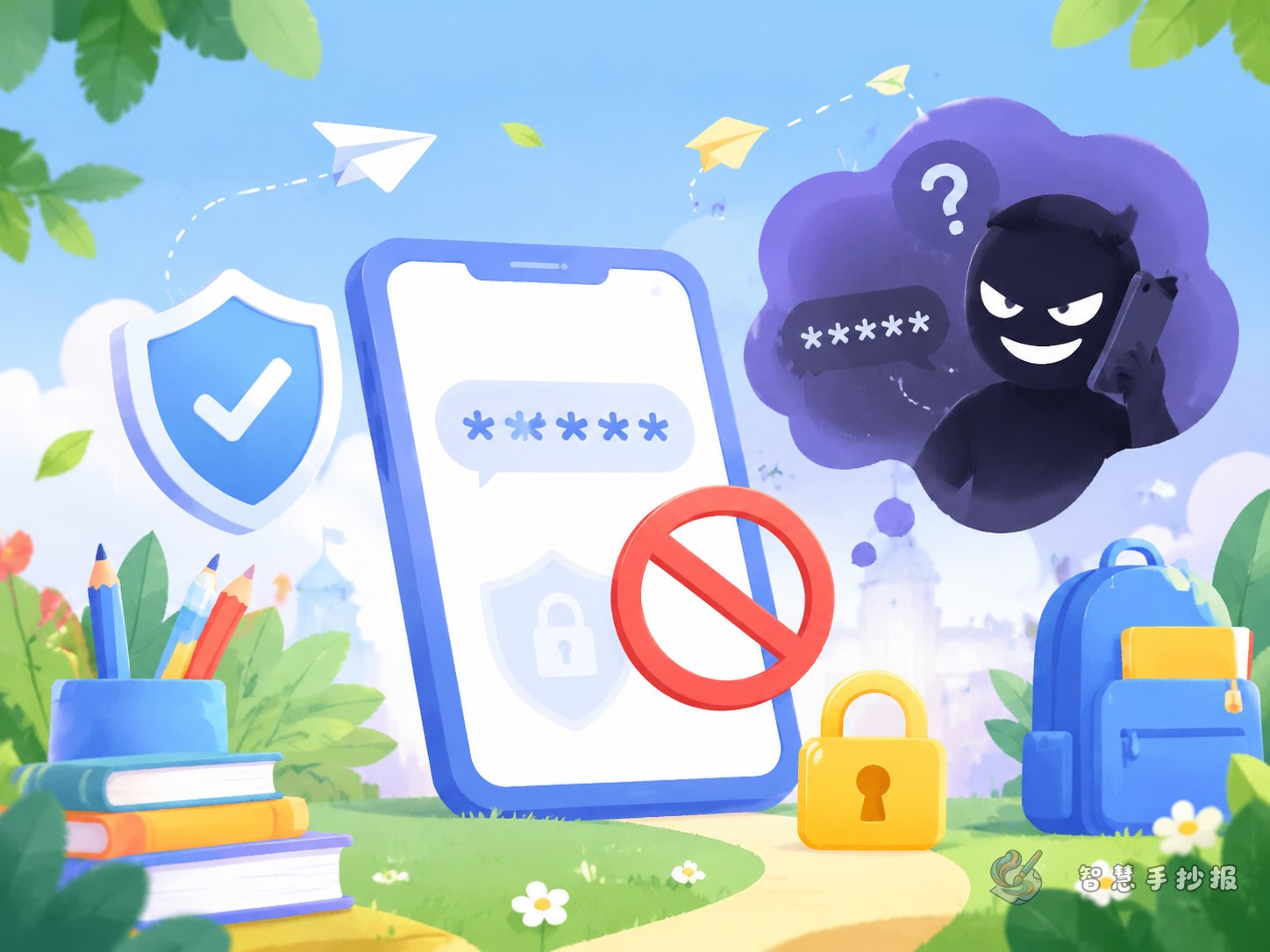
Start with the main message: a verification code is a temporary password
For this kind of handwritten newspaper, it helps to use a direct title such as “Never Share Your Verification Code” or “Protect Your Code, Protect Your Account”. At the beginning, explain in one simple sentence that a verification code is not just a random number. It is a temporary password used for login, payment, or password recovery.
When students understand this first, the warning becomes much clearer and easier to remember.
Four sections students can copy into the poster
1. What is a verification code?
- It is a temporary password sent by a system.
- It may appear in a text message, phone call, or app notice.
- It should only be seen and used by the account owner.
2. Who should never receive it?
- Strangers on the phone pretending to be customer service.
- People in private chats asking for the number.
- Anyone saying they need it to “check your identity.”
- Anyone urging you to read it out immediately.
3. Common scam lines
- “You won a prize. Tell me the code now.”
- “Your account has a problem. Verify it right away.”
- “I’m from the service team. Your account will be frozen if you don’t cooperate.”
4. The correct response
- Do not say the numbers aloud.
- Do not send screenshots or forward the message.
- Tell a parent or teacher first.
- Check through an official channel before doing anything.
Use school-life situations to make the poster stronger
A good anti-fraud poster becomes more vivid when it includes short situations instead of only rules.
- Situation 1: After school, a caller says there is a problem with a family registration form and asks for a code. The correct action is to refuse and contact a parent first.
- Situation 2: Someone online says they can help you receive study materials but asks for a code. The correct action is to stop, ignore the request, and ask an adult.
- Situation 3: The person keeps rushing you and says, “Just one more step.” The correct action is to stay calm, hang up, and verify the situation later.
These examples help students connect the message with real life and make the handwritten newspaper more practical.
Simple layout ideas that look clear and eye-catching
You do not need a complicated design. A center title with side sections works well. Put the main title in the middle, place scam tricks on one side, correct actions on the other, and add warning slogans at the bottom.
- Use blue, orange, and red to create a clear warning style.
- Add small drawings like a phone, shield, lock, or exclamation mark.
- Highlight key lines in bold words, such as “Code = Temporary Password.”
- Keep each text block short so the page stays neat and readable.
If you want more text ideas or layout inspiration, you can continue organizing your poster in the WeChat mini program of Zhihui Shouchaobao.
Short slogans for the most visible spots
- A short code can protect big safety.
- If a stranger asks for a code, always refuse.
- The more urgent it sounds, the more careful you should be.
- Your verification code belongs to you alone.
- Learn anti-fraud habits and keep accounts safe.
These short lines are perfect for borders, title corners, or section endings and can make the whole anti-fraud handwritten newspaper more memorable.