Why a health checkup report suits an Earth Day poster
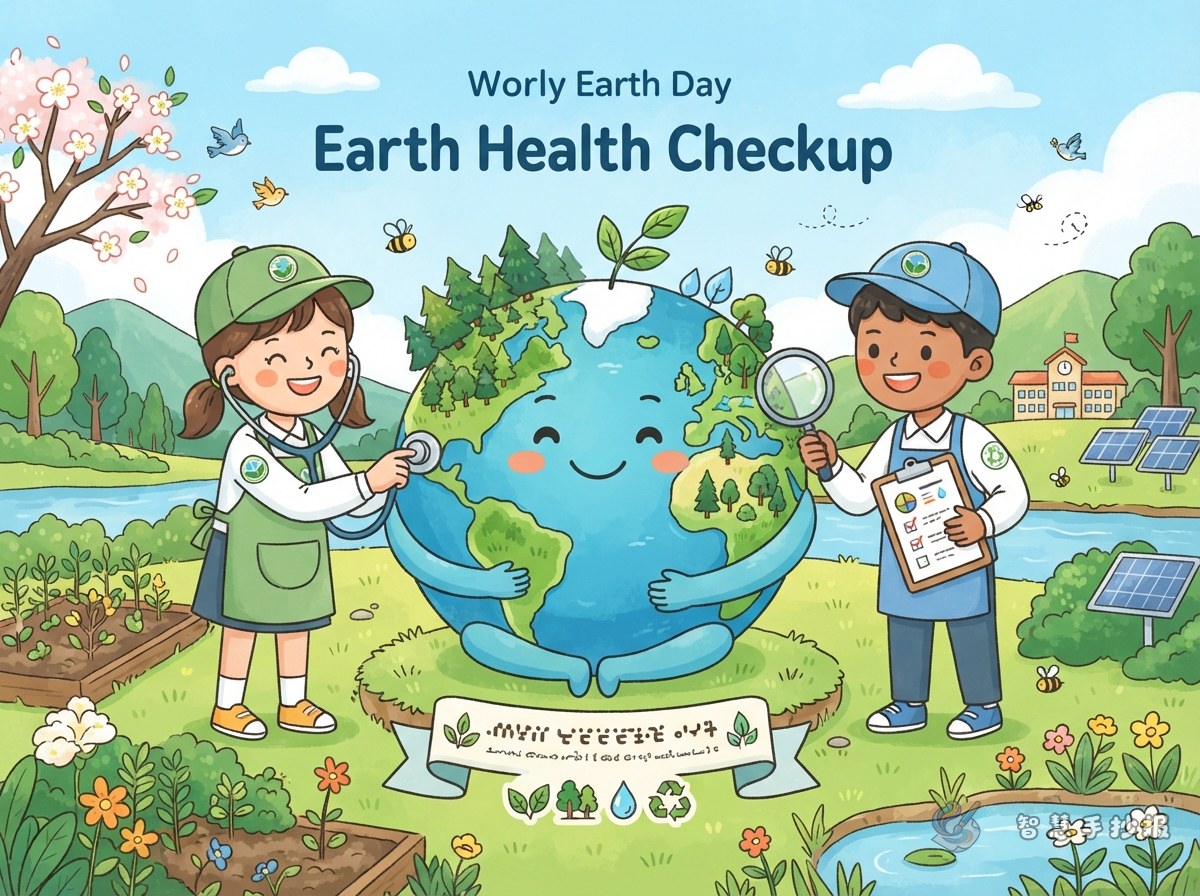
Many Earth Day posters tell a story or list eco-friendly tips. If you want the page to look organised at first glance, try treating the Earth as a patient visiting a clinic, so the whole poster becomes a checkup report. The layout then splits naturally into three parts: checkup items, findings and the doctor's advice.
This angle has two more advantages. A health checkup is familiar to children, so the drawings are easy to understand, and tables, slips and stamps are simple shapes to draw, which keeps the page from looking empty. Younger students can finish it with colouring, while older students can write more.
Choosing the checkup items for planet Earth
Pick three to five items. Each one only needs a small row or box.
Breathing: the air
Write about whether the sky often looks grey or how the air smells. Draw grey clouds, chimneys and a mask next to a clean blue sky for contrast.
Temperature: the climate
Describe how summer feels hotter and winter less cold, then draw a thermometer. You do not need exact numbers, just use deeper or lighter colours on the scale.
Blood: rivers and oceans
Ask whether the river water is clear and whether there is rubbish by the sea. A blue ribbon flowing from mountains to the sea, dotted with small fish and floating bottles, works well.
Skin: forests and soil
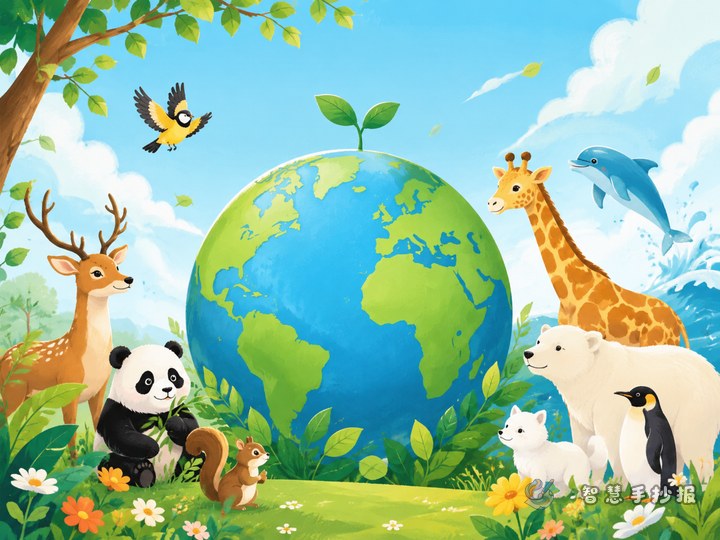
Write about how many trees there are and whether the soil has been dug away. Draw one tree with a full crown beside a bare stump so the contrast is obvious.
Daily condition: waste and plastic
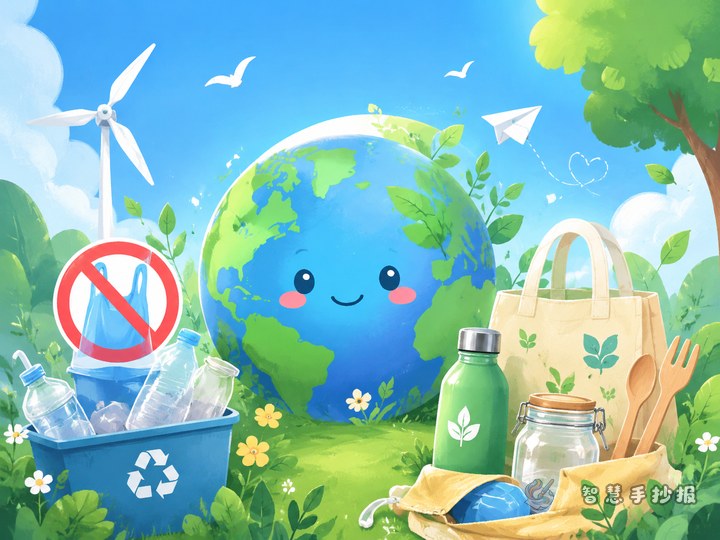
Ask how much rubbish is produced in a day and how many plastic bags are used while shopping. A row of small icons saves space and looks clear.
Write each item as something you have noticed, instead of quoting statistics you cannot check.
Writing the diagnosis and the prescription
The table is only a set of boxes. The most interesting part of the poster is the findings and the advice.
Keep the diagnosis gentle and short, for example: the Earth's breathing is a little heavy, the river is quietly growing thin, the forest needs more rest. Under ten characters each, written inside a bold frame, looks like a stamped note.
The prescription turns into action: carry your own water bottle, switch off lights, sort the rubbish, use fewer disposable items, finish an old notebook before opening a new one. Writing them in a doctor's tone, such as twice a day or keep it up, makes the page fun to read and reminds you to actually do them.
If there is space left, add a small message in a corner, such as thank you to everyone who looks after the Earth.
Laying out the page like a real report
A simple four-part layout works well:
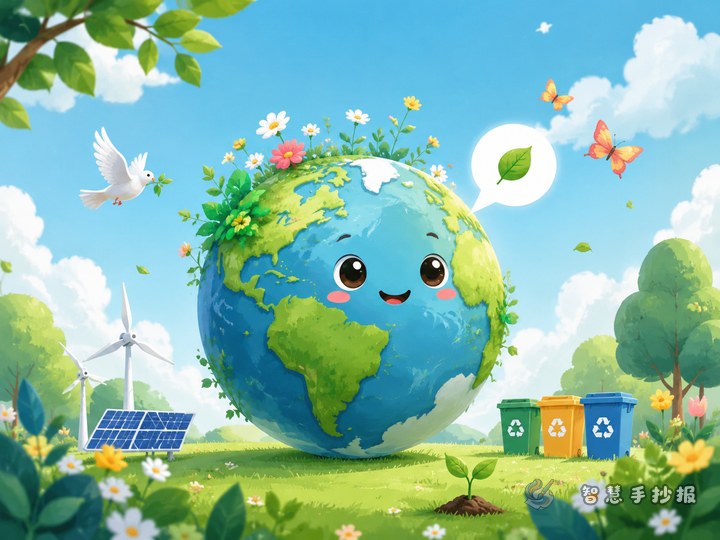
- Top strip: write the title Earth Health Checkup Report, with a round Earth and a thermometer beside it as the cover area.
- Main area: a vertical checkup table with items on the left and findings on the right, separated by small icons.
- Side column: a prescription slip in a sticky-note or medicine-box frame, listing the eco actions one by one.
- Bottom strip: a closing sentence or wish so the page does not feel top-heavy.
Keep the colours to about three: blue for water and air, green for forests, and white or pale yellow for the background. Alternating dotted and solid borders makes the table feeling stronger.
Finishing touches and where to go next
Outline the title in two colours, number the checkup items, and write 22 April in the date box to link back to Earth Day. Keep the writing straight and leave a little line spacing, and place a small drawing where the text is dense so the page can breathe.
If you would like a different table arrangement, or more borders, icons and layout styles, open 智慧手抄报 in WeChat Mini Program, choose an Earth Day template, adjust it on screen, and then copy the finished layout onto your own paper.