Build the theme around “A Day of Jobs Around Us”
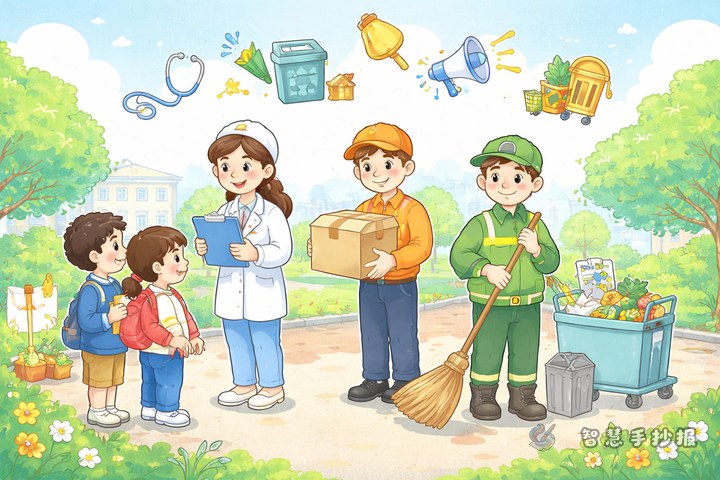
This poster theme works well because it connects labor practice with early career awareness. Instead of only listing job names, children can learn how different workers support everyday life. Start with jobs students see often, such as street cleaners in the morning, traffic police on the road, teachers at school, doctors in the community, or shop workers nearby.
Possible titles include “Jobs I Notice Every Day,” “How Work Keeps Our City Running,” or “A Day of Helpful Workers.” These angles feel natural and easy for children to expand.
Try a timeline layout instead of equal boxes
Rather than using a basic four-box design, this topic looks better as a timeline from morning to night. At the top, write time labels like “Morning,” “Noon,” “Afternoon,” and “Evening.” Under each part, place a small job card with the job name, main duties, useful skills, and one lesson learned from that worker.
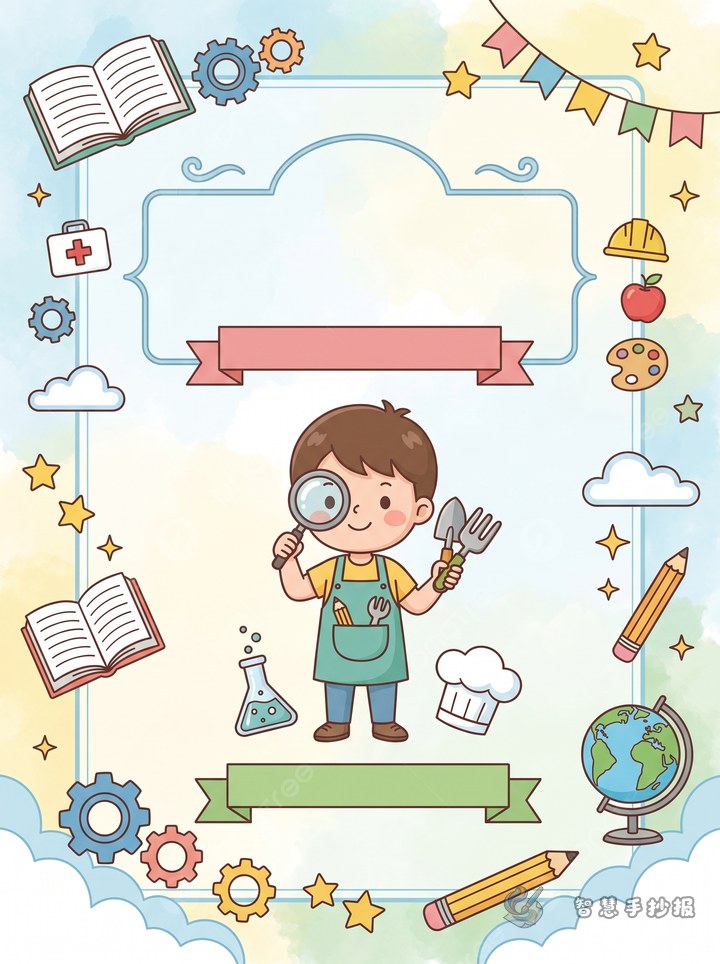
- Left section: What I noticed in labor practice
- Center area: A day of jobs around us
- Right section: The job I want to explore most
- Bottom line: A short message about respecting labor
Simple icons such as a broom, traffic light, stethoscope, book, toolbox, or package can make the page lively without being crowded.
Ready-to-use writing material
Section 1: My job observation
There are many hardworking people around us every day. Street cleaners keep roads tidy, traffic police make travel safer, teachers help us learn, and doctors protect our health. Every job matters, and every kind of work deserves respect.
Section 2: Skills behind each job
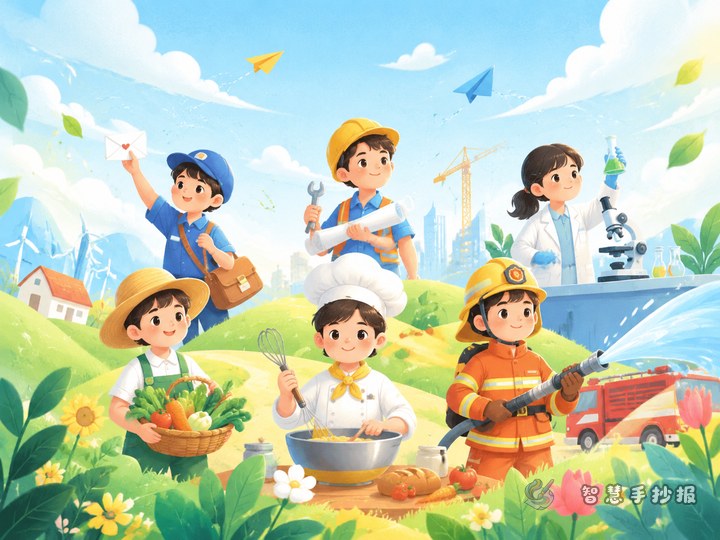
Different jobs need different strengths. Teachers need patience and clear communication. Doctors need care and responsibility. Cooks need practice and coordination. Builders need teamwork and safety awareness. To understand a job, we should learn not only what people do, but also what abilities they need.
Section 3: What labor practice teaches me
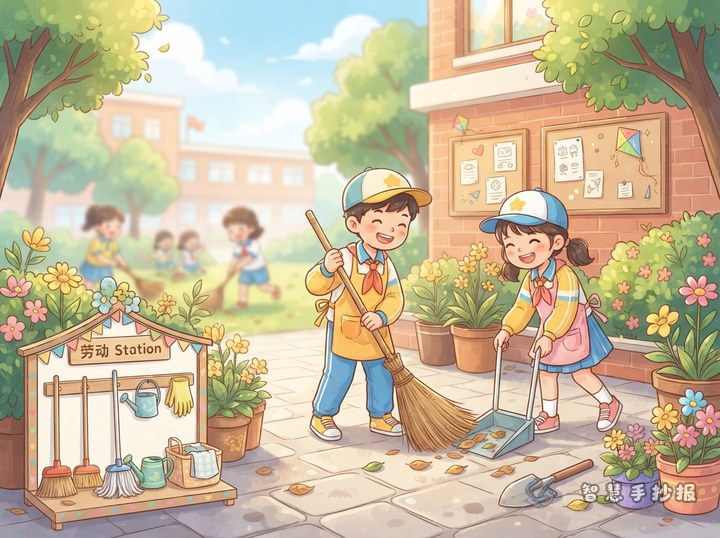
When we clean a classroom, organize a shelf, water plants, or sort supplies, we learn that work takes effort, order, and responsibility. Labor practice trains our hands, but it also builds good habits and respect for other people’s effort.
Section 4: My future job dream
I may not know my future job yet, but I can start by learning about different kinds of work. If I stay curious, work hard, and practice doing small tasks well, I will be closer to finding a job I truly like one day.
Add details that make the poster feel real
If the content feels too plain, use three kinds of short sentences: “I saw,” “I tried,” and “I wonder.”
- I saw: The school guard helped students line up safely after class.
- I tried: I organized books at home and learned that sorting takes patience.
- I wonder: How does a doctor plan a busy workday?
This style makes the poster sound like a real observation instead of a list of facts.
Color and decoration tips
Choose two main colors, such as blue, green, or orange. Blue works well for medical, teaching, or science-related jobs. Green matches labor practice and environmental themes. Orange adds warmth and energy. Keep the main title bold, use simple borders for each section, and avoid writing long blocks of text.
Decorations can include small job-related icons like helmets, schoolbags, tools, seedlings, or hearts. Leave some blank space so the whole page looks neat and readable.
How to end the poster naturally
A good ending can focus on three ideas: respect labor, learn about jobs, and grow through practice. For example: every job helps society in its own way, and every labor activity teaches us something important. We can begin with small tasks in daily life, respect workers around us, and slowly discover the direction we want to follow in the future. If you want to keep improving the layout and sections, you can also continue designing in the Zhihui Shouchaobao WeChat mini program.