Turn the topic into “A Wheat Seed’s Winter Diary”
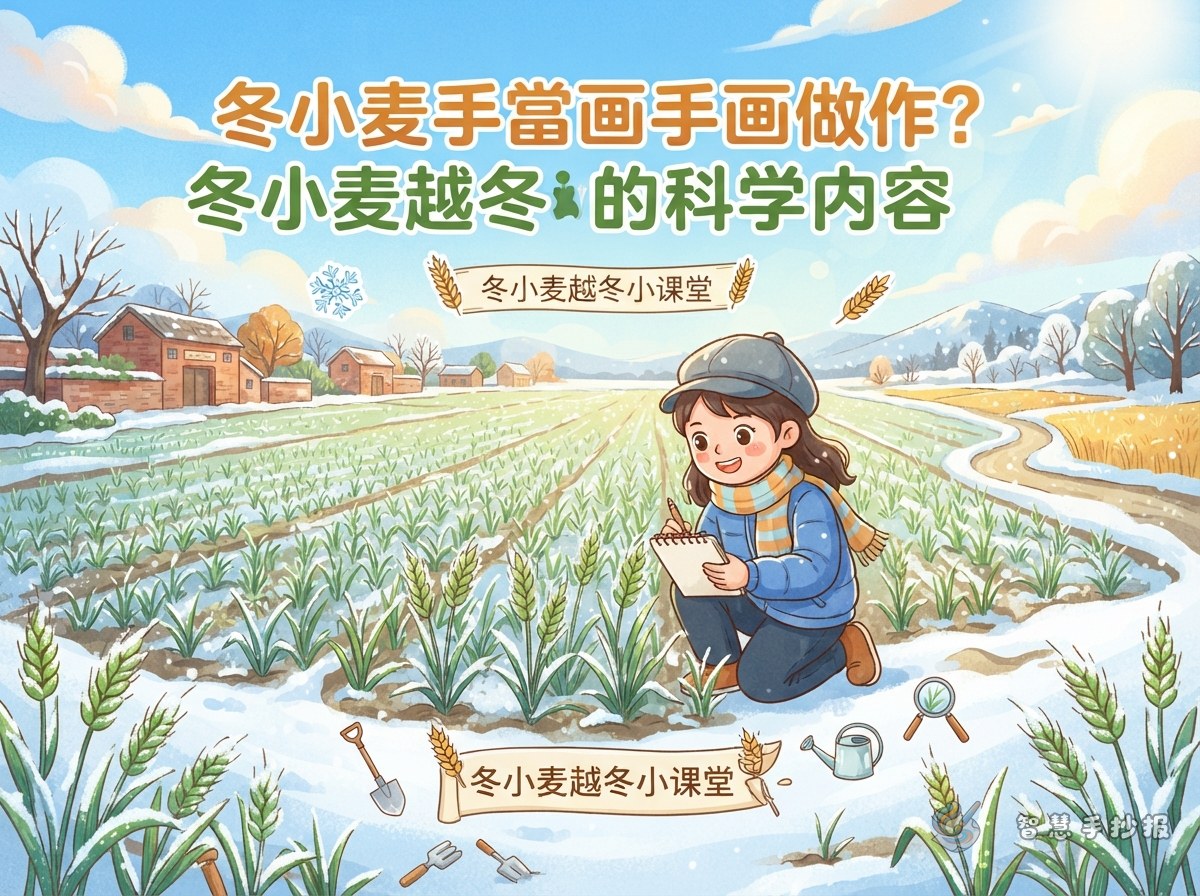
Winter wheat is a great theme for a seasonal crops handwritten newspaper because it grows across several seasons. It is usually planted in autumn, rests or grows slowly in winter, turns green again in spring, and becomes ripe in early summer.
You can use a story-like title such as “Why Can Winter Wheat Survive the Cold?”, “The Winter Secret of Wheat Seedlings”, or “From Seed to Golden Wheat Ear.” These titles make the poster more interesting than a plain crop introduction.
Key facts to include on the poster
1. The growing rhythm of winter wheat
Winter wheat is planted before the coldest season arrives. Small green seedlings appear in the field, then slow down during winter. When spring comes, the plants grow faster, form stems, and finally produce wheat ears that turn golden in early summer.
2. How wheat seedlings get through winter
The seedlings grow close to the ground, and their roots stay protected in the soil. Soil works like a warm cover for the roots, and snow can also help keep the field insulated. When temperatures rise, the plants begin active growth again.
3. Wheat in everyday life
Wheat can be ground into flour and made into noodles, bread, dumplings, steamed buns, and many other foods. A “from field to table” path is a good visual idea for the poster and helps students understand why food should be valued.
Useful columns for a complete handwritten newspaper
- Field Observation: Show the changes of winter wheat in autumn, winter, spring, and summer.
- Wheat Facts: Explain words such as overwintering, turning green, jointing, and heading.
- Food Classroom: List foods made from wheat and add a reminder about saving food.
- Draw a Wheat Field: Use seedlings, snowflakes, sunshine, and wheat ears as borders or corner decorations.
Short writing materials students can use
Short sentences: Wheat seedlings look quiet in winter, but they are storing strength. When the spring wind arrives, the wheat field turns green again. A tiny wheat seed needs time, soil, sunlight, and care before it becomes a full wheat ear.
Science paragraph: Winter wheat is special because it experiences cold weather during its growing period. The cold does not simply stop its life. It helps the plant prepare for later growth. Farmers care for wheat fields by watching the weather, soil, and water conditions.
Message: Learning about winter wheat helps us understand how hard it is to grow food. We should avoid wasting flour, bread, noodles, and other foods made from wheat.
Page design: show seasons with warm and cool colors
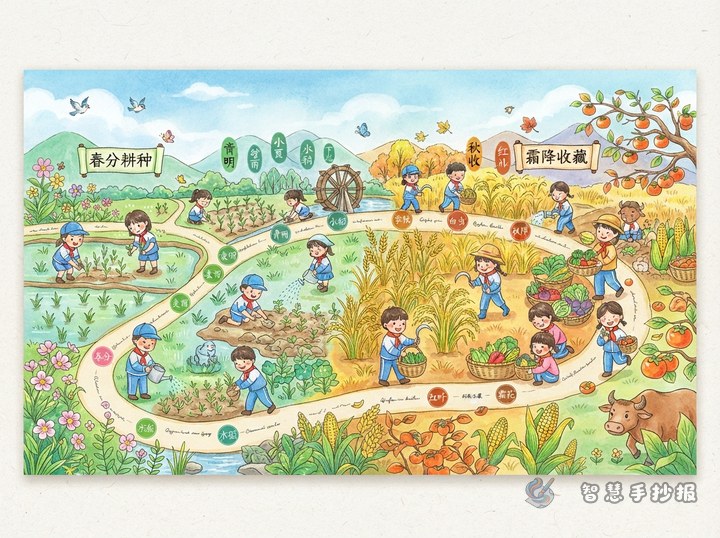
A horizontal layout works well. On the left, draw autumn sowing; in the middle, draw green seedlings and snowflakes; on the right, draw bright wheat ears in spring and early summer. Use light blue, white, and green for the winter part, and golden yellow or orange for the harvest part.
If you want to organize the title, columns, and text more easily, you can continue creating in the Zhihui Handwritten Newspaper WeChat mini program and turn ideas such as “winter wheat survival,” “from wheat to table,” and “saving food” into a clear poster layout.