Start with the mystery of underground peanuts
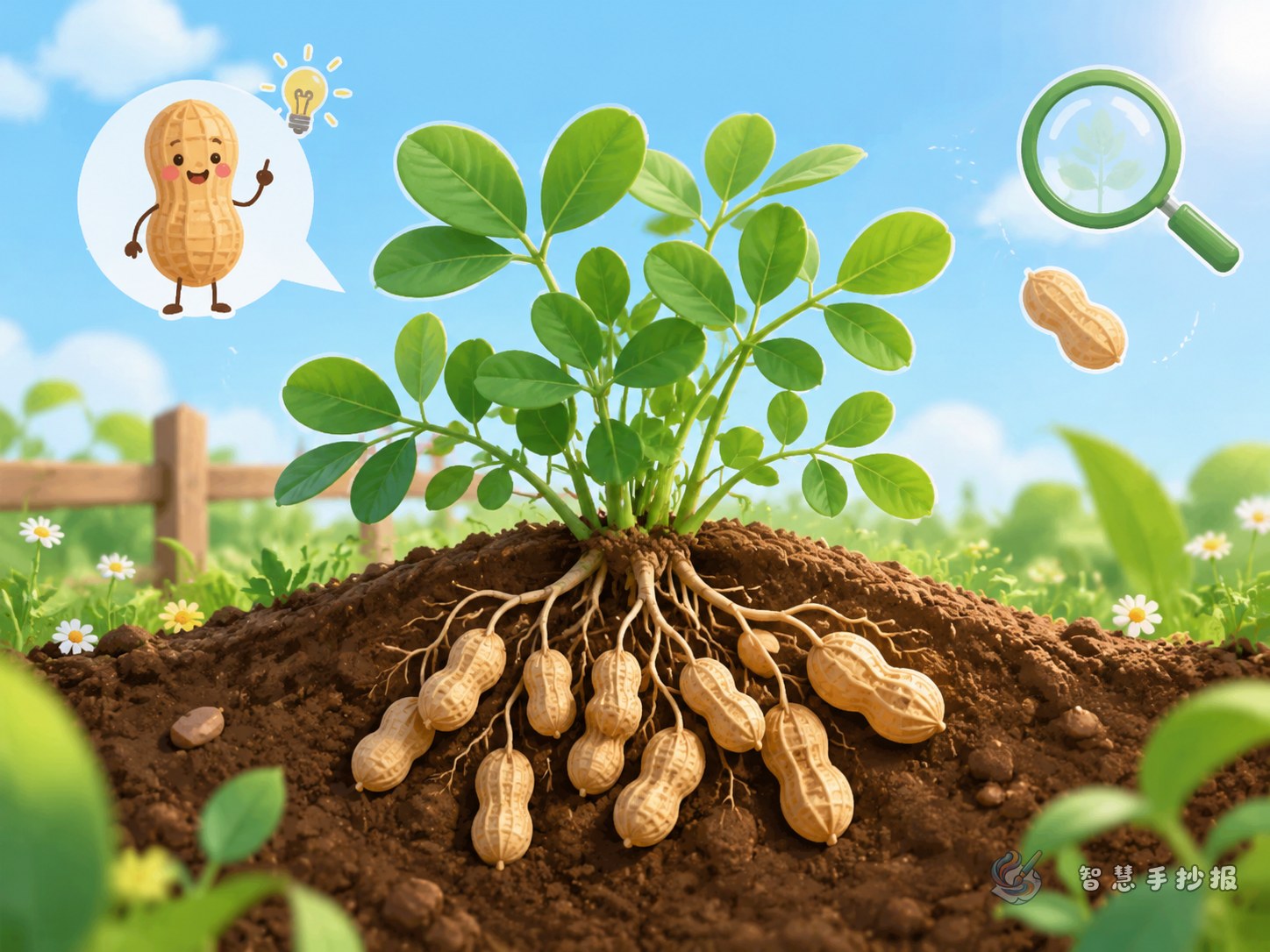
The most interesting part of a peanut poster is not simply saying that peanuts are food. The key idea is this: peanuts bloom above the ground but form pods underground. This makes the topic perfect for a science-style handwritten poster, because the page can show both the plant above the soil and the pods below it.
Possible titles include “Why Do Peanuts Hide in the Soil?” “Flowers Above, Pods Below,” or “A Secret in the Peanut Field.” A question-style title can make readers curious right away.
Short science texts for your poster
Peanut fact file
Peanuts are common farm crops that grow well in warm and sunny places. The plant has small leaves, yellow flowers, and pods that develop in the soil. When farmers harvest peanuts, they often pull up the whole plant and remove the pods from the roots and soil.
The secret of underground pods
After a peanut flower blooms and fades, a special stalk bends downward and enters the soil. The part in the soil continues to grow and slowly becomes a peanut pod. So peanuts do not simply “hide” underground; this is their special way of growing.
Quick knowledge cards
- Peanut flowers usually bloom above the soil and are often yellow.
- Peanut pods develop underground, so they are found in the soil during harvest.
- Loose soil helps peanut pods grow larger.
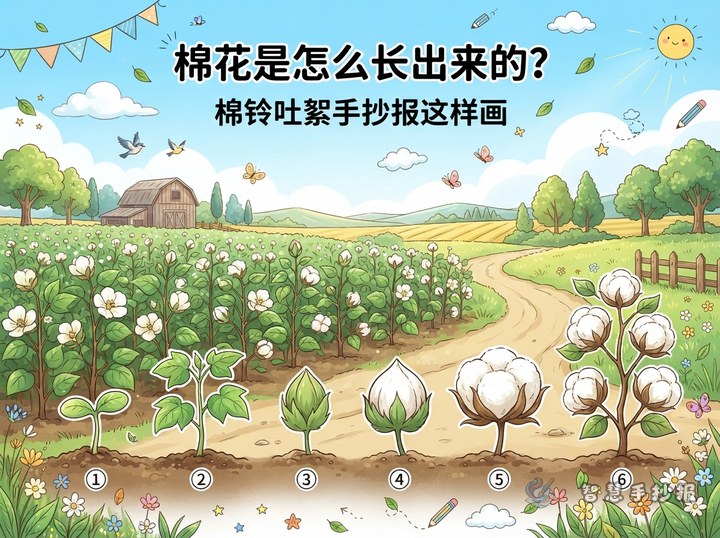
- Peanuts go through stages such as sprouting, flowering, entering the soil, and maturing.
Student-friendly sections to arrange on the page
A peanut poster does not need to read like a textbook. Several short sections will make the page clearer and easier to finish.
- Section 1: Peanuts I Know, describing the leaves, flowers, and pods.
- Section 2: How Pods Grow Underground, using arrows to show the process from flower to pod.
- Section 3: Field Observation Notes, writing what you notice about peanut fields, soil, leaves, or harvest scenes.
- Section 4: Peanuts on the Table, mentioning peanut kernels, peanut butter, or peanut oil briefly while keeping the focus on the crop.
- Section 5: Respect the Harvest, reminding readers that planting, caring for, and harvesting crops take a lot of work.
Design the page like a soil cross-section
A strong layout idea is to divide the page into two layers. In the upper half, draw the sky, sun, peanut leaves, and small yellow flowers. In the middle, use a brown line to show the soil surface. In the lower half, draw soil, roots, and peanut pods. This design clearly explains how peanuts grow underground.
For decoration, use peanut shells, leaves, soil dots, and small garden tools. Green, yellow, and light brown work well as the main colors. Use warm yellow or orange for the main title, and leave enough blank space for neat handwriting.
Small details that make the poster more scientific
- Draw four growth steps: sowing, flowering, entering the soil, and harvesting.
- Add labels such as “flower,” “stalk,” “soil,” and “pod.”
- Use a question-and-answer box, such as “Do peanuts grow on roots?” “No. Their pods develop in the soil.”
- Add a corner called “My Countryside Discovery” and write one observation or idea.
If you want to organize the layout more easily, you can open the Smart Handwritten Poster WeChat mini program and continue designing with countryside science and seasonal crop themes.