Tell the Story Through a Cotton Growth Trail
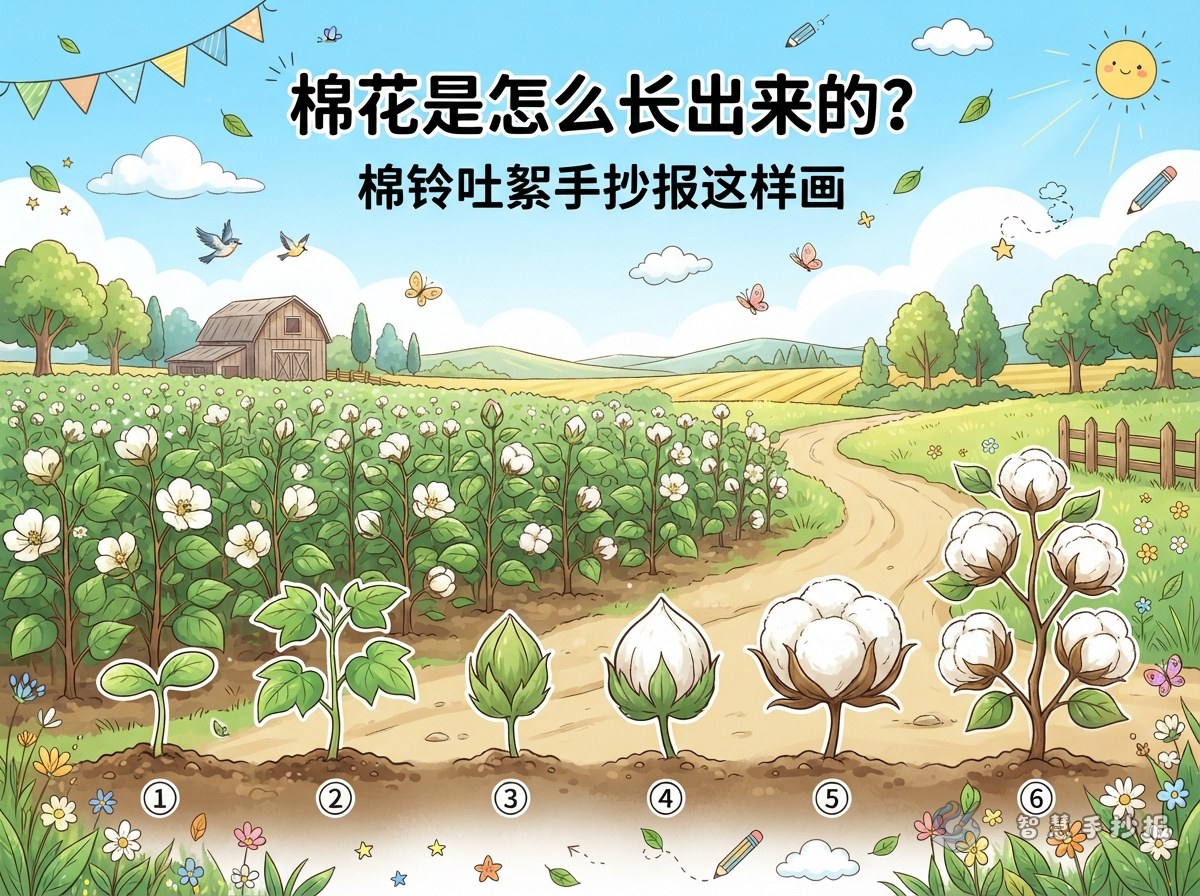
Cotton does not appear on a branch as an instant white puff. A clear poster can follow its seasonal journey: seeds are planted in spring, seedlings develop true leaves, buds and flowers appear in summer, green bolls form after the flowers fade, and mature bolls open to reveal white fiber before the autumn harvest.
- Germination: Warmth, moisture, and air help cotton seeds sprout.
- Budding and flowering: The plant produces buds, and its flowers are pollinated.
- Boll development: A small boll remains after a flower fades, while seeds and fibers grow inside.
- Boll opening: The mature boll splits and exposes fluffy cotton ready for harvesting.
What Is the White Fiber Inside a Boll?
The white fluff is not a group of flower petals. It consists of fibers that grow on the surface of cottonseeds. As a boll develops, the fibers become longer. When they mature and lose moisture, they flatten, twist naturally, and form the soft mass we recognize as cotton.
Short Facts for the Poster
- Cotton is a crop grown mainly for the fibers attached to its seeds.
- A green cotton boll protects the developing seeds and fibers inside it.
- When a ripe boll splits open, the visible fiber signals that harvest time is near.
- Picked cotton must be cleaned, spun into yarn, and woven before it becomes cotton fabric.
Follow Cotton from the Field to Everyday Life
Add a narrow process strip showing what happens after harvest: cotton is picked, fibers are separated from seeds, the fibers are spun into yarn, and the yarn is woven into fabric. Small drawings of a shirt, towel, or bedsheet can complete the route without turning the poster into a product display.
An observation prompt such as “How does raw cotton feel different from cotton cloth?” can help classmates compare a natural material with a finished fabric. Remind readers not to pick or damage crops in a field.
Lay Out the Page Like a Maturing Cotton Field
Use a horizontal growth layout. Place the title across the top and draw a branching cotton stem through the center, moving from a flower to a green boll and then an open boll. Put the growth stages on the left, the fiber explanation on the right, and the field-to-fabric sequence in a slim section along the bottom.
- Colors: Combine leaf green, cotton white, pale yellow, and dark brown for readable contrast.
- Border: Alternate leaves, bolls, and short dotted lines instead of filling every edge with cotton puffs.
- Text: Keep each fact to two or three short lines and emphasize only the key terms.
- Space: Leave open areas around white cotton drawings so they remain easy to recognize.
Check the Science Before Finishing
Make sure the stages are in the correct order and that the words flower, boll, seed, and fiber are not confused. Check that drawings do not cover any text. To refine the column arrangement, title style, and decorations for a chosen paper size, continue the design in the Smart Handwritten Poster WeChat Mini Program.