Turn the Page into a Day in Ancient Life
This handwritten newspaper does not need to focus on one famous relic. Instead, use everyday objects in a museum to ask how people dressed, ate, lived, and traveled. A suitable theme is Ancient Life Through Museum Objects, with each object serving as a clue in a connected story.
- Main title: A Day in the Life of People in Ancient Times
- Subtitle: Understanding History Through Clothing, Food, Homes, and Travel
- Guiding question: What objects helped people make everyday life more convenient?
Build the Story Around Four Clues
Clothing: Learn from Dress and Accessories
Include clothing, hair ornaments, footwear, and textiles. Observe their materials, shapes, and decoration. There is no need to guess complicated meanings; use exhibit labels or school materials to record the name, material, appearance, and possible use.
Food: Explore Eating and Cooking Tools
Bowls, plates, jars, cups, and cooking tools are useful materials for the food section. Draw their outlines first, then add one or two sentences about whether an object may have been used for serving, drinking, or cooking.
Homes: Imagine Everyday Spaces
Architectural pieces, lamps, furniture, and household objects can form the home section. Draw a simple ancient room and place the objects where they might have been used. Small labels can explain their possible place in daily life.
Travel: Follow the Signs of Movement
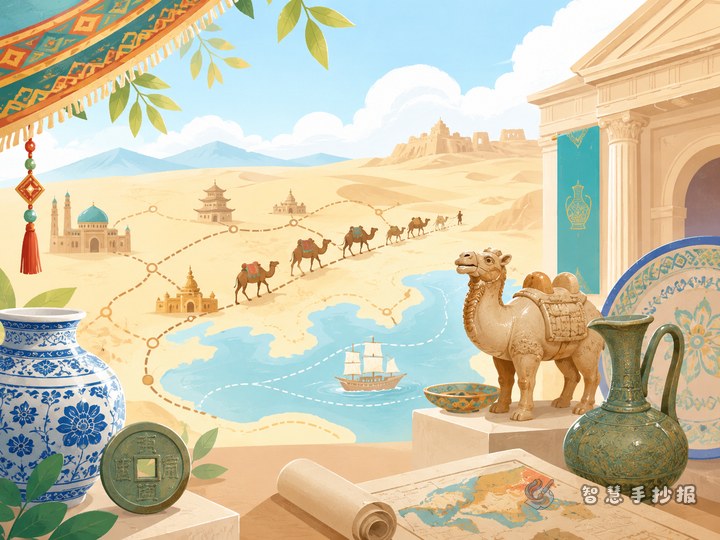
Horse and carriage fittings, boat models, and travel items work well in the travel section. Draw a path leading from a home toward a distant place, and explain that these objects help us understand the tools and belongings used during journeys.
A Layout Like a Small Museum Floor Plan
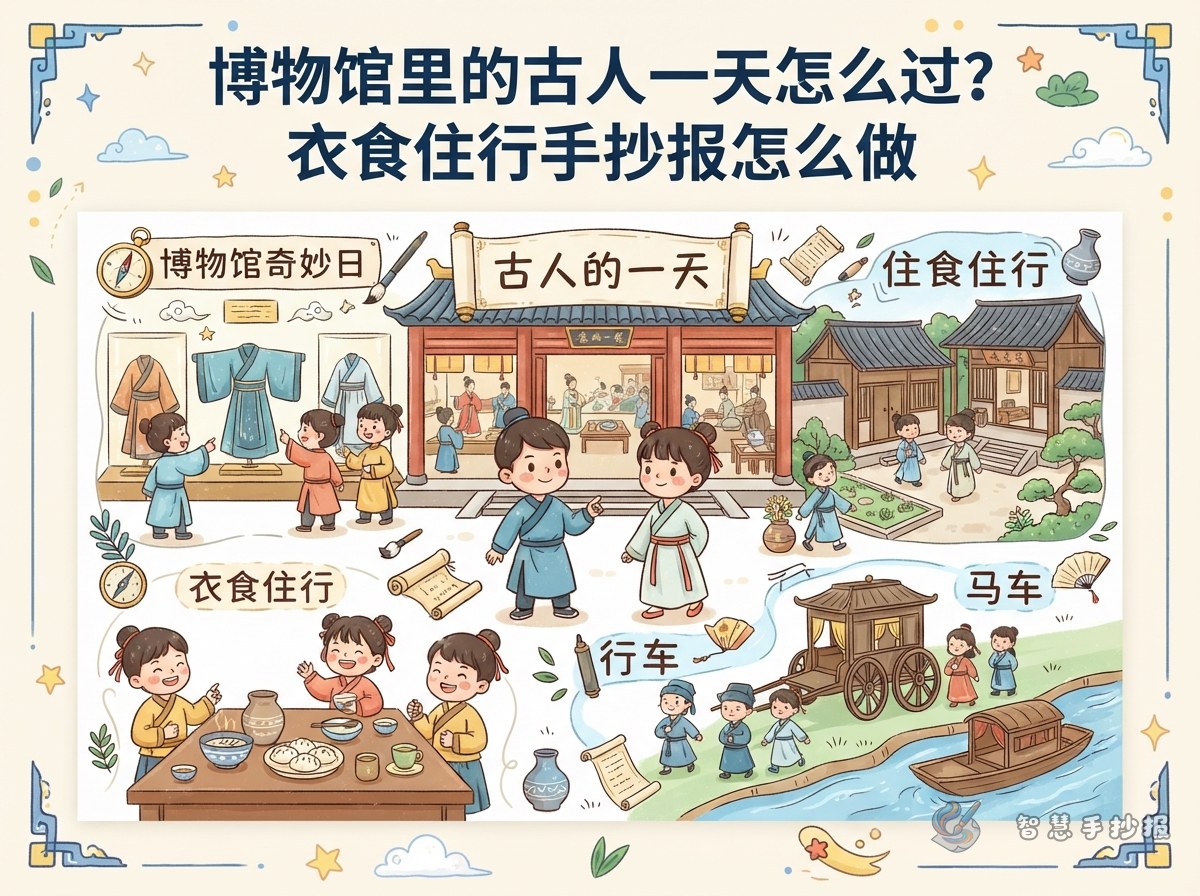
Draw a winding route through the center of the page. Let it begin with waking up and end with returning home, with four stops for clothing, food, home, and travel. Put the main title and a small museum building at the top, place the four sections around the page, and reserve the bottom for an Object Observation Card.
- Use lines and fabric-like patterns for clothing, and draw bowls, jars, or a dining table for food.
- Use windows, lamps, or a house outline for home, and wheels, boats, or roads for travel.
- Keep each section to three to five sentences so the page does not become crowded.
- Try cream, ochre, or blue-green as calm main colors, with one bright color for the title.
Ready-to-Organize Writing Material
Opening: Museum objects are more than quiet exhibits. They preserve many clues about everyday life in ancient times. By observing them, we can almost see a real and interesting daily scene.
Observation Card: Object name: ____; Shape I noticed: ____; Possible material: ____; What everyday problem might it have helped solve: ____.
Closing: Clothing, food, homes, and travel may seem ordinary, but together they create a rich picture of history. Protecting relics allows future generations to keep learning about the past.
Make the Details Feel Like a Mini Exhibition
Add short labels to each object and use arrows to connect it with a daily-life scene. Lightly sketch the title, text boxes, and illustrations first, then copy the text neatly, outline the drawings, and add color. If a source does not clearly explain an object’s use, write it as an observation or personal possibility rather than presenting a guess as proven history.
For a tidier arrangement of sections, you can continue organizing the theme, panels, and decoration ideas in the 智慧手抄报 WeChat mini program, then adapt the plan to your own paper size and draw it by hand.