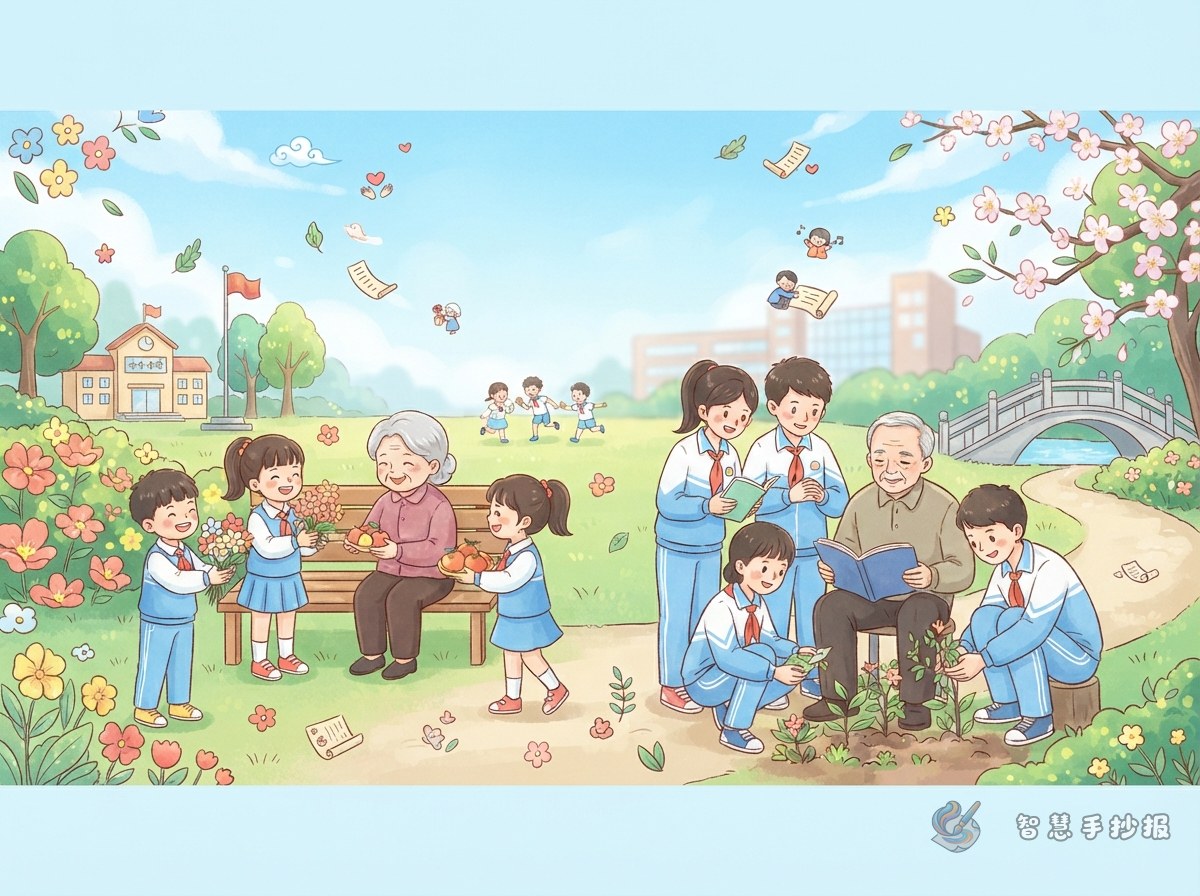
Decide the grade level before you decide the design
When a teacher assigns a filial piety and respect-the-elderly handwritten newspaper, many students immediately search for stories and copy everything they find. The result is a crowded page with cramped, uneven handwriting. The same topic should look completely different for a first grader and a sixth grader. The real differences are whether pictures or words lead the page, how many sections you need, and how much writing is realistic.
Before starting, ask three questions: what grade am I in, which single idea do I most want to share, and how much empty space is left on the paper? Answer those and both the content and the layout become much easier.
Grades 1-2: let the drawings carry the page
Young children write slowly and their strokes are still unsteady. If they are asked to copy long paragraphs, the letters drift downhill and the child loses interest. At this stage, artwork should take up more than half of the page.
What to write
- One sentence in the child's own words, such as 'I poured water for Grandpa' or 'I helped Mom clear the table'.
- One story summarized in a single line, such as 'Huang Xiang warmed the bed for his father'.
- Two or three big words such as 'honor', 'respect', 'family', drawn as bubble letters for the title.
How to arrange it
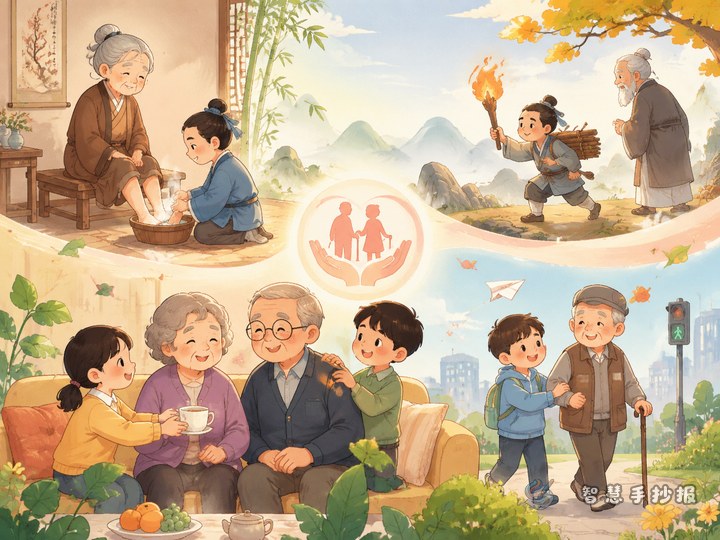
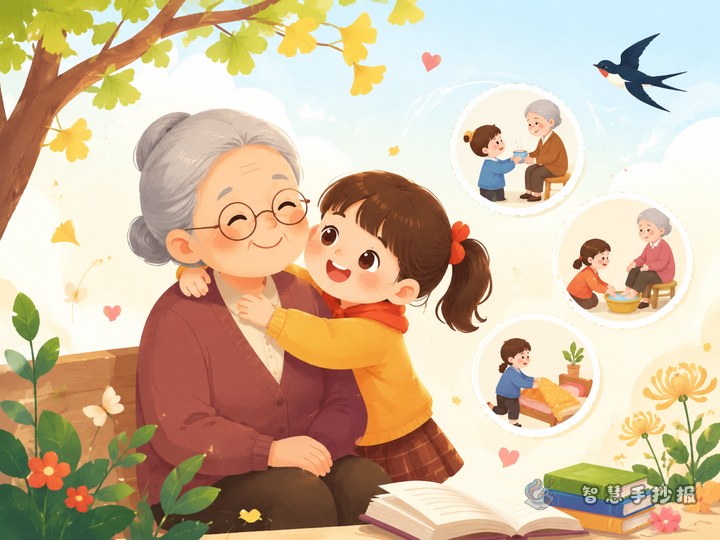
Draw one large picture in the middle and leave four small boxes around it, each holding one short sentence. Shape the title like a cloud or a circle at the top and separate the boxes with wavy lines. Fewer words are fine; crooked letters squeezed together are the real problem.
Grades 3-4: one story, one small section
By third and fourth grade, students can write full sentences, so they can start practising sections. Use only two or three sections on the whole page, each with its own small heading.
- 'Story corner': retell one filial piety story in your own words in three to five sentences, not copied straight from a book.
- 'Kindness at home': describe one thing you actually did, in three specific sentences. Avoid empty claims like 'I am very filial'.
- 'One old saying': choose a memorable quotation and frame it with its own border.
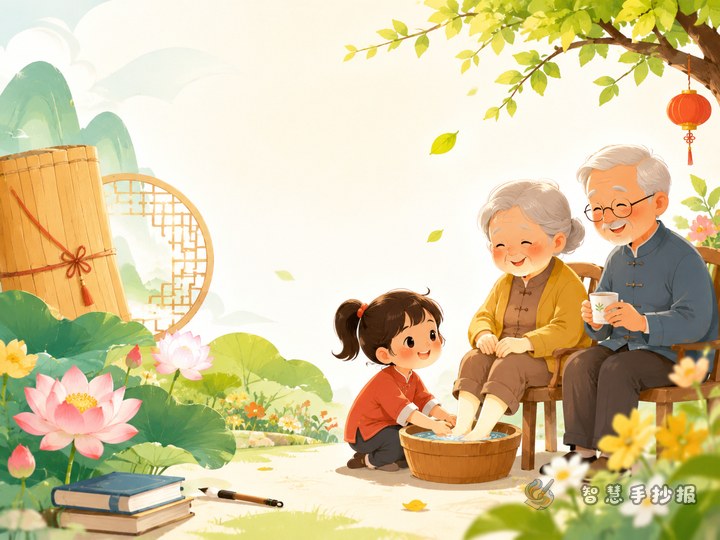
Divide sections with straight or decorative lines, and add a small illustration beside each one. The drawing does not need to be complex: one figure plus one object, such as a basin of water, a fan or a basket of food, is enough to explain the section.
Grades 5-6: connect the old story to everyday life
If a fifth or sixth grader still produces only a story plus decorations, the page can feel thin. At this level, add layers: what people did long ago, what you think about it, and what you can do nearby.
Sections worth adding
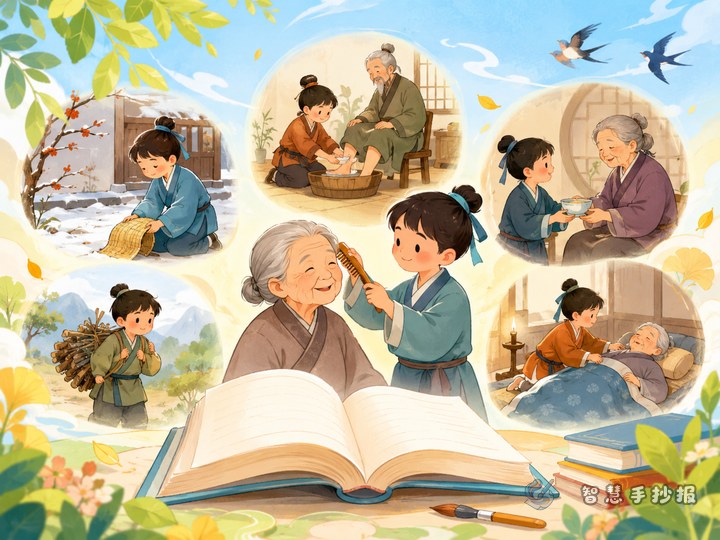
- 'How they did it': summarize the story in two or three sentences, making the person and the key action clear.
- 'What I think': write one line of your own judgement, for example, 'Caring for elders does not have to be dramatic; remembering what they like also counts.'
- 'What I can do today': list three small things you could finish the same day, such as walking with Grandma, serving Dad a bowl of rice, or simply saying goodbye properly.
The layout can become cleaner: two horizontal bands, or a picture on one side and text on the other. Less decoration and more white space actually looks more mature.
How much writing is enough?
Treat the numbers below as rough guides and adjust for the individual child. Neat handwriting earns more credit than a full page of rushed characters.
- Grades 1-2: thirty to sixty characters of body text, with artwork filling over half the page.
- Grades 3-4: one hundred to one hundred and fifty characters across two or three sections.
- Grades 5-6: two to three hundred characters across three sections, including your own opinion.
Two things parents and teachers often overlook
First, do not write the content for the child. You can help them recall what they did for a grandparent last week, but the sentences on the page should be ones the child can read aloud and explain. Second, do not chase a completely full page. A little empty space lets the eye rest and makes the headings and key sentences stand out.
If time is short, sketch the section boxes on scrap paper first, decide what goes in each one, and only then copy it onto the final sheet. For ready-made layouts and topic ideas, 智慧手抄报 offers a filial piety theme inside its WeChat mini program: pick a layout, fill in the content, and let the child copy it out by hand so the finished page is still their own work.