Choose short stories instead of too many stories
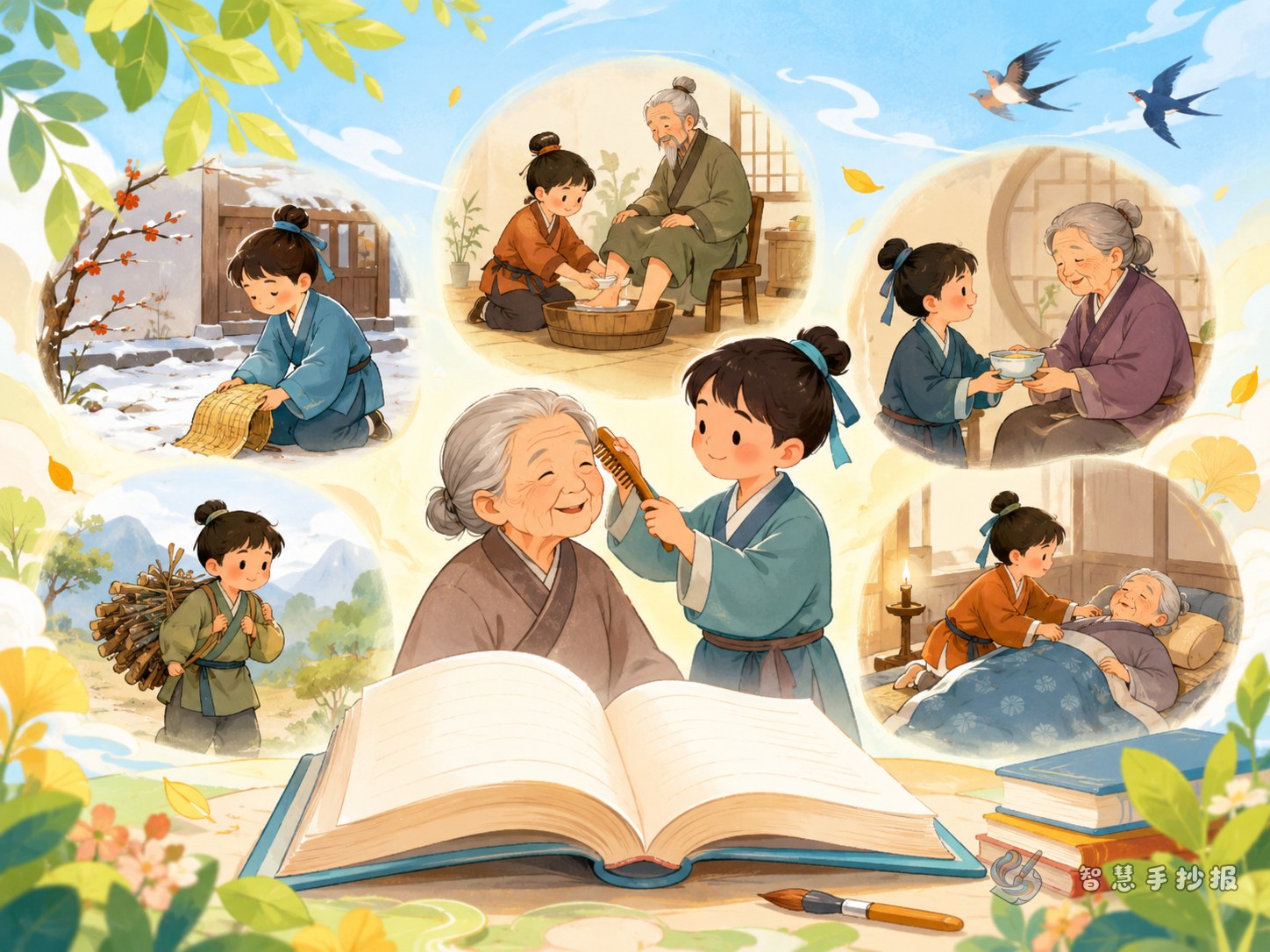
A common problem with this topic is trying to squeeze in too much. If students attempt to mention all twenty-four stories, the page often becomes crowded and hard to read. A better plan is to pick three to five short story snippets and write each one clearly.
The best stories for a handwritten newspaper are easy to understand, not too long, and able to show a clear act of caring for parents or elders. This makes the page neat and student-friendly.
- Pick stories with clear people and clear actions
- Keep each story to two to four sentences
- Use simple modern language instead of difficult classical wording
- Avoid repeating the same kind of idea again and again
Story snippets that fit this theme well
Huang Xiang warming the bed
Though still young, Huang Xiang cared deeply for his father. In summer he cooled the bed mat, and in winter he warmed the bedding first. This story shows thoughtfulness and daily care.
Tasting medicine first
Before serving medicine to a sick parent, the child first checked whether the temperature was suitable. This short story highlights patience, responsibility, and loving care.
Fanning the pillow and warming the quilt
This story focuses on caring for a parent’s comfort in hot and cold seasons. It connects naturally with everyday life and is easy for students to understand.
Seeking fish on the ice
This story shows a willingness to work hard for a parent’s needs. When using it in a handwritten newspaper, it is enough to summarize the plot simply and then explain the spirit of filial respect behind it.
If the page is large, one or two more short stories may be added, but it is still better to leave breathing room in the layout.
Add more than old stories
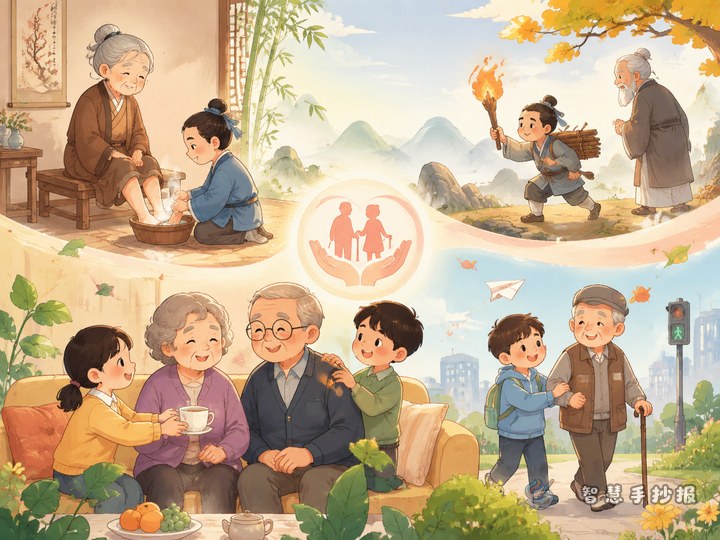
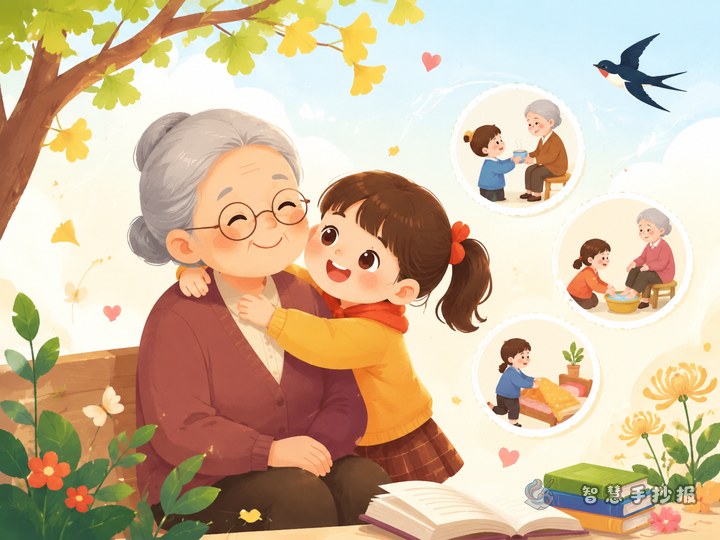
If the page only contains ancient stories, it may feel distant from students’ lives today. A stronger handwritten newspaper combines traditional ideas with real actions that children can practice now.
- Quotes about filial respect: choose short and positive lines.
- Things I can do for elders: pour water, greet grandparents, walk with them, or listen patiently.
- Festival companionship: visiting and spending time with elders during Chongyang Festival, Mid-Autumn Festival, or Spring Festival.
- My reflection: write one or two sentences about what the stories teach you.
This mix makes the newspaper feel complete and more useful for classroom display.
Try a “story card wall” layout
This topic works especially well as a page divided into small story cards. Put the main title in the center, such as “Respect Elders, Start with Me,” and arrange short sections around it.
- Use a larger title with simple cloud, scroll, or heart decorations
- Place two story boxes on the left and two on the right
- Use the bottom part for modern actions or a personal reflection
- Add small decorations like flowers, longevity peaches, or festive patterns
Warm colors such as orange, red, and light yellow suit this theme well. They create a traditional yet gentle feeling.
Write in a student-friendly voice
This kind of handwritten newspaper does not need difficult language. Simple sentences are often more sincere and easier to read. For example, instead of writing a very formal phrase, students can write, “Respecting elders begins with small actions every day.”
After each story, one short connection to daily life works very well:
- I should care more about the elders in my family
- I can help when my grandparents feel tired
- Respect is not only for holidays but also for ordinary days
That helps the page move beyond copying old stories and shows real understanding.
Prepare a quick checklist before making the page
Before starting, students can follow a simple order: choose the title, pick the stories, add one or two practical sections, and then plan colors and decorations. This makes the whole process much easier.
If you already have a topic idea and want to keep improving the layout, title style, and section arrangement, you can continue in the Zhihui Handwritten Newspaper WeChat mini program.