Turning food into a clear unity theme
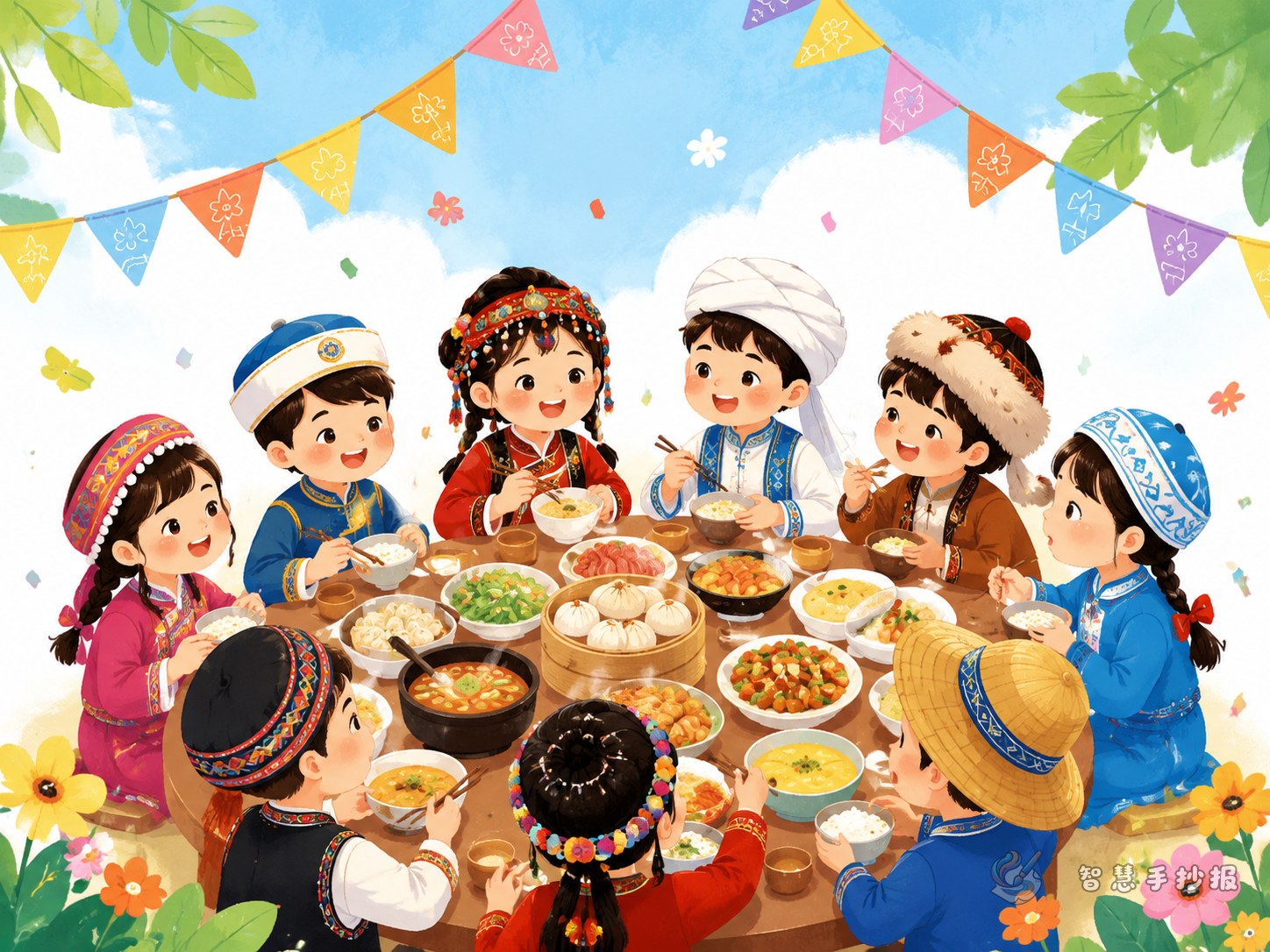
For an ethnic unity and cultural exchange handwritten newspaper, food is a strong starting point because it is easy to understand, easy to write about, and easy to draw. Children can begin with familiar scenes such as eating together, introducing hometown dishes, or talking about foods prepared during special days.
The title should feel warm and inviting. Ideas like “One Table, Many Flavors,” “Cultural Exchange Through Food,” or “Sharing Meals, Sharing Hearts” can show both unity and communication.
Section ideas that are easy to use
Section 1: What flavors are we sharing today?
This part can introduce several foods from different traditions. There is no need to make it overly academic. The key is to explain what the food means in family life, festivals, or hospitality.
Section 2: Respect at the table
This section highlights the spirit of unity. Students can write about respecting different eating habits, listening to others talk about hometown food, and being open to new tastes.
- Learning what others enjoy is the beginning of communication.
- Respecting different food habits shows kindness and understanding.
- Sharing a meal helps people feel closer to each other.
Section 3: A hometown dish I want to introduce
A short first-person paragraph works well here. Students can write the dish name, how it looks or tastes, when people eat it, and why they want to share it with classmates.
Short text materials for the poster
These lines can be copied into the main text, side notes, or closing area:
- Different flavors can carry the same warmth.
- One table can hold many colorful cultures.
- We understand more when we listen and share.
- Respecting daily habits is a simple way to practice unity.
- Cultural exchange can begin with one bite of hometown flavor.
You can also add a short paragraph saying that different groups have different food traditions and holiday dishes, and these differences make life richer. When people are willing to taste, listen, and share, cultural exchange becomes part of everyday life.
How to design the page
A round-table layout or a platter-style layout works especially well. Put the main title in the center and place smaller sections around it to create a feeling of gathering and sharing.
- Write the main title in the middle and decorate it with bowls, chopsticks, steam, or ingredients.
- Put “Food Introduction” in one corner and “Festival Table” in another.
- Use the lower space for “Respect at the Table” and “Messages of Unity.”
- Add simple borders with grains, vegetables, spoons, or small patterns.
Warm colors such as orange, red, and light beige work well, with a small amount of green to brighten the page. Do not fill every corner. Leave enough space so the text remains easy to read.
Mistakes to avoid
First, do not turn the poster into only a list of foods. The real focus should be how food connects people.
Second, avoid stereotypes. Use equal, respectful, and friendly language when writing about different cultures.
Third, do not create too many sections. Four or five content areas are usually enough for a neat and readable page.
A warm ending for the poster
Food helps us discover the flavors of different places, but it also helps us feel the warmth of living together. Ethnic unity is not only a slogan. It grows when people are willing to understand, respect, and share with one another. After choosing this theme, users can continue polishing the layout, colors, and text in the Zhihui Shouchaobao WeChat mini program.