Start with birds students can really see on campus
When children make a bird-themed handwritten newspaper, they often choose a topic that is too broad and then struggle to fill the page. A campus birdwatching topic works better because it begins with birds seen in daily life. Birds on playground fences, trees, wires, shrubs, and near school buildings can all become part of the poster. The result feels more real and is much easier to write and decorate.
Possible titles include “Birds I Saw at School”, “Common Campus Birds”, or “Watching Birds, Protecting Life”. These sound natural and are easy for students to understand.
Sections that fit this topic especially well
A small profile area for common birds
- Sparrow: small, active in groups, often looks for food on the ground.
- Magpie: long tail, clear call, often seen standing in higher places.
- Swallow: fast and graceful in flight, often seen in warmer seasons.
- Bulbul: easy to notice by its head pattern and lively movement in trees.
- Pigeon: common around people and open areas, with steady movement.
Each bird can be introduced with three short points: appearance, where it is often seen, and one behavior. That is enough for a neat and readable poster.
An observation note section
This is often the most interesting part of the whole handwritten newspaper. Students can write short entries such as:
- Time: morning, noon, or after school
- Place: under a tree, near the playground, by a flower bed, beside a building
- Weather: sunny, cloudy, breezy
- Bird seen: name or a simple description
- Behavior: feeding, hopping, calling, resting, flying
- My finding: birds prefer quiet places with trees, or some birds appear in groups
These notes make the page feel like a real science observation rather than a copied text block.
Short text materials students can use directly
- Birdwatching tip: Stay quiet and watch from a little distance so birds can behave naturally.
- Protection message: Care for trees and shrubs because they are important resting and nesting spaces for birds.
- My feeling: I found that our campus is not only full of plants, but also full of small feathered neighbors.
A strong closing sentence can be: “The more we observe, the more we learn to protect.” This works well near the title or at the bottom of the page.
Simple layout ideas that look clear and lively
This topic matches a fresh and natural design. A central title with four surrounding sections works well, and a diary-style path layout can also be effective.
- Top area: title and a short protection slogan
- Left side: common bird profiles
- Right side: my observation notes
- Bottom area: polite birdwatching rules and protection ideas
Decorations can include leaves, feathers, branches, nests, or binoculars. Use them lightly so the page does not feel crowded. Soft green, light blue, and warm earth tones fit the theme nicely.
Turn birdwatching into bird protection
A good campus birdwatching handwritten newspaper should not stop at “what I saw.” It should also answer “what should we do next?” Students can include practical ideas from daily school life:
- Do not scare birds resting in trees
- Do not damage grass, shrubs, or branches
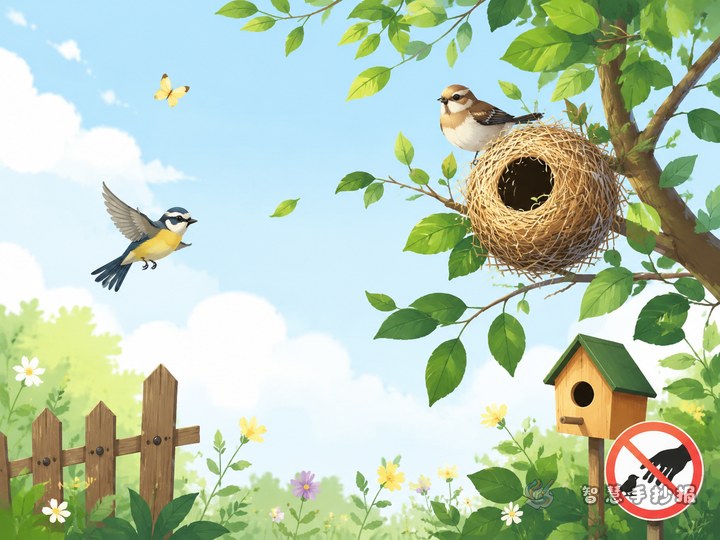
- Do not touch nests or take eggs
- Do not litter in school spaces
- Help keep the campus green and peaceful for birds
This makes the work more meaningful and complete. If students want to continue improving their layout, titles, or section ideas, they can also explore more poster-making inspiration in the Zhihui Shouchaobao WeChat mini program.