Why Ancient Timekeeping Makes a Great Poster Topic
If you want a topic under ancient Chinese inventions and scientific civilization but do not want to repeat the usual Four Great Inventions, ancient timekeeping is a smart choice. It combines science, daily life, and visual interest, making it easy to turn into a clear handwritten newspaper poster.
You can build the page around one simple question: how did people in ancient China tell time before modern clocks? This gives the whole poster a strong and natural structure.
Useful Sections for the Poster
Section 1: How people first noticed time
Start with natural signs such as sunrise, sunset, the length of shadows, and the sound of a rooster at dawn. This helps explain that people observed nature long before mechanical clocks appeared.
Section 2: What is a sundial?
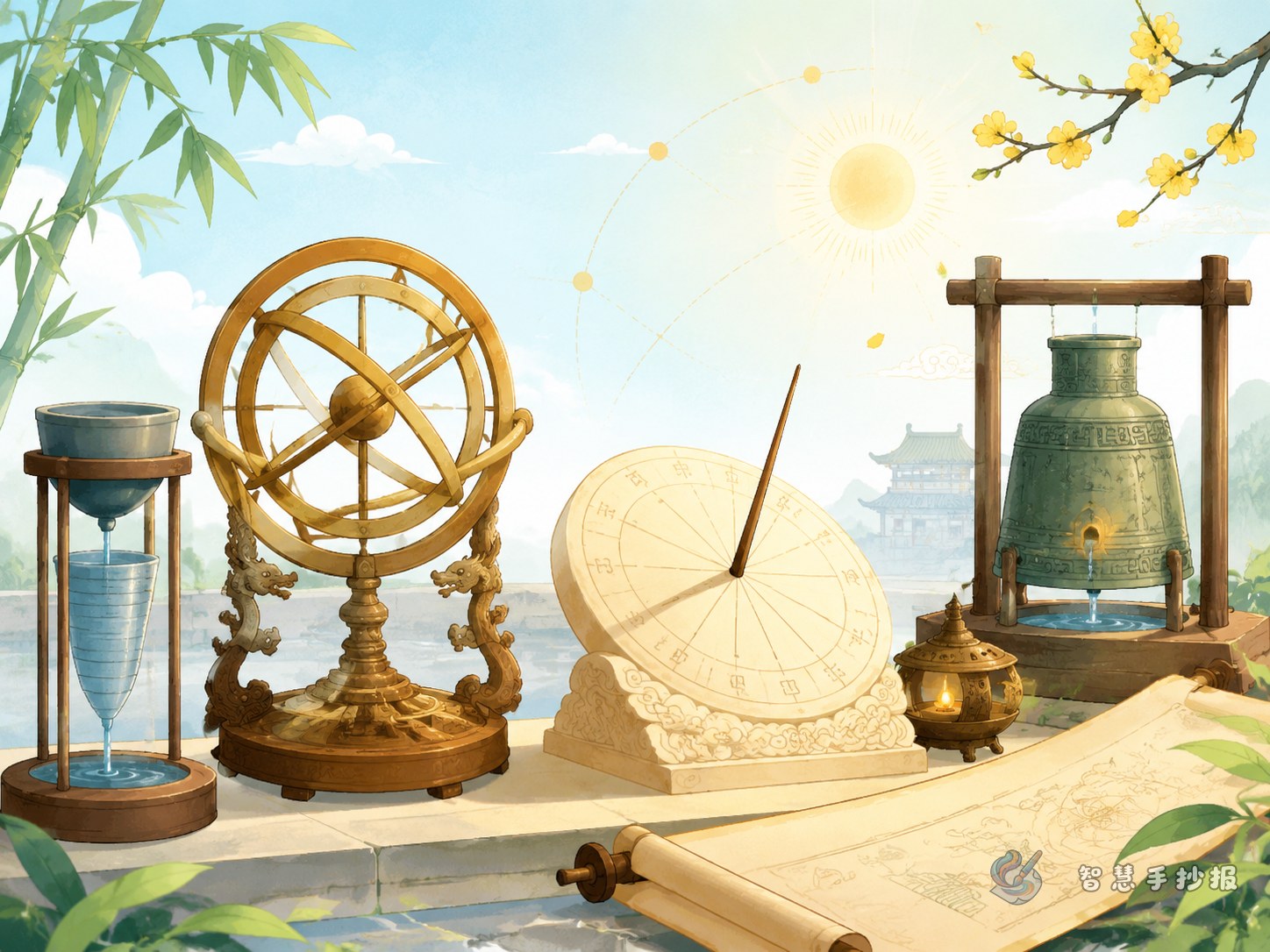
A sundial tells time by the movement of the sun and the shadow of a pointer. As the sun changes position, the shadow points to different marks. It shows ancient people’s understanding of light, direction, and regular patterns in nature.
Section 3: How the water clock worked
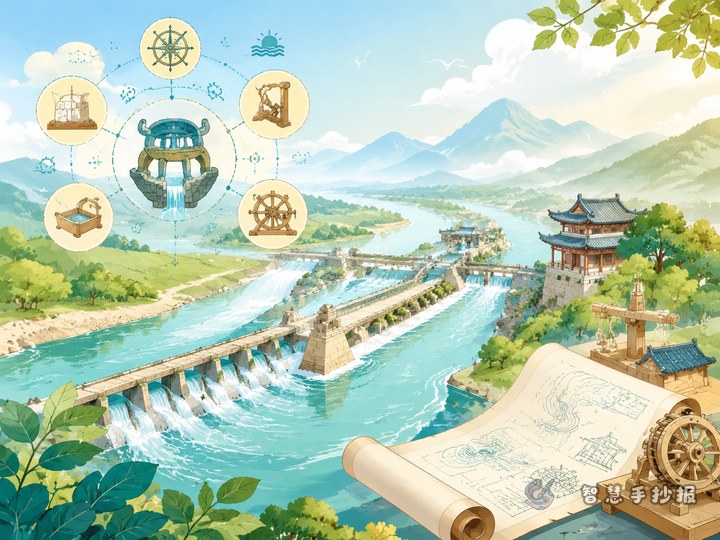
The water clock, also called a clepsydra, measured time through dripping or flowing water. People watched the water level or flow marks to know the time. It was especially useful when there was no sunlight, such as on cloudy days or at night.
Section 4: The twelve traditional Chinese time periods
You can add the idea of the twelve double-hours in ancient China. One traditional period equals about two modern hours. This section adds cultural depth and makes the poster feel more complete.
Short Text Materials You Can Use
- Theme sentence: From shadows under the sun to carefully measured flowing water, ancient Chinese people used wisdom to record time.
- Intro line: The development of timekeeping tools shows how science grew from close observation of everyday life.
- Knowledge line: Sundials use sunlight and shadows, while water clocks use flowing water to measure time.
- Closing line: Ancient timekeeping tools were simple, but they reflected patience, creativity, and scientific thinking.
Layout Ideas That Match the Theme
A timeline layout works very well. Place natural time observation on the left, the sundial in the middle, and the water clock and traditional hours on the right. This helps readers see the development clearly.
You can also divide the page into a daytime and nighttime design. Use a sun, rays, and shadows in the upper half for the sundial, and water drops, a vessel, and scale marks in the lower half for the water clock.
Decoration Tips for a Better Handwritten Newspaper
- Draw a small sun and a sundial pointer near the title.
- Use cloud patterns, wave lines, or simple traditional borders to create an ancient Chinese style.
- Highlight key words like sundial, water clock, and twelve time periods with color.
- If there is extra space, add small sketches of shadow changes or traditional hour symbols.
How to End the Poster Nicely
Your ending can connect ancient inventions with modern life. For example, you can write that ancient timekeeping tools may seem simple today, but they show the intelligence and creativity of early people. We should value time and stay curious about science.
If you want to keep improving the layout, adjust the sections, or make a cleaner finished version, you can continue designing in the Zhihui Shouchaobao WeChat mini program.