Start with a Story: A Classroom Light’s Low-Carbon Journey
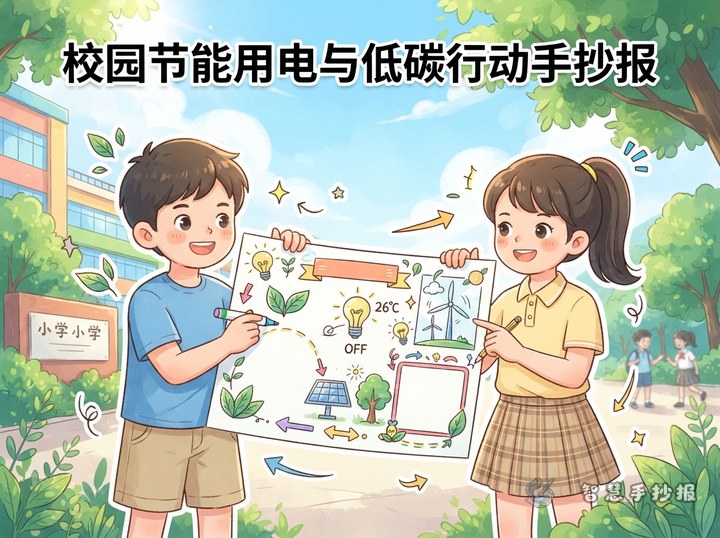
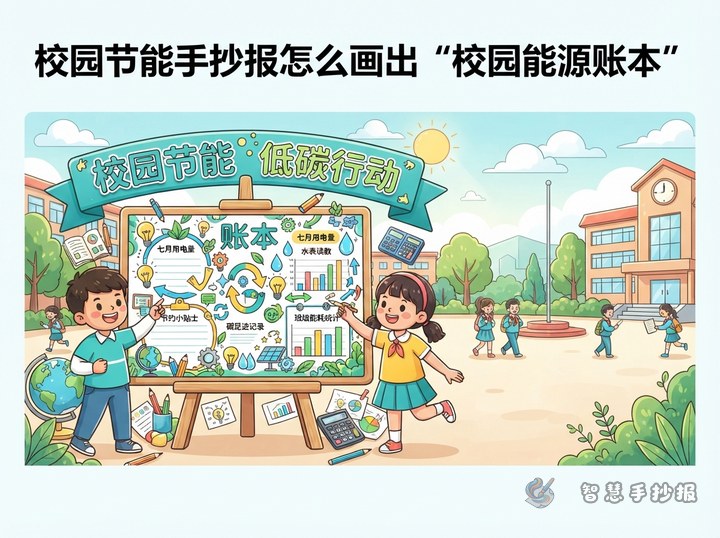
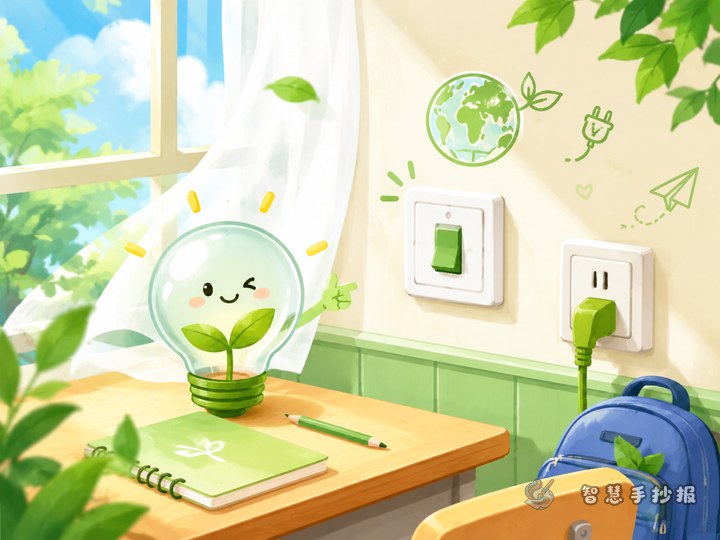
This hand-copied poster can be more engaging than simply writing “save electricity.” You can build the theme around the low-carbon journey of one classroom light. Show scenes such as turning on lights for morning reading, switching them off during breaks, unplugging devices at noon, and checking power before leaving school.
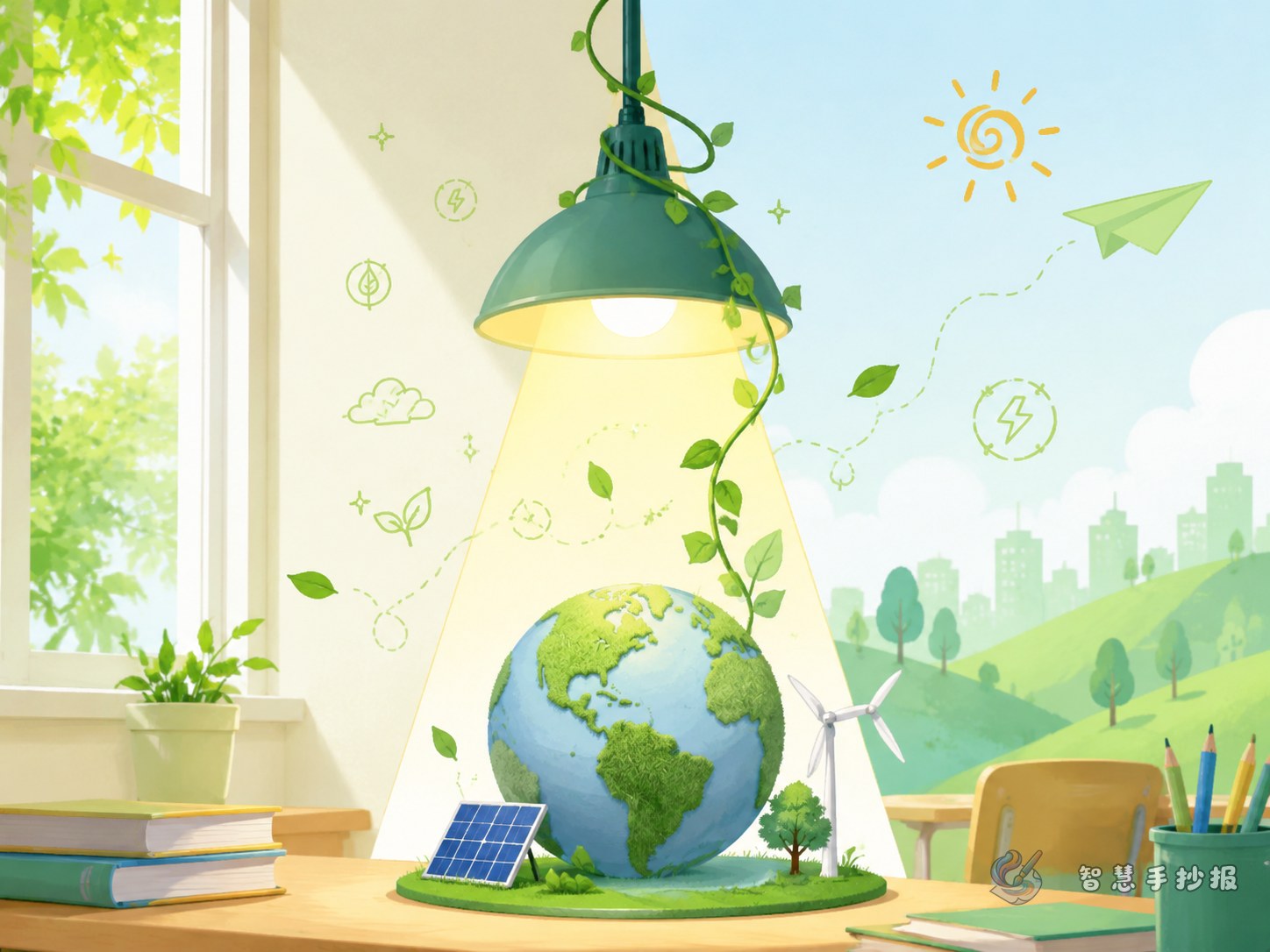
Good title ideas include “Did You Turn Off the Light Today?”, “One Light, One Green Habit,” or “Let the Classroom Shine Wisely.” Around the title, draw light bulbs, leaves, switches, windows, and school buildings to create a bright campus feeling.
Ready-to-Use Writing Materials
Energy-Saving Tips
- Turn off lights, fans, and classroom screens when leaving the room.
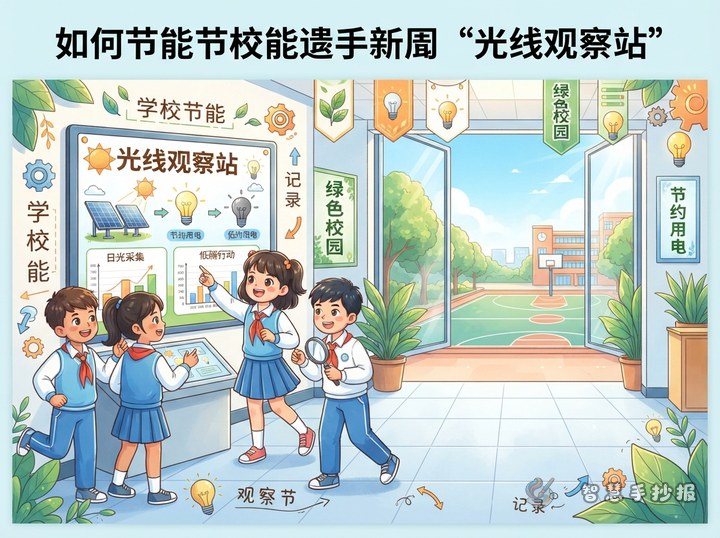
- Use natural sunlight when the classroom is bright enough during the day.
- Unplug devices that are not in use instead of leaving them on standby.
- When using air conditioning, close doors and windows and set a suitable temperature.
A Low-Carbon Pledge
Starting today, we can become campus energy-saving helpers. The last student leaving the classroom can check the lights and fans. During breaks, we can remind each other to save electricity. If we see lights left on in public areas, we can tell a teacher. Small habits at school can also become green habits at home.
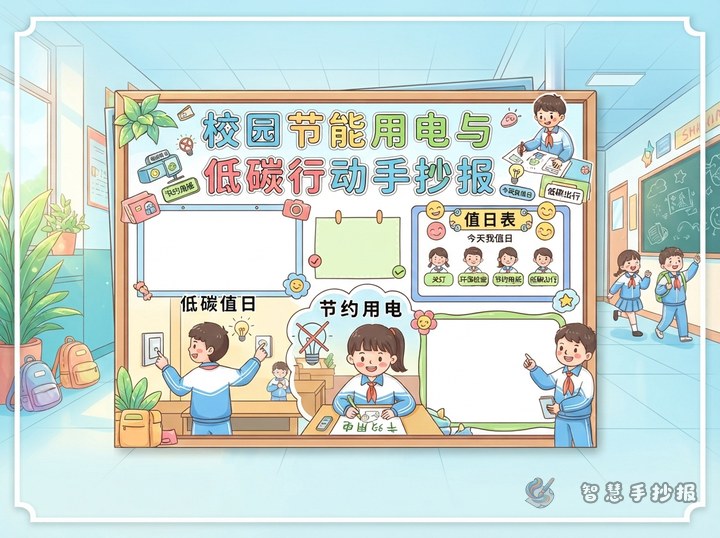
Useful Sections for the Poster
- The Light Bulb Speaks: Write in a friendly voice, such as “I like lighting up learning, not an empty room.”
- Classroom Power Checklist: List lights, fans, computers, projectors, and plugs to check every day.
- Low-Carbon Q and A: Add simple questions about standby power and natural light.
- Green Campus Action Corner: Write short promises that classmates can follow together.
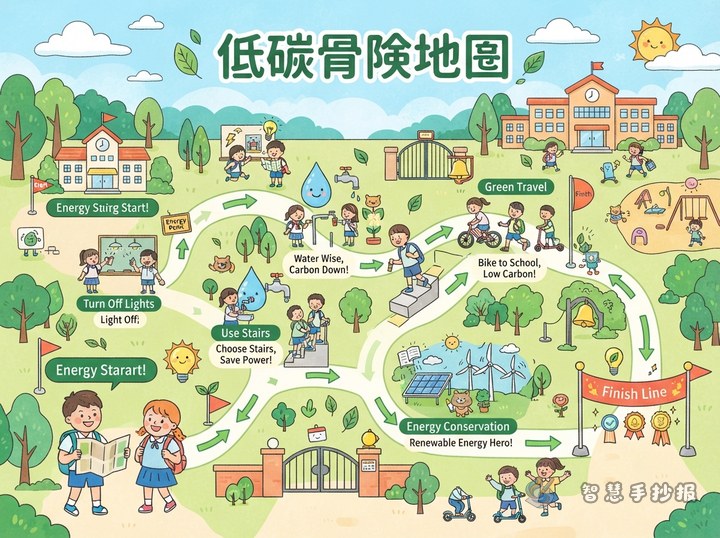
Layout Idea: Make It a Campus Route Map
Instead of placing long paragraphs everywhere, design the poster as a “low-carbon school route.” Draw the school gate, classroom, reading corner, hallway, and after-school check area. Add one energy-saving tip at each stop. This makes the poster easier to read and gives it a clear story line.
For colors, use light blue, fresh green, soft yellow, and white. Blue suggests clean energy, green represents low-carbon action, and yellow matches the light theme. A border made of simple wires and small bulbs can look lively, but leave enough blank space for neat writing.
Add Personal Actions to Make It Real
A strong campus electricity-saving poster should include “what I can do.” For example: “I will remind my desk mate to turn off the light,” “I will open the curtains when there is enough sunlight,” or “I will join the class energy-saving check.” These sentences are specific and suitable for primary school students.
If you want to organize the title, sections, and layout more easily, you can continue creating your hand-copied poster in the 智慧手抄报 WeChat mini program.