Turn the theme into a story about saving electricity at school
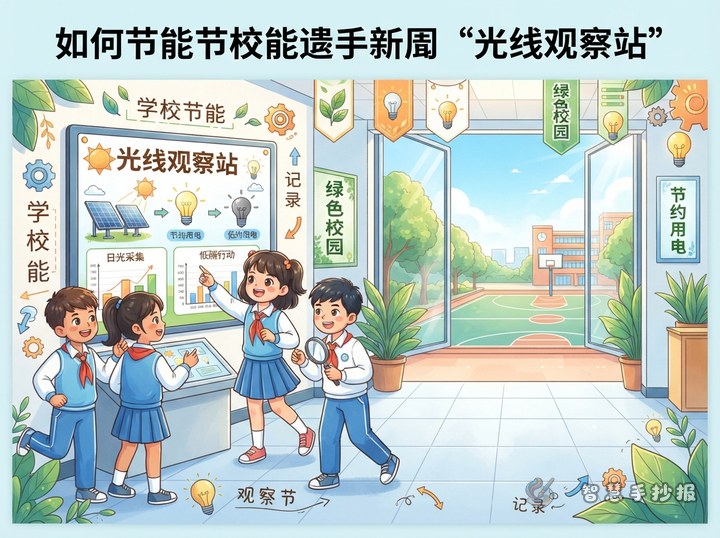
Many students only write broad slogans about saving electricity, and the result feels empty. A better idea is to make the handwritten newspaper about real low-carbon actions on campus. For example, opening windows for natural light in the morning, switching off lights during breaks, turning off fans at noon, and checking devices before leaving school all make the topic feel more real.
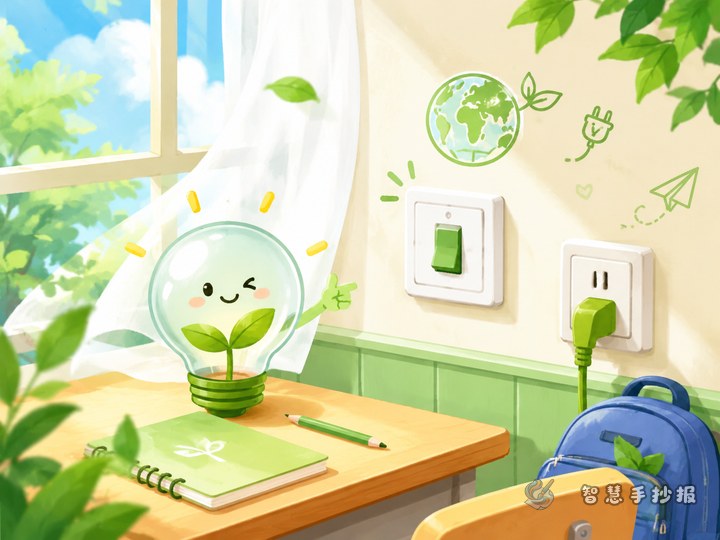
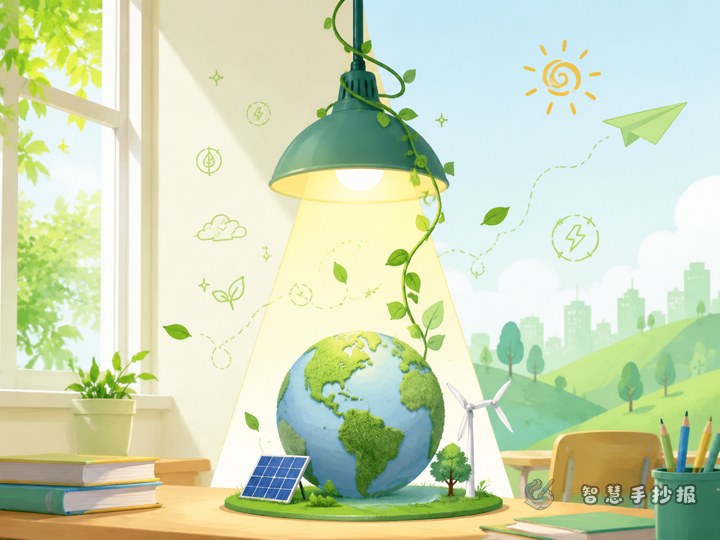
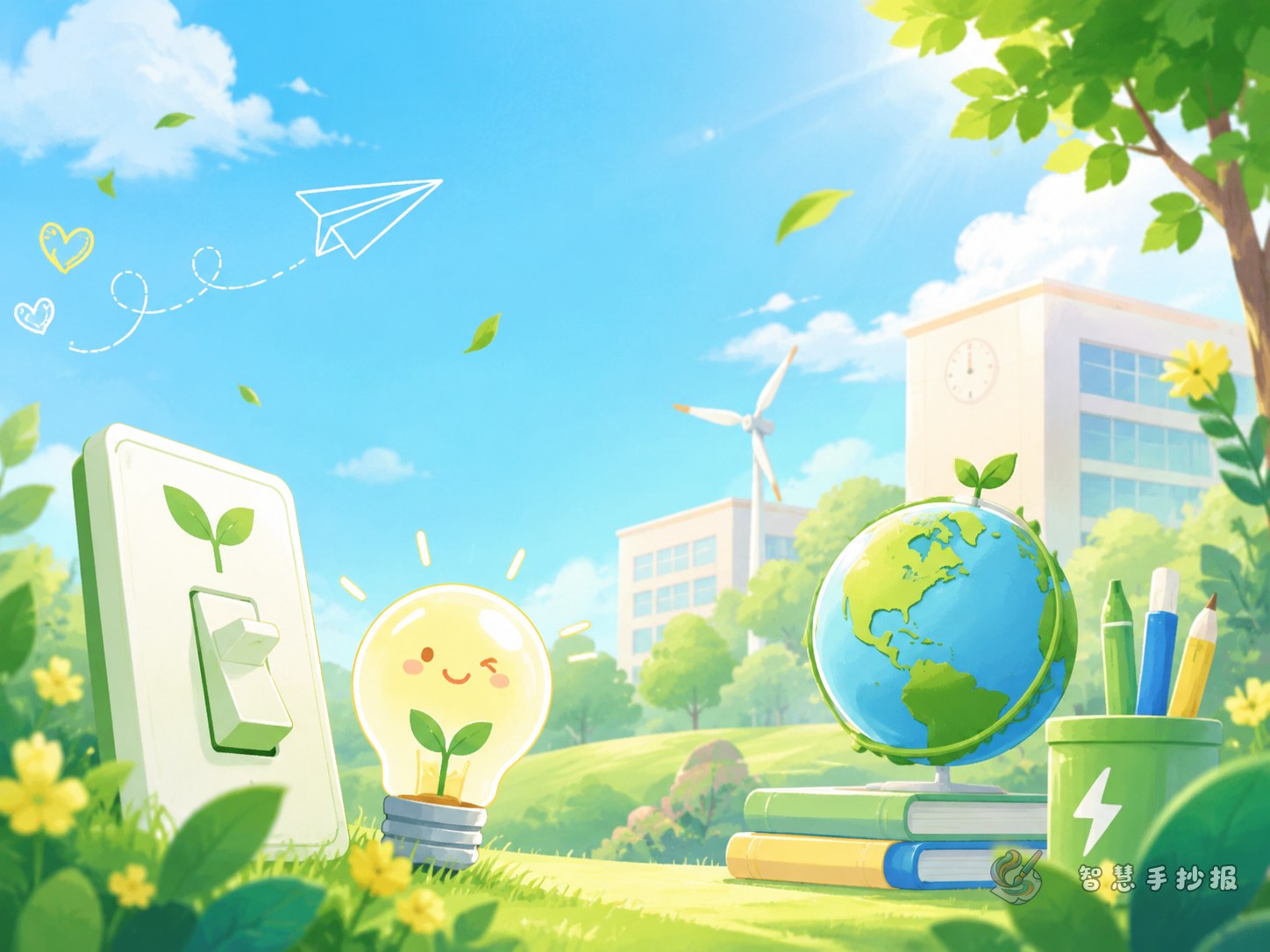
Your main title can be something like “Save Electricity, Start at School” or “Green Campus, Energy-Saving Together.” Add small drawings of light bulbs, leaves, the Earth, or plugs around the title to match the theme.
Section ideas you can use directly
Section 1: Energy-Saving Moments on Campus
- Use fewer lights when natural daylight is enough.
- Turn off lights when leaving classrooms or school rooms.
- Shut down computers and projectors after use.
- Set the air conditioner to a reasonable temperature.
Section 2: Low-Carbon Actions I Can Do
- Remind classmates when lights are left on.
- Use fewer disposable items to reduce waste.
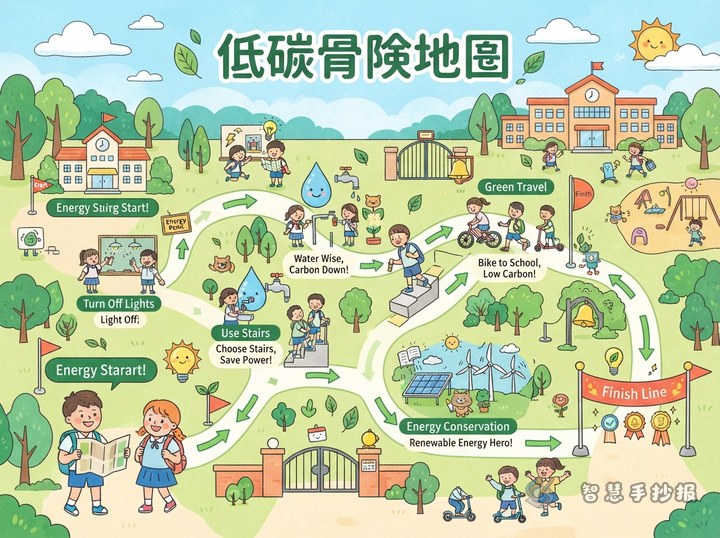
- Take the stairs more often instead of the elevator.
- Use electrical equipment carefully and responsibly.
Section 3: Short Slogans
- Save one unit of electricity, brighten a green campus.
- One quick switch-off, one big step toward low carbon life.
- Save energy from today, starting with me.
- Use electricity wisely and keep the campus green.
Keep the text short and easy to copy
A handwritten newspaper is different from an essay. The key is that people can understand it at a glance. Two to four sentences in each section are enough. Here is a short paragraph that works well as the center text:
Electricity is an important energy source for study and daily life. Lights, fans, computers, and projectors in school all depend on it. Saving electricity is not a small thing. It is an action every student can join. If we build habits such as turning off lights, using devices properly, and valuing resources, our campus can become greener and more civilized.
You may also add this short paragraph:
Low-carbon living starts around us and starts at school. Saving every unit of electricity means protecting resources. Every reminder spreads responsibility. Let us take action together and bring green ideas into daily school life.
Try a more creative page layout
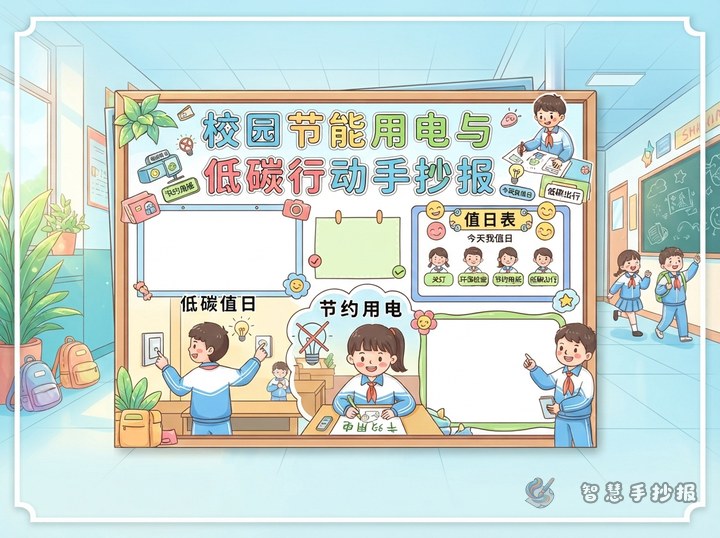
You do not need to use equal boxes for every part. A more interesting layout is one main visual with several scene-based panels. For example, draw a large light bulb in the center and place the title inside it. Around it, create small areas for “Classroom Energy Saving,” “Hallway Habits,” “Computer Room Tips,” and “My Promise.” This makes the page more lively.
- Place a clear title at the top.
- Use one central image such as a light bulb, Earth, or leaf.
- Arrange short text blocks on both sides.
- Leave a bottom area for a pledge or call to action.
For borders, you can draw curving wire lines, leaf patterns, or simple colorful shapes. Clean design matters more than complexity.
How to make teachers feel the campus atmosphere
If you want the work to feel truly school-based, make the text specific rather than just writing “save energy and protect the environment.” For example:
- Check whether all classroom lights are really needed before class.
- Turn off multimedia equipment after use.
- Ask duty students to check lights and fans before leaving.
- Encourage everyone to be a green campus helper.
This kind of content is practical, clear, and closely connected to school life.
A simple ending that completes the page
To finish the handwritten newspaper neatly, add a short call to action such as:
Save electricity, everyone has a part; build a low-carbon campus, starting with me.
If you already have your title and text ideas but still need help with colors or arrangement, you can continue refining the page in the Smart Handwritten Newspaper WeChat mini program.