Turn Energy Saving into a Campus Challenge Map
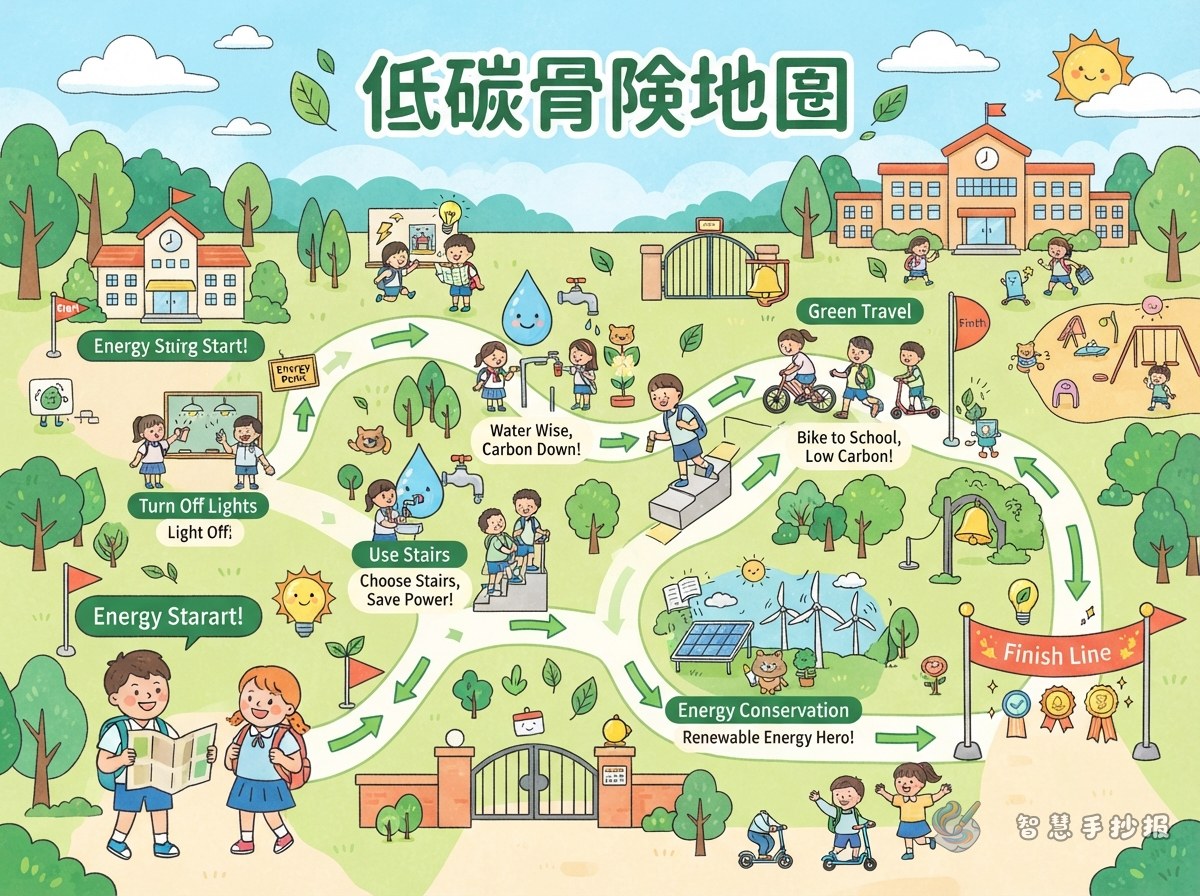
This handwritten newspaper can use a “low-carbon challenge map” as its main idea. Draw a route that starts in the classroom, passes the hallway and reading corner, and ends at the playground. Place a clear title such as “Join the Campus Low-Carbon Challenge” in the center so readers immediately understand the theme.
A simple campus background with a classroom, windows, trees, and sunshine is enough. Connect each area with arrows and add one short task to every checkpoint. This makes the page easy to draw and more engaging to read.
Four Checkpoints to Include
Checkpoint One: The Lighting Observer
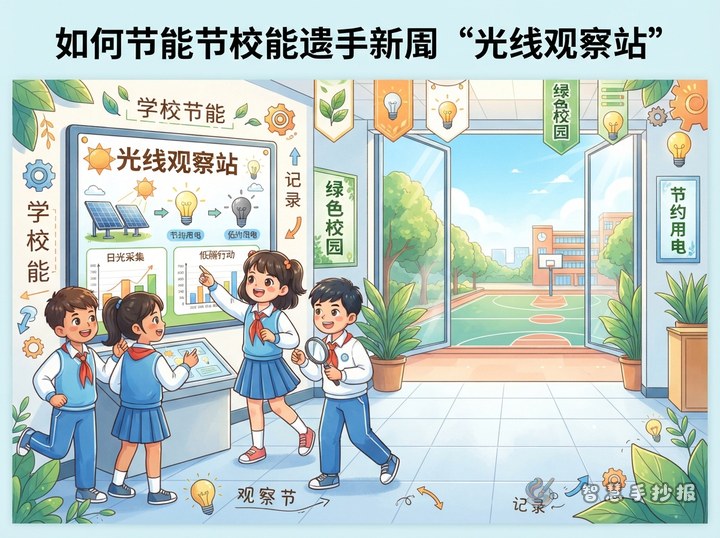
Write a short message such as: “Use daylight when the room is bright, and switch off unnecessary lights before leaving.” Draw a window and a hand turning off a light to show the action clearly.
Checkpoint Two: The Device Rest Stop
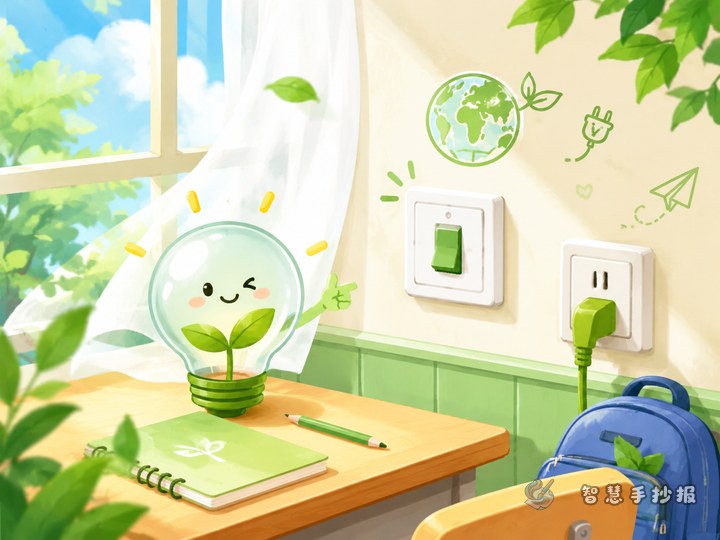
This section can cover computers, projectors, and other school equipment. Write: “Turn devices off after class and avoid leaving them on standby when they are not needed.” A plug, a sleeping computer, and a moon can make the idea easy to understand.
Checkpoint Three: The Comfort Guardian
Offer simple advice about fans and air conditioners: “Use cooling equipment reasonably, keep doors and windows closed when needed, and do not let cooled air escape.” Keep the wording friendly and avoid difficult technical terms.
Checkpoint Four: The Class Action Station
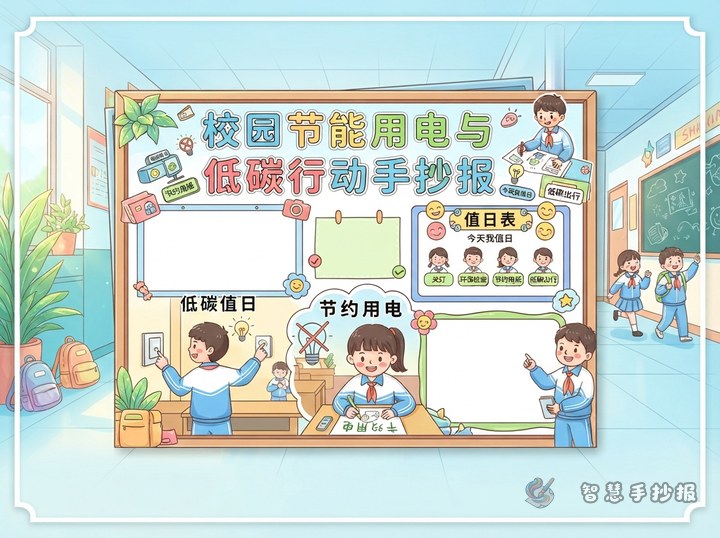
Create a small area where students can add check marks or colors. List four actions: “Switch off lights, turn off the projector, unplug unused equipment, and remind classmates.” This turns the message into a daily activity.
Use Short Sentences for Low-Carbon Ideas
Add an “Energy-Saving Tips” section with phrases such as “Lights off when you leave,” “Less standby, more saving,” and “Save every unit of electricity to protect our campus.” You can also write: “Energy saving is not a one-day contest. It is a daily choice made by everyone at school. A small action becomes meaningful when we keep doing it together.”
At the end of the route, add a “My Green Promise” box. Students can write promises such as “I will check the power before leaving the classroom” or “I will remind people around me to use electricity wisely.” Personal promises are easier for younger students to understand than a page full of facts.
Layout and Color Suggestions
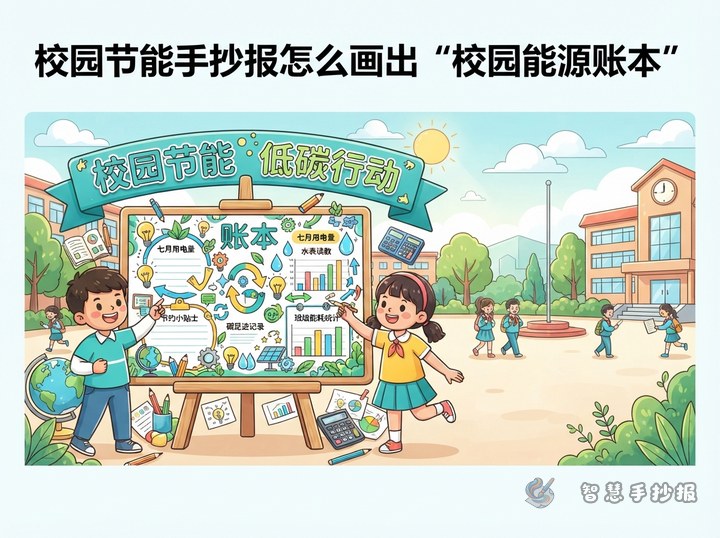
Use a horizontal layout. Put the title, sun, and leaves near the top, draw the largest challenge map in the middle, and place energy-saving phrases and green promises along the bottom. Use different colors for the four checkpoints, such as blue for lighting, orange for devices, green for the environment, and yellow for group action. Keep the full palette to about five colors.
The title can follow the shape of the route or appear on a banner. Make sure every arrow points clearly to the next checkpoint. Lightly divide the page with a pencil before outlining and coloring, and leave enough room for every sentence. Small footprints, leaves, and power symbols can fill empty spaces without making the page crowded. To arrange the title, sections, and layout more quickly, continue designing in the Weizhi Handwritten Newspaper WeChat Mini Program.