Build the Theme Around a Late-Autumn Meal
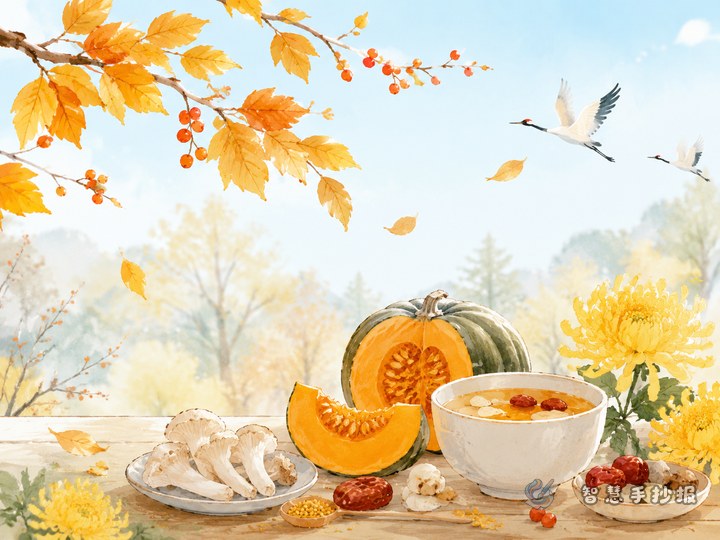
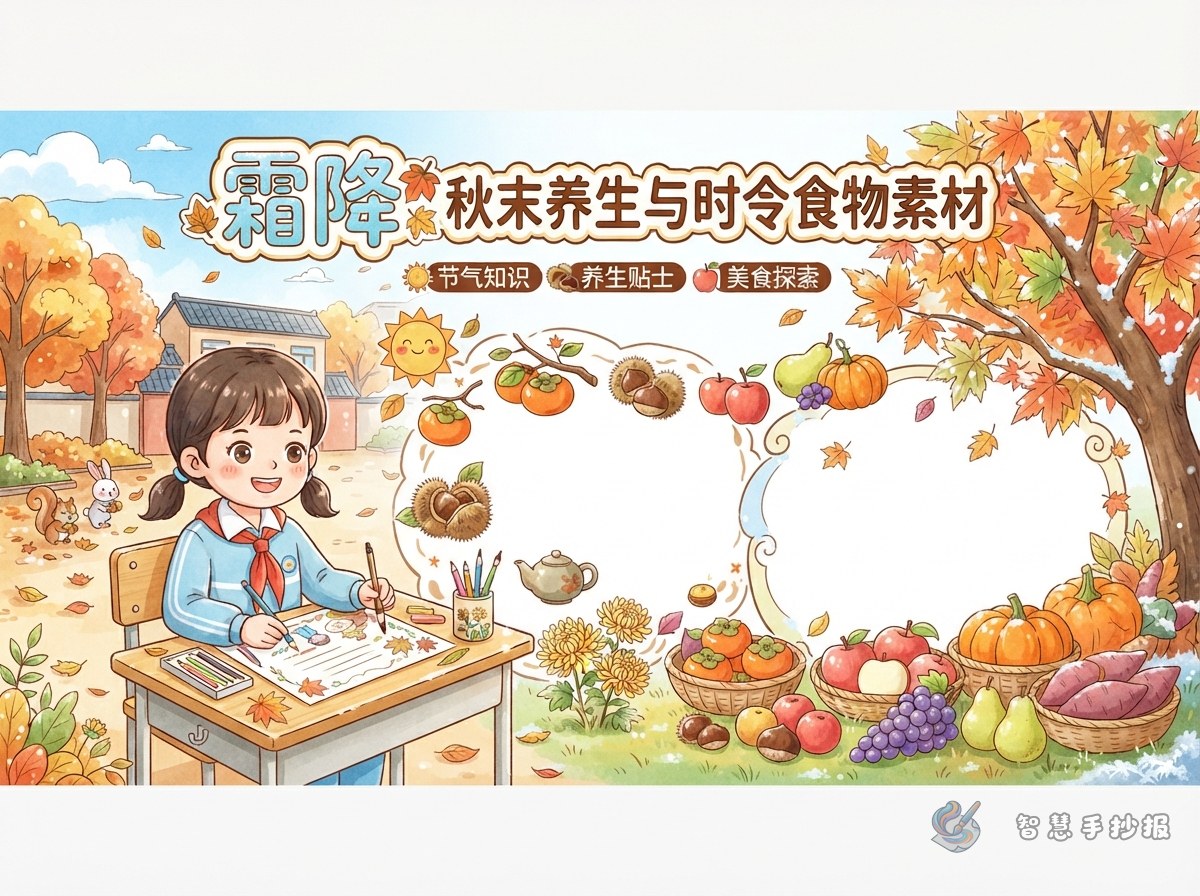
A Frost's Descent poster can connect late-autumn weather, everyday warmth, and seasonal foods. Draw a round dining table in the center with persimmons, pears, Chinese yam, and radishes. Add fallen leaves, chrysanthemums, light morning frost, and a warm-water bottle to make the season easy to recognize.
Useful Facts for the Writing Sections
A Quick Solar Term Profile
Frost's Descent is the final solar term of autumn. Temperatures continue to fall, and the difference between daytime and nighttime temperatures may become more noticeable. Its name describes a period associated with colder weather and possible frost; it does not mean frost appears everywhere on that exact day.
Healthy Late-Autumn Habits
- Dress for changing temperatures: Add a jacket during cool mornings and evenings, and dry off after exercise.
- Keep a steady routine: Get enough sleep and enjoy suitable activities such as walking or skipping rope.
- Remember water and fresh air: Drink water regularly in dry weather and ventilate rooms appropriately.
Create a Four-Color Seasonal Menu
Grouping foods by color makes the poster attractive and easy to scan. An orange section can feature persimmons and pumpkins. A white section can include Chinese yam, lotus root, and radish. Use cabbage and spinach in the green section, then pears and corn in the yellow section. Add short notes such as “steam or boil,” “good for a simple soup,” or “serve fresh.”
Keep the food advice focused on variety, balance, and sensible portions. Avoid presenting home remedies as medical treatments. Students with allergies or special dietary needs should follow guidance from their families and qualified professionals.
Turn the Page into a Visual Timeline
- Place a frosty morning scene and a short solar term introduction at the upper left.
- Use the center for the four-color menu, framed by small plates or baskets.
- Add scenes of wearing a jacket, drinking water, and exercising on the right.
- Finish with “My Late-Autumn Plan” at the bottom and list three practical habits.
Orange-red, leaf green, and pale gray can represent ripe produce, vegetables, and morning frost. A few scattered leaves can separate sections without enclosing every paragraph in a heavy border. Leave enough open space around the title and text.
A Short Closing Paragraph
As Frost's Descent arrives, autumn grows deeper. By noticing weather changes, sleeping regularly, staying active, and eating a varied diet, we can discover practical seasonal wisdom in everyday meals and clothing.
After choosing the sections, students and parents can open the Zhihui Shouchaobao WeChat Mini Program to select a layout, organize the text, and continue creating the poster.