Why choose the Temple of Heaven for this topic
The Temple of Heaven is an excellent subject for a handwritten newspaper about traditional Chinese architecture. It is visually recognizable, culturally meaningful, and easier for students to understand than a broad introduction to ancient buildings. Instead of treating it like a travel note, the page can focus on architectural beauty, ritual meaning, and traditional design ideas.
If space is limited, students do not need to cover every building. Focusing on the Hall of Prayer for Good Harvests, the Circular Mound Altar, and the Echo Wall is enough to build a clear and strong page.
Key points students can write on the page
1. What the Temple of Heaven is
The Temple of Heaven is in Beijing. In the Ming and Qing dynasties, emperors used it to worship heaven and pray for a good harvest. It is not an ordinary palace. It is a traditional architectural complex with clear functions and careful layout, showing how much ancient people valued nature, seasons, and ritual order.
2. Architectural highlights worth including
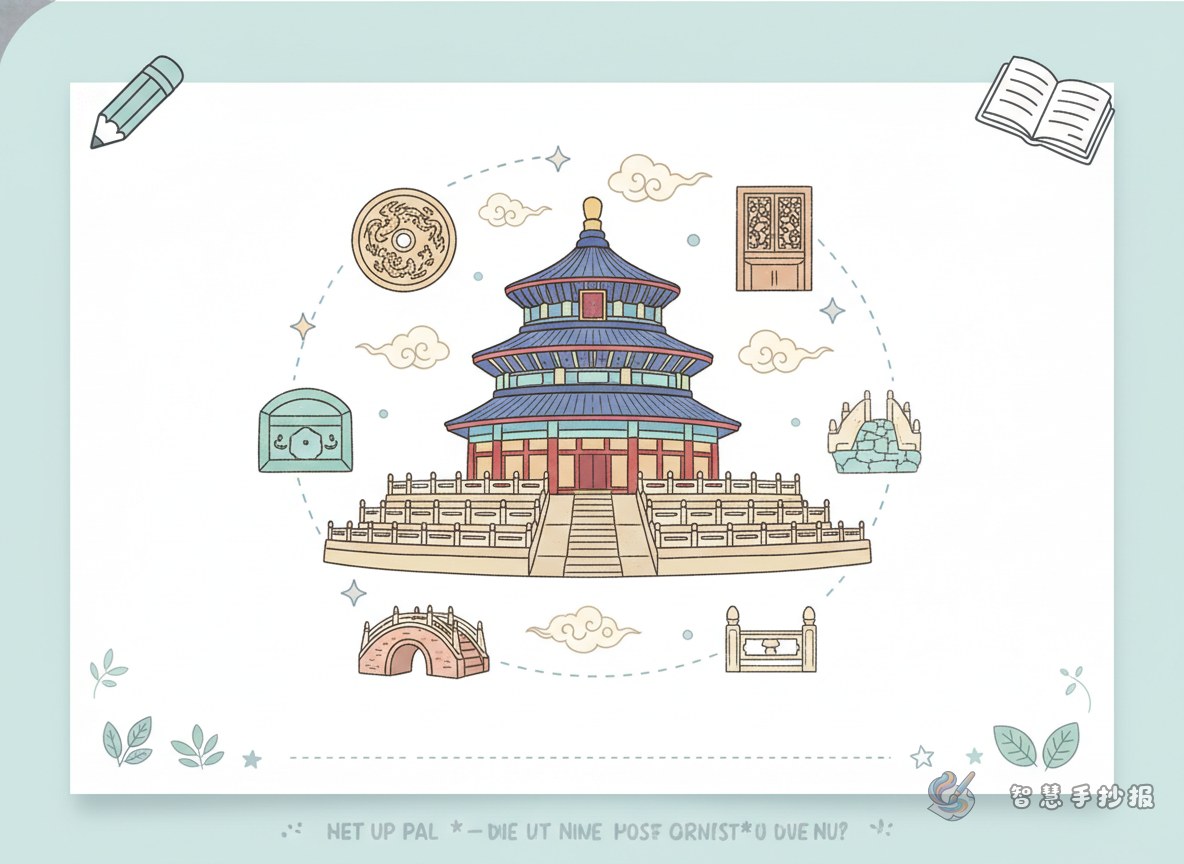
- Hall of Prayer for Good Harvests: Its elegant round form makes it the best main drawing for the page.
- Circular Mound Altar: The layered steps create a solemn and ceremonial feeling.
- Echo Wall: This can introduce an interesting point about sound design in ancient architecture.
3. Cultural meaning
The Temple of Heaven reflects the idea of harmony between heaven, earth, and human ritual. Circular forms often symbolize heaven, and blue colors suggest the sky. These details work very well in a small “culture facts” box on the handwritten newspaper.
Useful writing material for students
The following short lines can be directly adapted for a school page:
- The Temple of Heaven is a representative example of ancient Chinese ritual architecture.
- The Hall of Prayer for Good Harvests shows the beauty of traditional wooden architecture.
- The Temple of Heaven carries people’s hopes for good weather and good harvests.
- Its layout shows that traditional Chinese architecture values symmetry, order, and symbolism.
- Traditional buildings are not only structures, but also carriers of history and culture.
Students may also add a personal line such as: The Temple of Heaven feels like a living textbook of traditional architecture.
A clear layout idea for the handwritten newspaper
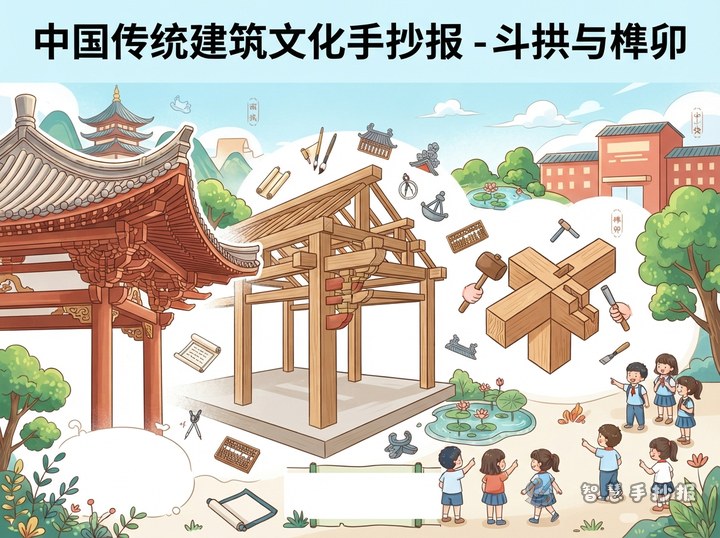
This topic works well with a central illustration and four surrounding content sections. Draw the Hall of Prayer for Good Harvests in the middle, then place short blocks of writing around it.
- Top title area: Use a title like “Traditional Architecture in the Temple of Heaven.”
- Left section: Introduce what the Temple of Heaven is and what it was used for.
- Right section: Present the main architectural highlights.
- Bottom section: Add cultural meaning, fun facts, and personal thoughts.
For decoration, students can use cloud patterns, roof-tile motifs, lantern lines, or simple traditional borders. Blue, red, gold, and light gray are good color choices.
How to make it an architecture culture page, not just a sightseeing page
Many students only write where the Temple of Heaven is and what visitors can see there. To match the theme of traditional Chinese architecture culture, the focus should be on architectural form, layout, symbolism, and ancient wisdom.
Two useful mini-sections are “Architectural Clues I Found” and “Wisdom in Ancient Buildings.” In these parts, students can write about round shapes, layered platforms, symmetry, and the Echo Wall. This makes the whole handwritten newspaper feel more thoughtful and more closely connected to architecture culture.
If more ideas are needed, users can also explore more title styles, border inspiration, and page layout ideas in the Zhihui Shouchaobao WeChat mini program before finishing their design.