Turn the Page into a Walk Through an Ancient City
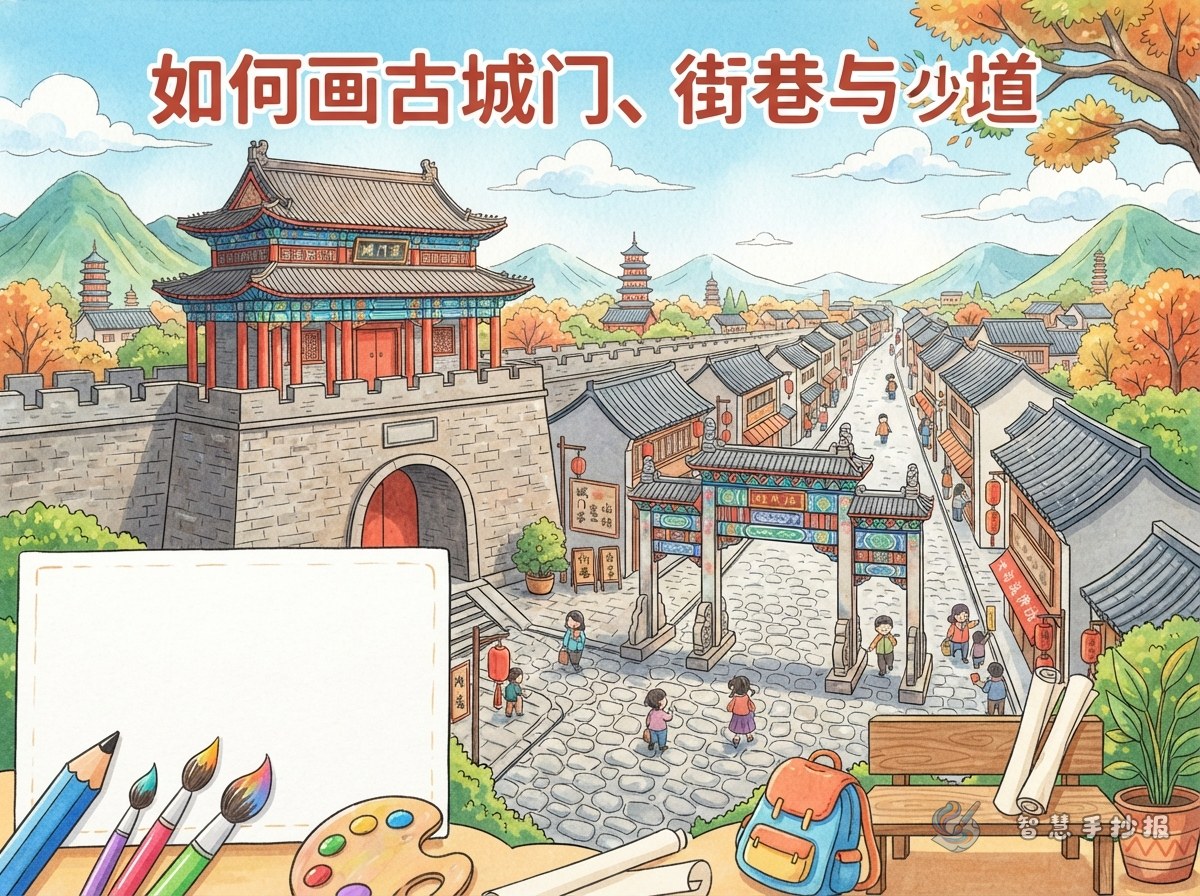
This project does not need to list many city names. Instead, imagine the whole page as a walking route that begins at a city gate, passes through old streets, and ends at an archway. This story-like structure introduces traditional architecture while giving the page a clear visual direction. A suitable title is “Entering the Ancient City Through Its Gate”.
- City gate: Use it as the entrance to the page and show the strength of the old city.
- Old street: Let it extend through the center and describe shops, homes, and everyday movement.
- Archway: Use it as the final cultural stop and explain its commemorative or symbolic meaning.
Three Building Stops and Ready-to-Use Text
City Gate: Begin with the Outer Shape
You can write: “The city gate is like a solid frame around an ancient city. It connects the roads inside and outside while showing how earlier cities valued order and protection.” Draw an opening, a wall, and a tower, using firm lines to suggest brick and stone.
Old Street: Architecture Meets Daily Life
You can write: “Old streets are the liveliest part of an ancient city. They connect homes, shops, and public spaces, allowing people to walk, trade, and talk. Traditional buildings are therefore more than quiet scenery.” Add tiled roofs, wooden doors, a stone path, and a few small shop fronts.
Archway: A Doorway to Cultural Memory
You can write: “An archway may carry meanings of remembrance, recognition, or place-making. Its beams, columns, and decorative patterns show how traditional buildings value balance and detail.” Keep the drawing simple by using symmetry and a few clear motifs.
Layout Plan: Lead the Eye Along the Road
- Draw a large city gate on the left or in the upper-left corner, and place the title nearby as the visual entrance.
- Use a winding stone path, a wall line, or a decorative border to connect the sections.
- Place the old-street scene in the center, adding small houses, lanterns, trees, and simple people silhouettes.
- Arrange the archway and a short fact box in the lower-right area so the composition has a clear ending.
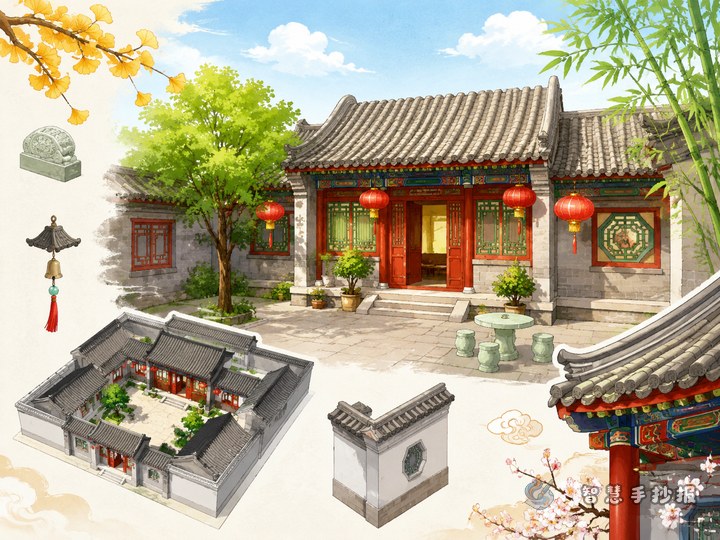
- Add seal-like shapes, roof-tile patterns, cloud motifs, or window-lattice designs in the corners, but avoid repeating too many decorations.
Add an Ancient-City Observation Card
At the bottom of the page, create a small section titled “What Did I Notice in the Ancient City?” Use questions instead of a long paragraph:
- Why do city gates often look solemn and strong?
- How do old streets connect different buildings and areas of daily life?
- How can visitors help protect historic buildings and public spaces today?
This approach combines architectural knowledge with personal observation and makes it easier for children to write a conclusion in their own words. A possible ending is: “Protecting an ancient city means protecting not only its buildings, but also its memories, ways of life, and cultural spirit.”
Color and Drawing Checklist
- Try brick red, gray-blue, cream, and ink black for a bright yet time-worn feeling.
- The title may resemble a signboard or a seal, but the main text should remain neat and easy to read.
- Sketch the building shapes first, then outline them in black or dark brown. Leave small areas uncolored on walls and roofs to keep the page airy.
- Check that each section includes an architectural feature, a cultural meaning, and a hand-drawn element rather than showing scenery alone.
If you need help arranging the title, sections, and decorative areas, open the WeChat Mini Program Smart Handwritten Newspaper and continue creating your page with your own ancient-city details.