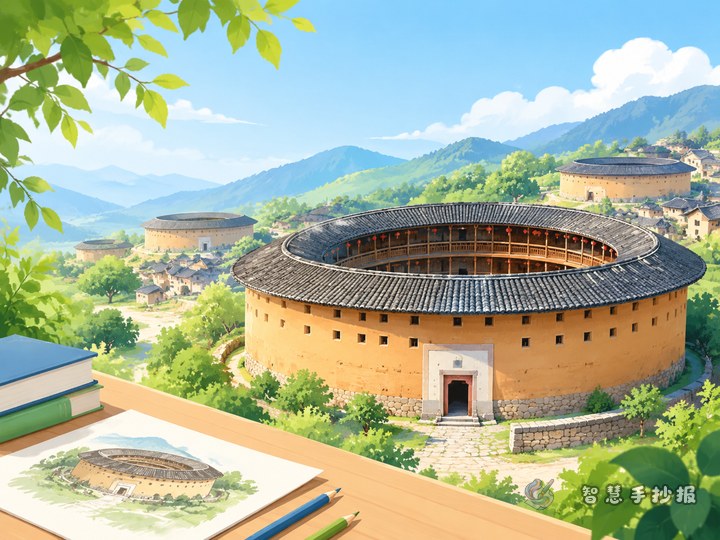
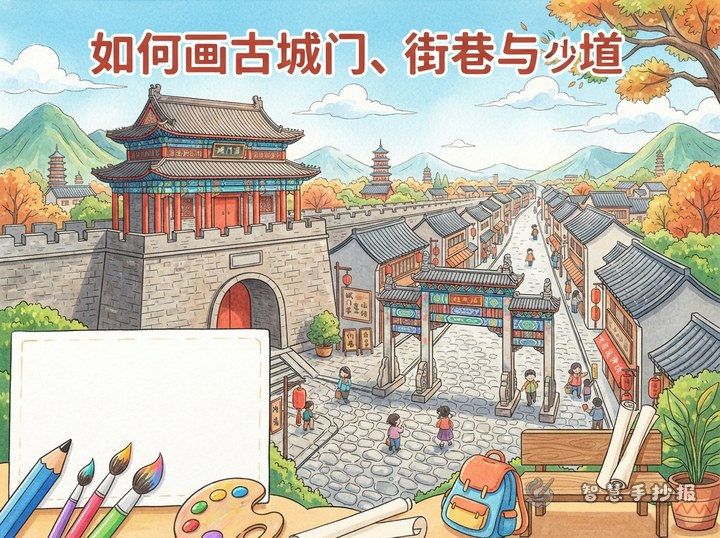
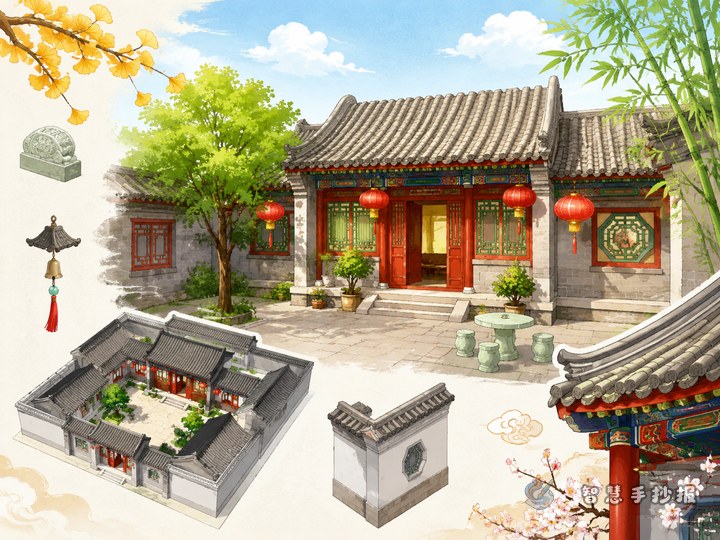
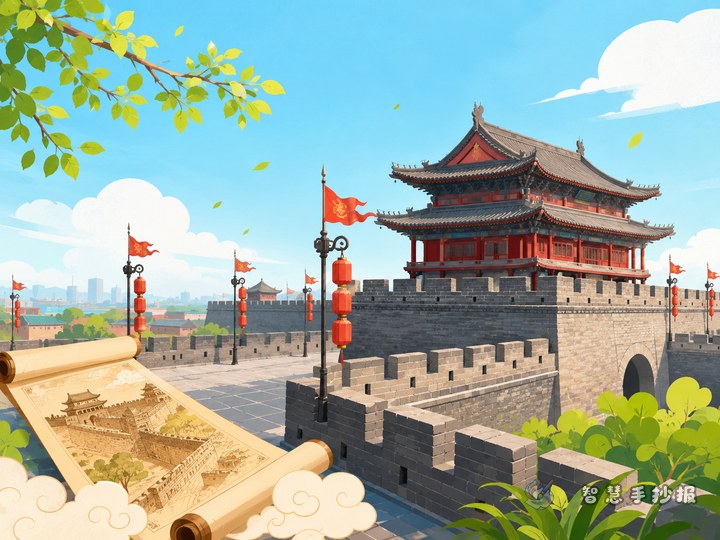
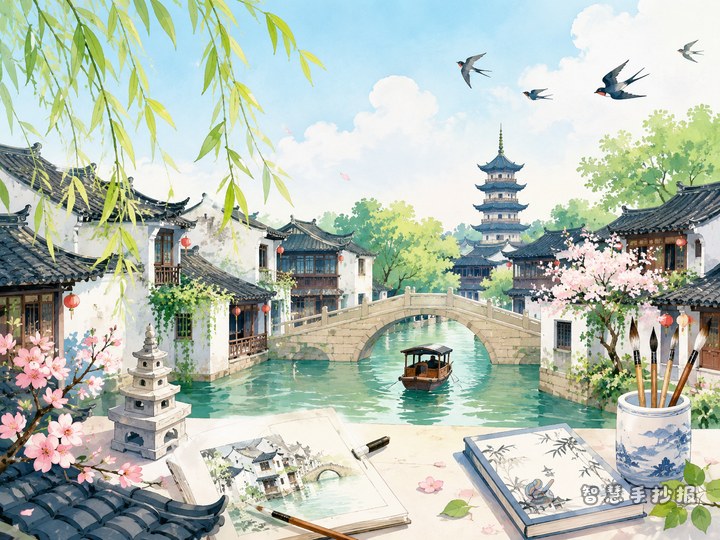
Start with the most recognizable Huizhou building features
You do not need to include every fact about architecture. Pick the most representative elements first. The easiest and most effective ones are white walls, black tiles, horse-head walls, courtyards, carved wooden windows, and stone-paved lanes. These can be used as section titles or short notes beside drawings.
If you want a stronger ancient city feeling, connect the buildings with town life. Add old alleys, archways, ancestral halls, bridges, and traditional shops so the page shows both architecture and cultural atmosphere.
Section ideas that are easy to use
A clear handwritten newspaper page usually works well with about four sections.
- Main features of Huizhou architecture: brief lines about white walls, black tiles, horse-head walls, and courtyard design.
- Scenes from the old town: describe lanes, stone roads, gates, and quiet streets.
- Traditional culture notes: mention family traditions, carved decorations, plaques, and local customs.
- What I noticed: write a few child-friendly reflections to make the page more lively.
If the paper is larger, add a mini vocabulary box with terms like horse-head wall, courtyard, brick carving, and wooden carving.
Writing ideas students can use directly
Keep each paragraph focused on one point. That makes the page easier to read and better for a school project.
- Huizhou houses look quiet and elegant because of their white walls and black roofs.
- Horse-head walls are beautiful and also help separate buildings.
- Old stone lanes make people feel the long history of the town.
- Doors, windows, and eaves often show fine traditional craftsmanship.
- Ancient buildings are not only houses, but also records of how people once lived.
Younger students can use short sentences, while older students can add one small paragraph about protecting traditional architecture.
Leave space in the layout to match the style
Huizhou architecture feels calm and refined, so the page design should not be too crowded. Place the title at the top center, and use rooflines, window patterns, or wall silhouettes as decorations. A two-column layout works well, or you can put one main drawing in the center and arrange smaller sections around it.
Use thin borders rather than heavy ones. Small drawings of roofs, lanterns, tiles, bridges, or carved patterns can make the whole page feel connected. Leaving some blank space will help the design look cleaner and more traditional.
Small details that make the page stand out
You can add roof curves or lattice patterns into the title lettering. Use dark gray or black for subtitles and keep the body text neat and readable. Decorative elements do not need to be complicated. Repeating two or three simple motifs is often enough.
Before finishing, check three things: whether the page stays focused on Huizhou architecture, whether the writing is short and clear, and whether the visuals feel unified. If you want to improve the layout or add more material, you can continue creating in the Smart Handwritten Newspaper WeChat mini program.