Choose One Clear Observation Story
A soybean changes noticeably as it grows from a dry seed into a young plant. Your handwritten newspaper can follow the question, “What did I discover after planting soybeans myself?” Connect each task with an observed result instead of filling the page with unrelated facts.
Build a Seed-to-Seedling Timeline
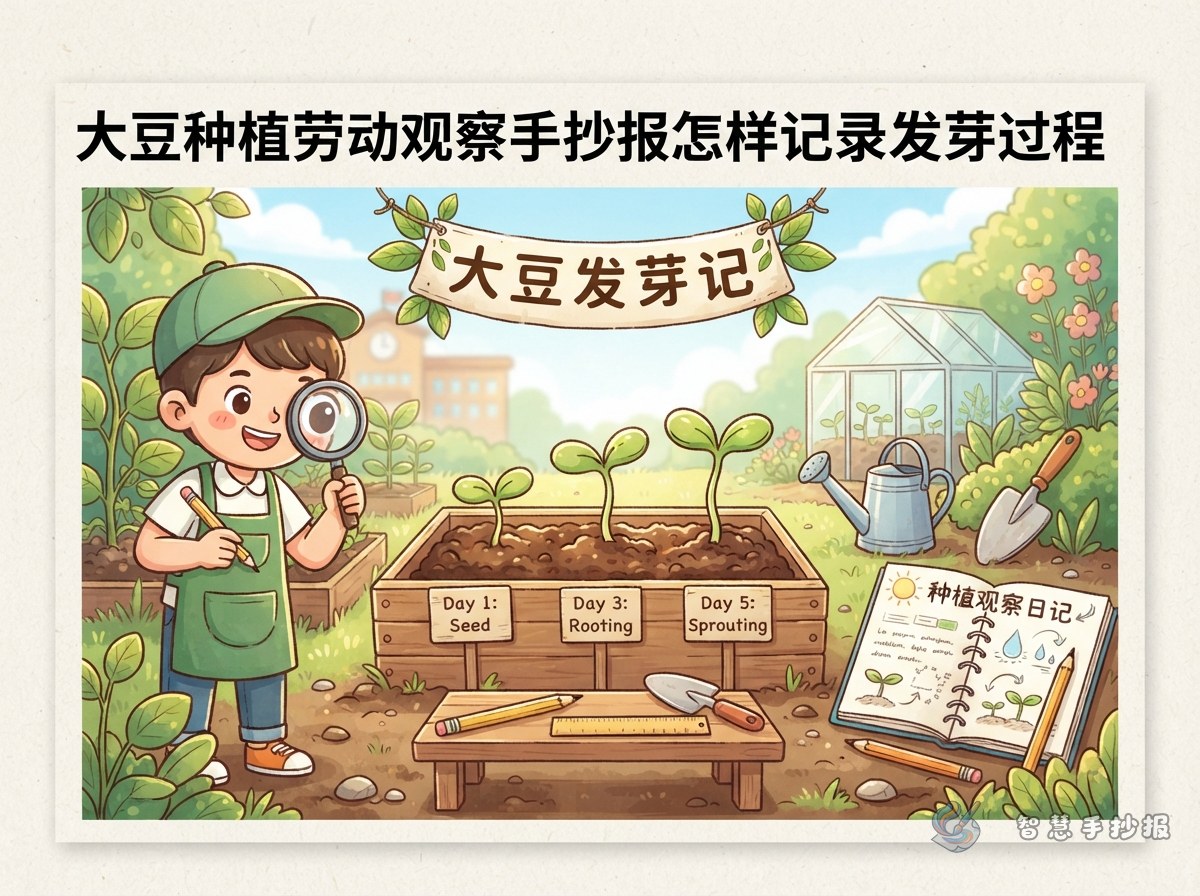
Place a horizontal or gently curved timeline across the center of the page. At each point, add the date, the work completed, and the visible change. Germination speed varies with moisture, warmth, light, and seed condition, so use your own dates rather than copying a fixed schedule.
- Planting day: Select healthy seeds, loosen the soil, make shallow holes, cover the seeds, and water carefully.
- Germination: Look for raised soil, a split seed coat, an emerging shoot, or cotyledons appearing above the soil.
- Seedling growth: Measure height, count leaves, and note changes in color, stem position, and leaf direction.
- Daily care: Record watering, loosening soil, and removing weeds, along with the condition of the soil and seedlings afterward.
Short Writing Samples for the Page
Work Record
I broke up the small clumps of soil and made holes of similar depth. After placing the soybean seeds inside, I covered them with a thin layer of soil without pressing too hard. I poured water slowly near the edge of the pot so the seeds would not be washed out.
Growth Description
At first, the soil looked unchanged. Later, one small area began to rise. A curved shoot pushed through the soil and gradually became upright. The cotyledons opened, and the new green leaves grew larger over the next few days.
What I Learned
Planting soybeans taught me that the work does not end after sowing. The plants need patient care and regular observation. Too much or too little water may affect growth, and careful notes help reveal small changes that are easy to miss.
Add a Simple Comparison
Choose two plants and compare their height, number of leaves, and soil moisture at the same time each day. Differences in germination time or leaf size are useful observations, so keep the real results even when they are uneven.
- Measure on the same day and use centimeters consistently.
- Describe the soil as moist, slightly dry, or dry.
- Use phrases such as “one possible reason is” when the cause has not been tested.
Arrange It Like a Mini Planting Record
Put the title at the top, tools and planting steps on the left, the growth timeline in the center, and the comparison notes and reflection on the right. Green works well for seedlings, yellow can highlight soybean seeds, and brown can represent soil. A border of pods, leaves, or small garden tools adds character while leaving enough room for readable text.
After organizing the material, open the 智慧手抄报 WeChat Mini Program to select a suitable layout and continue making the soybean planting observation handwritten newspaper.