Turn Flat Landmarks into Something You Can Open
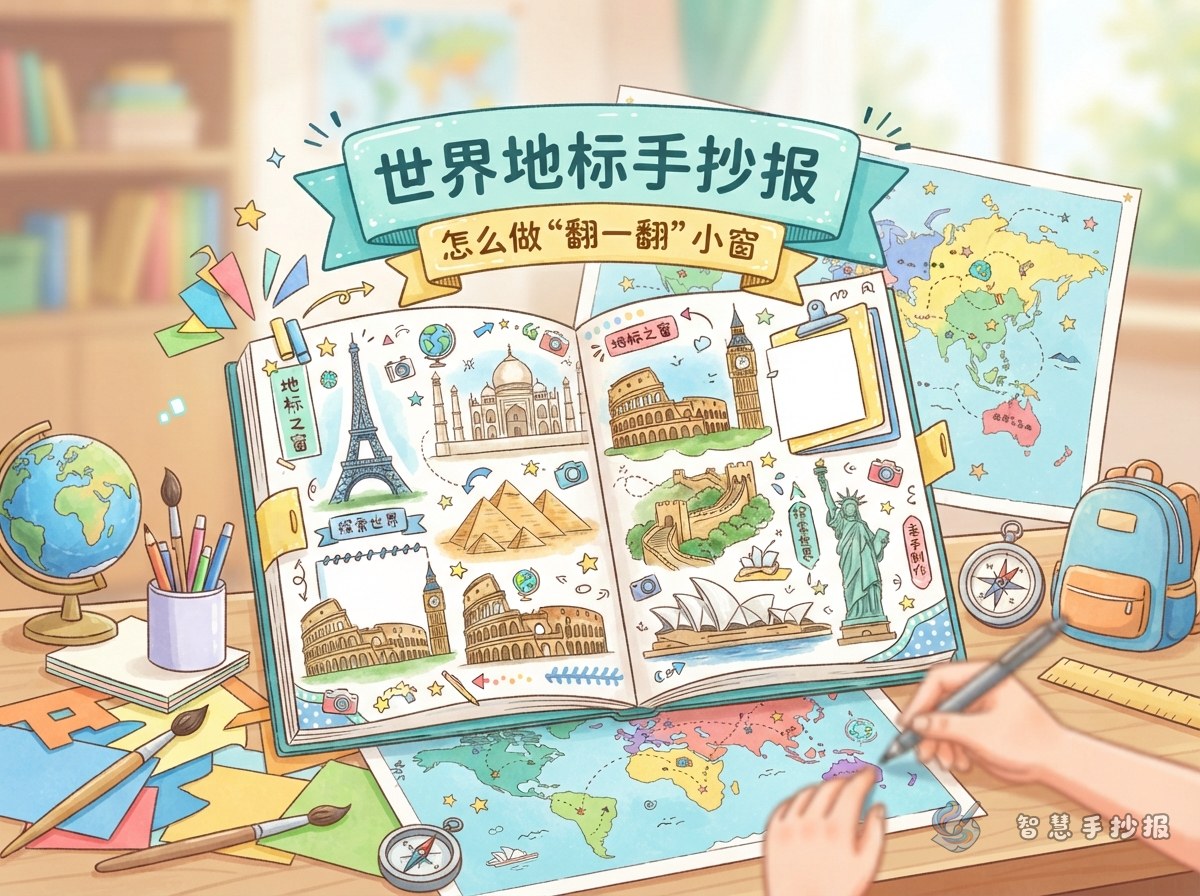
Most world landmarks posters end up as a map covered in printed pictures, and readers skim past them in seconds. Lift-the-flap windows change that. A visitor sees a landmark drawing or a country name on the front, then lifts the flap to reveal a fact underneath. The poster stops being something to look at and becomes something to explore.
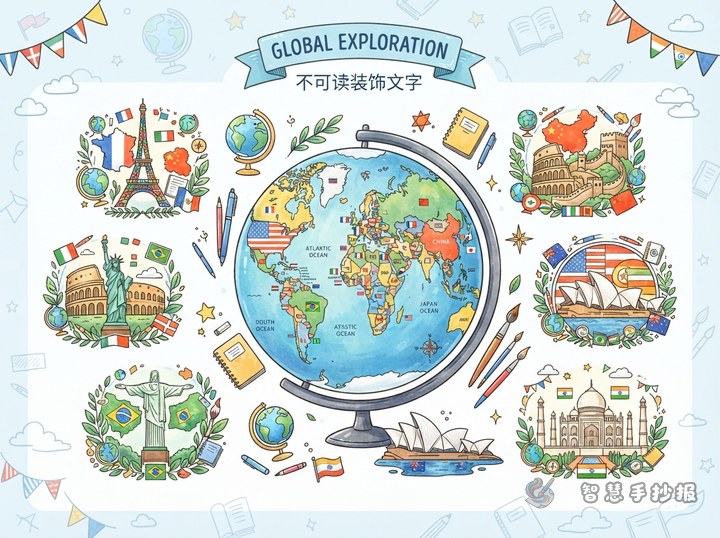
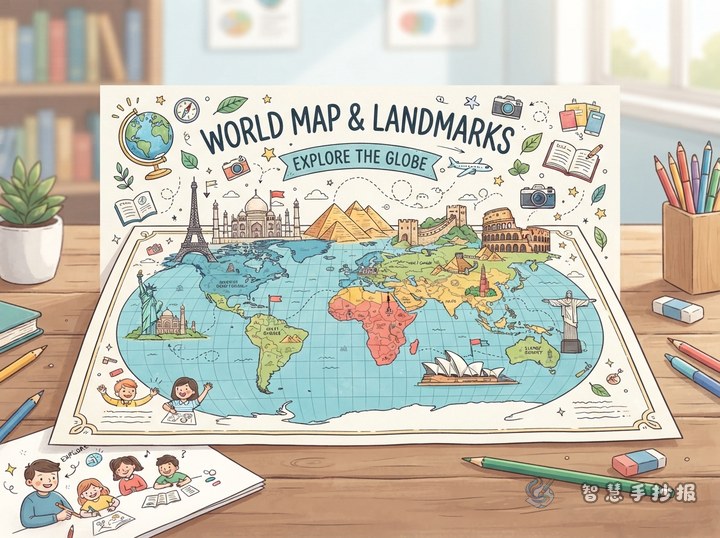
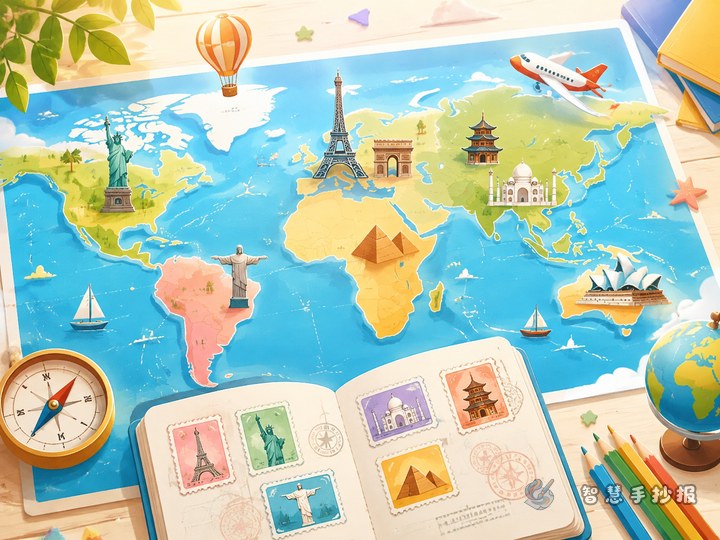
Choose Six to Eight Landmarks, One Continent at a Time
Resist the urge to include everything. Six to eight landmarks keeps the page airy and still shows the whole world. Try this shortlist:
- Asia: the Great Wall of China, Mount Fuji, the Taj Mahal
- Europe: the Eiffel Tower, the Leaning Tower of Pisa, Big Ben
- Africa: the pyramids of Egypt
- North America: the Statue of Liberty
- South America: Christ the Redeemer in Rio de Janeiro
- Oceania: the Sydney Opera House
Test the layout with paper squares first
Write each landmark name on an equal-sized slip of paper and move the slips around your world map. You will quickly see which corners are crowded and which are bare, and you can fix it before touching the final sheet.
Three Lines Behind Every Window
Flap space is limited, so a tidy three-line pattern works best:
- Line one: the landmark name, for example "Eiffel Tower"
- Line two: the country and city, for example "France, Paris"
- Line three: one feature, for example "built from iron and lit up at night"
Encourage children to write the third line in their own words. Short, concrete descriptions stick in a reader's mind far better than a copied sentence from a reference book.
Four Steps to Build the Windows
- Sketch the window outlines in pencil: rounded squares, arches or simple landmark silhouettes all work.
- Cut along three sides of each outline and leave the fourth side uncut as the hinge.
- Fold the flap gently and press along the crease so it opens and closes smoothly.
- Return the flap to its place, draw the landmark or write the country name on the outside, and add the three lines inside.
Tip: keep every hinge pointing the same way, either all up or all left, and the finished page will look far neater.
Titles, Borders and Colour Choices
- Title ideas: "Open a Window on the World" or "Landmark Book: Lift and Look".
- Keep the map pale, with light yellow or pale green continents, so the flaps stand out.
- Link the windows with a thin flight-path line and add small dots as cities along the route.
- Limit the whole poster to four colours, using dark tones only for the title and landmark names.
Final Checks Before You Hand It In
- Every line behind a flap is easy to read and clear of the fold line.
- Each landmark is matched to the correct country, with consistent spelling.
- Spacing is even and open flaps do not cover their neighbours.
If you would like a ready-made framework, open the Smart Handwritten Newspaper mini program in WeChat, choose the world map and national landmarks theme, arrange the columns, and then copy the layout onto paper by hand.