Why Three Sentences Per Landmark Is Enough
Plenty of students finish the map outline and the decorative border, then freeze at the writing stage. How much should one landmark get? Too much and you cannot copy it all; too little and the page looks bare. The fix is a three-sentence card for each landmark, with one idea per sentence. Six completed cards give the poster exactly the right amount of text.
Where It Is, How It Looks, Why It Matters
- Sentence one: the location. Say which country and city the landmark belongs to, so readers know where to look on the map. Example: "The Eiffel Tower stands in Paris, France, beside the River Seine."
- Sentence two: the appearance. Pick one clear feature, such as color, shape or outline. Example: "The Sydney Opera House looks like a set of white shells stacked together."
- Sentence three: the meaning. Explain why it is famous, whether it is a monument, a performance venue, an ancient structure or a modern city symbol.
Six Easy Landmarks With Lines You Can Rewrite
These are descriptive lines. Swap a word or two and they become your own sentences.
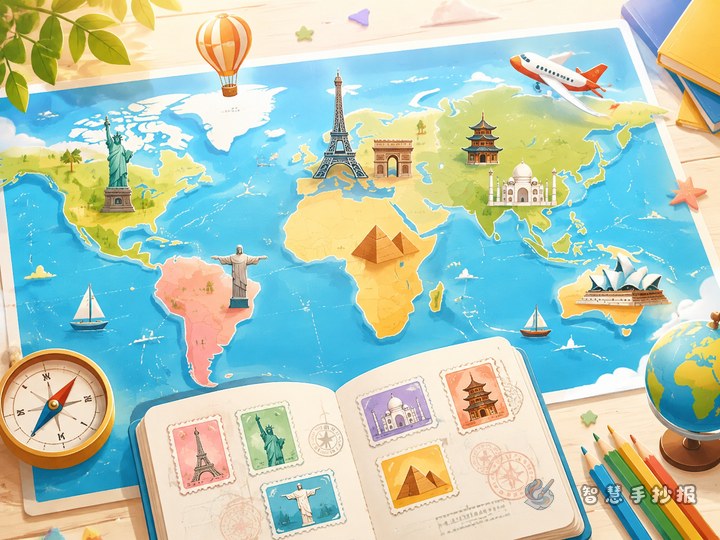
- Eiffel Tower (Paris, France): a tall open tower built from iron; its four sides are covered in a lattice of steel beams; it is the most recognizable symbol of the city.
- Statue of Liberty (New York, USA): a huge copper figure standing on a small harbor island; one hand holds a torch and the head wears a spiked crown; it was the first sight many travelers saw on arriving.
- Sydney Opera House (Sydney, Australia): a white building by the water; its roof looks like a group of opened shells or sails; it is a place for music and theatre.
- Pyramids (Giza, Egypt): four-sided stone shapes rising from the desert; their sloping edges meet at a single point; they are very old tomb structures.
- Leaning Tower of Pisa (Pisa, Italy): a white round tower that clearly tilts to one side; each level is ringed with columns; it is famous for leaning without falling.
- Great Wall (China): a long wall that rolls along the mountain ridges; walls, passes and beacon towers link into one line; it was an important defensive project in ancient times.
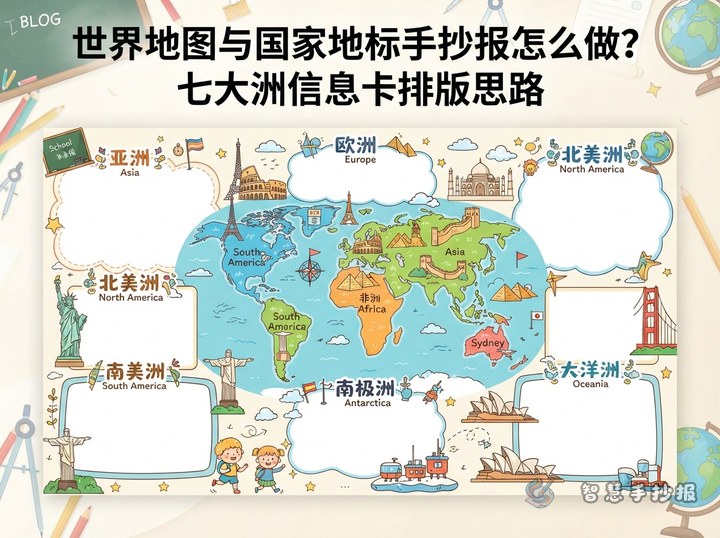
Layout: Map as the Base, Cards as Stamps
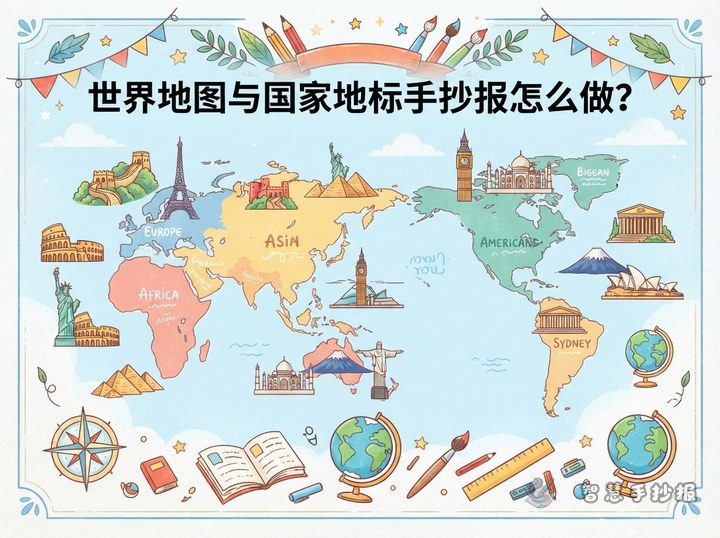
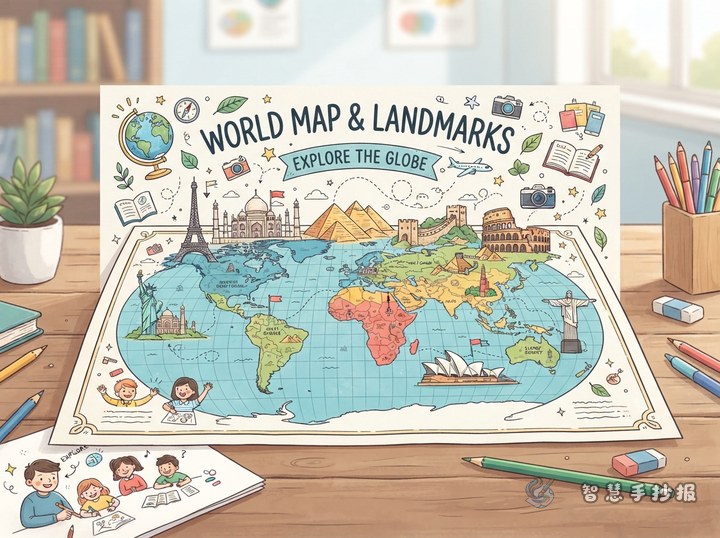
- Sketch the map outline lightly in pencil, separating land from ocean, and leave the ocean area free of text.
- Mark the rough position of each of the six landmarks with a small dot or star.
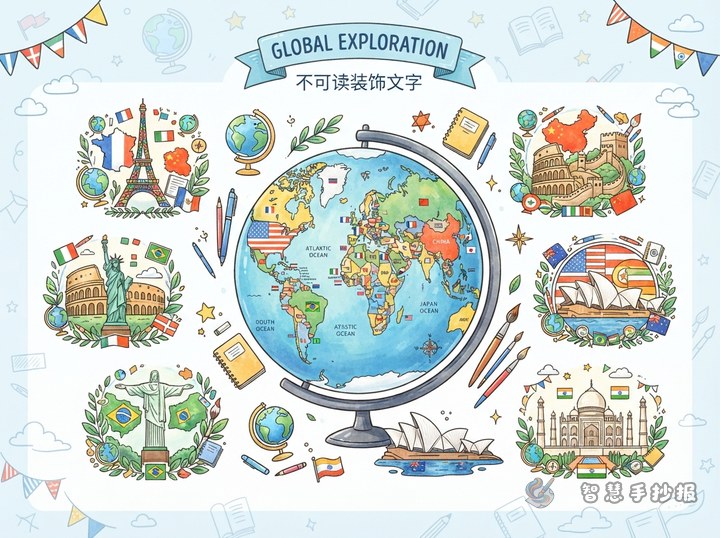
- Reserve four to six square card spaces along the edges of the map, one landmark per card.
- Draw short lines from each card to its dot on the map, which creates a visible travel route.
- Use the same border style for every card, such as a dotted line, so the whole page looks organized.
Neat Handwriting and a Balanced Page
- Draw light pencil guidelines first and erase them afterwards, so the lines stay level.
- Keep every sentence to a similar length, and the cards will match in size.
- Write place names and landmark names in a different color so the key points stand out.
- If you run out of time, replace the last card with a small illustration instead of squeezing in text.
A Quick Note Before You Start
Decide on your landmarks before you draw the layout, and you will erase far less. Once your text is ready, you can search for 智慧手抄报 in WeChat Mini Programs, choose a world map and national landmarks theme, and place your finished text into the matching sections to complete the poster.