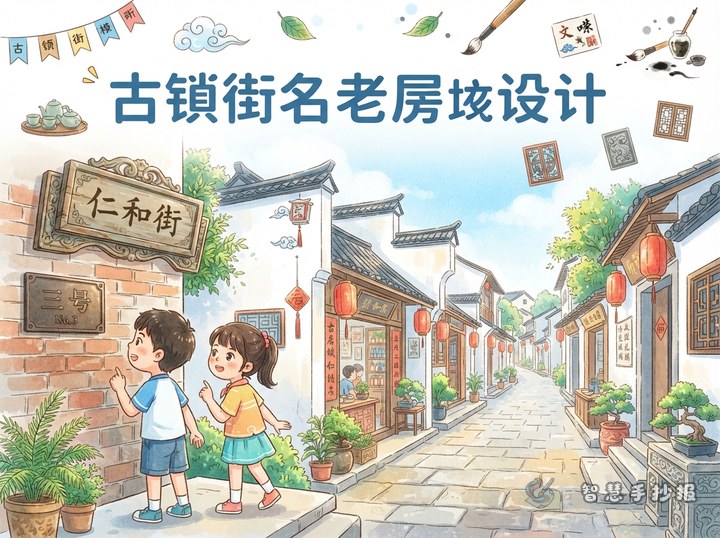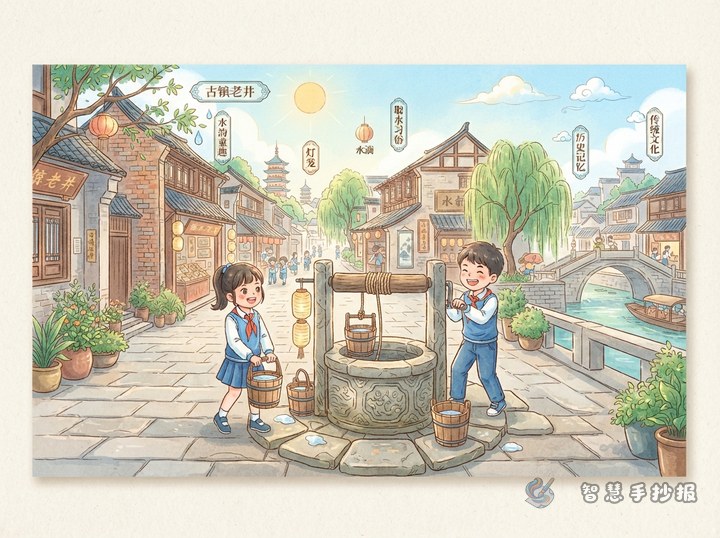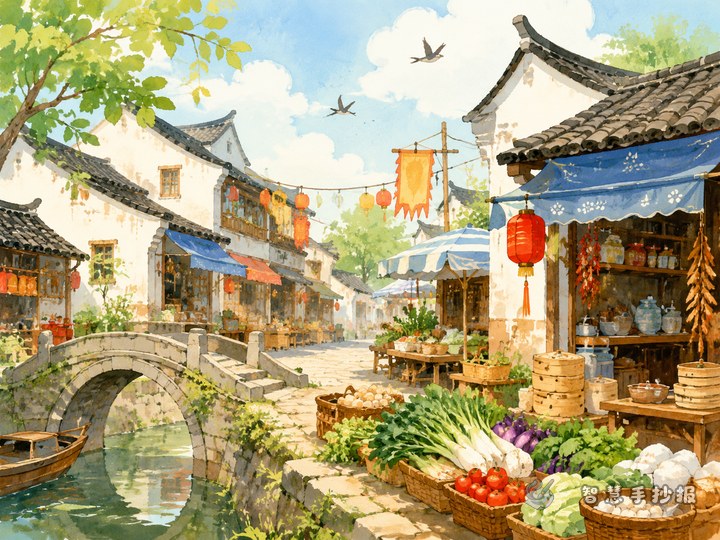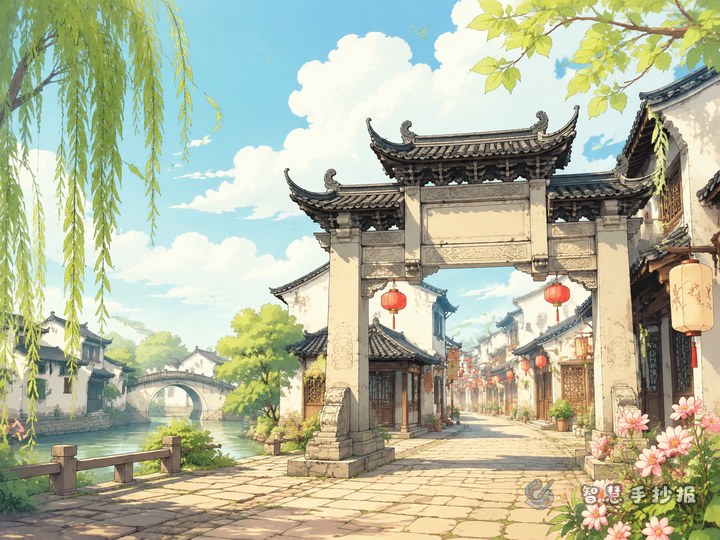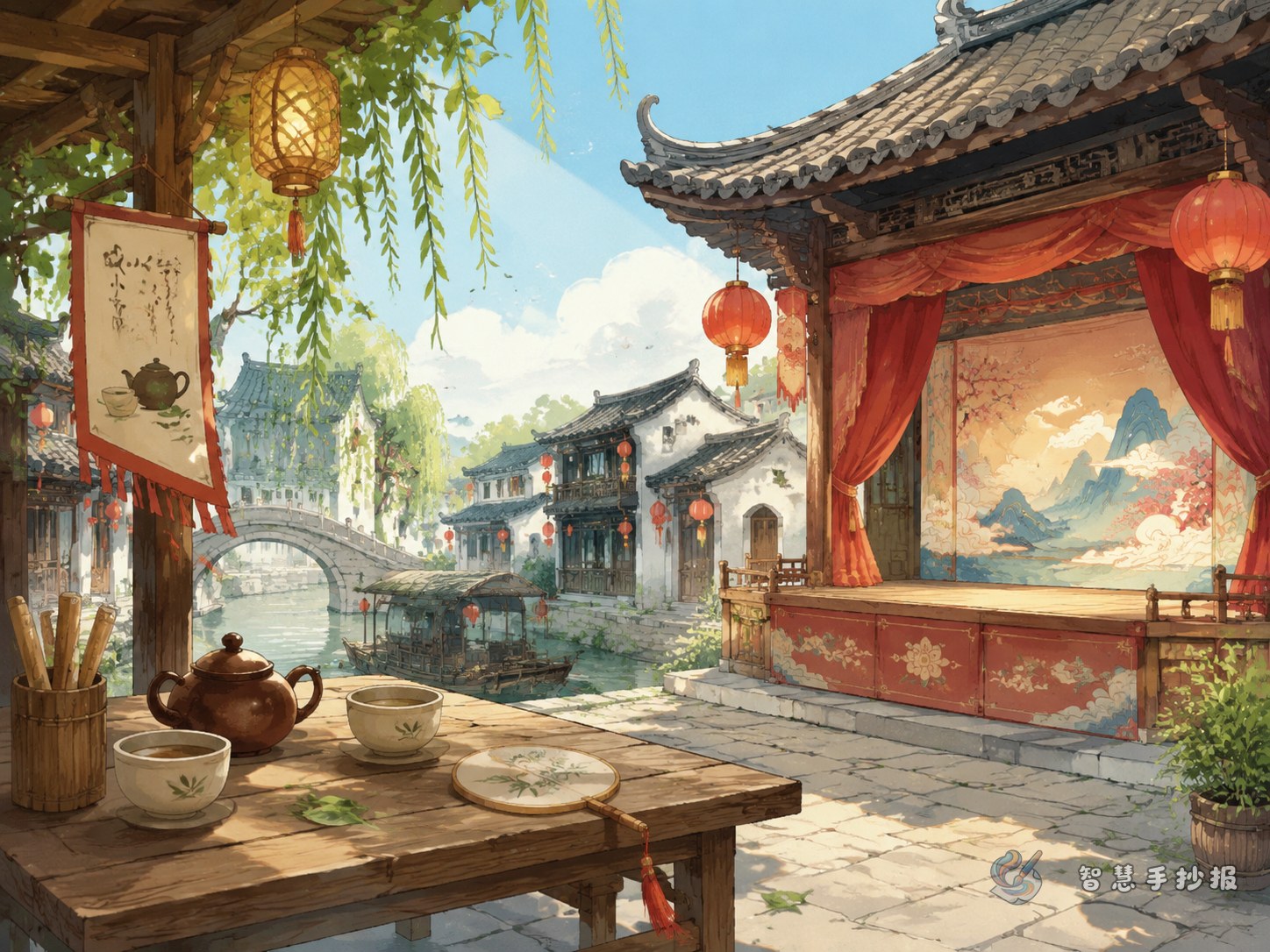
Start with the core scene: the teahouse at the alley corner and the small opera stage
The best part of this handwritten newspaper is not packing in every ancient-town element, but choosing one central scene that represents street culture. Place the teahouse in the middle, then add a small stage, gray brick walls, wooden signs, benches, and lanterns around it to show everyday life in the alley.
To make the scene feel more vivid, you can add a tiny story: someone is drinking tea and chatting at the door, people are watching an opera in the distance, and a snack cart is rolling through the lane. This makes the page more lively and also gives you more material to write.
How to write a title that feels search-friendly and engaging
Keep the title short and vivid. You could write things like:
- The Warm Everyday Life at the Ancient Town Alley Teahouse
- Slow Living Beside the Old Street Opera Stage
- Walking into Ancient Town Alleys: Tea Aroma and Opera Sounds
Small decorative words around the title such as “tea,” “opera,” “alley,” and “lantern” can make the layout feel more traditional. A bold title with cloud patterns, lattice lines, or little lantern accents works very well.
A simple column layout that is easy to use
If you are not sure how to arrange the content, split the page into four parts:
- First impression of the alley: gray tiles, narrow lanes, wooden doors, and old walls.
- Sounds inside the teahouse: boiling water, chatting, and storytelling.
- Buzz around the stage: applause, drums, lights, and the crowd.
- My view of the ancient town: finish with a short reflection, such as “An ancient town is not still; it is full of quiet and lively everyday moments.”
This structure is easy for children to write and easy for teachers to check.
Ready-to-copy text ideas
These short sentences are suitable for the body of the handwritten newspaper:
- The teahouse is the warmest corner of the ancient town alley.
- Applause in front of the stage brings the old street to life.
- Between the gray bricks and tiles, time seems to move slowly.
- A lamp, a pot of tea, and a play are all part of the town’s memory.
- Streets and alleys are not only passages, but also places where life happens.
You can also add one extra line: street culture in an ancient town shows neighborhood connections, folk activities, and everyday life all in one scene.
Layout and color suggestions
This topic works well with beige, brown, dark green, and vermilion as the main colors. The overall feeling should be warm and slightly vintage. A layout with one large central picture and several small text boxes around it is ideal.
- Put the title in the upper left corner and add a small teapot or lantern in the upper right.
- Write “Alley Impressions” in the lower left and “My Thoughts” in the lower right.
- Use window lattice lines, brick patterns, or lantern shapes for the border.
If coloring feels difficult, sketch the page divisions first, fill in light background colors, and then outline with darker pens. This keeps the page neat and steady.
A closing line that ties everything together
You can end with a sentence like: The most beautiful part of an ancient town is not the distant view, but the tea aroma at the alley corner, the lantern light on the stage, and the everyday feeling left by people passing through. This kind of closing line works very well at the bottom of the page and gives the whole piece a finished look. If you want to refine the layout and sections further, you can continue creating in the 智慧手抄报 WeChat mini program.