Focus on the message, not just the sheep
When making a handwritten newspaper about “Mend the Pen After Losing Sheep,” the key point is the lesson behind the idiom: it is not too late to fix a mistake once you realize it. If the page only retells the story, it may feel plain. If it also connects the lesson to school and daily life, the work becomes much more meaningful.
You can use a title such as “Mend the Pen After Losing Sheep,” “It Is Never Too Late to Correct a Mistake,” or “Learning to Fix Problems in Time.” A short subtitle can help readers understand the theme at first glance.
Simple sections that work well on the page
Section 1: The story in brief
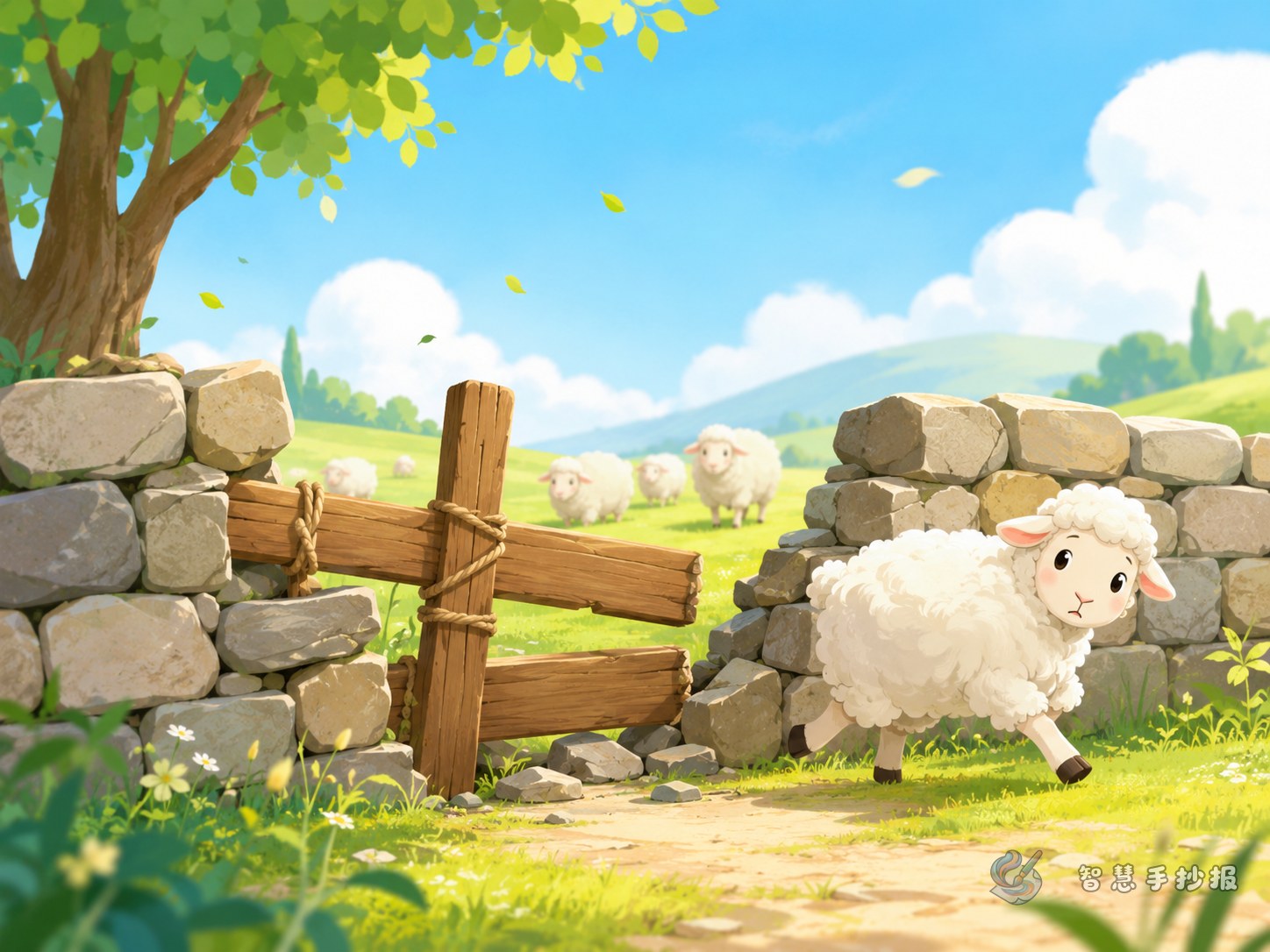
A man kept several sheep. One morning, he found that there was a hole in the sheep pen and one sheep was missing. His neighbor told him to repair the pen right away, but he did not listen. The next day, another sheep was gone. Then he realized the advice was correct and fixed the pen at once. After that, he did not lose any more sheep.
Section 2: What the idiom means
The idiom means that after a problem happens, taking action in time can still prevent greater loss. It teaches people not to delay when they notice a mistake or a weakness.
Section 3: Lessons we can learn
- Mistakes are not the end if we correct them quickly.
- Good advice from others should be taken seriously.
- Fixing a problem early is better than waiting.
- In study and life, timely correction helps us grow.
Section 4: Real-life examples
You can relate the idiom to daily situations. For example, if you lose points because of carelessness, review your mistakes right away. If your desk is always messy, organize it as soon as you notice the problem. If you have a misunderstanding with a classmate, talk and make peace early.
Useful lines to copy into the newspaper
- It is never too late to correct a mistake.
- Finding a problem is important, but taking action matters more.
- Timely repair can stop bigger losses.
- Learning from mistakes is part of growing up.
You may also add one personal sentence, such as: “This story teaches me not to ignore problems and to fix them as soon as possible.” A short original reflection makes the page feel more thoughtful.
Try a storyline layout for a clearer design
This topic works especially well with a step-by-step layout. Divide the page into three parts: first, “The sheep was lost”; second, “The pen was not fixed in time”; third, “The pen was repaired and no more sheep were lost.” This gives the whole page a natural flow.
- Place the main title at the top center in larger letters.
- Add simple drawings such as sheep, a wooden fence, grass, hills, or the sun.
- Use fence-shaped or cloud-shaped borders around the text boxes.
- Choose soft green, brown, and light yellow for a warm and tidy look.
Easy making tips for primary school students
- Write the title first, then lightly divide the page with a pencil.
- Keep each paragraph short so the page does not feel crowded.
- Highlight key ideas like “correct mistakes in time” and “take action quickly.”
- Keep the drawings simple; a few sheep and a broken fence are enough.
- Check spelling and handwriting carefully before finishing.
If you want to continue improving your layout, add more sections, or turn your idea into a cleaner final version, you can go to the Zhihui Shouchaobao WeChat mini program for further creation.