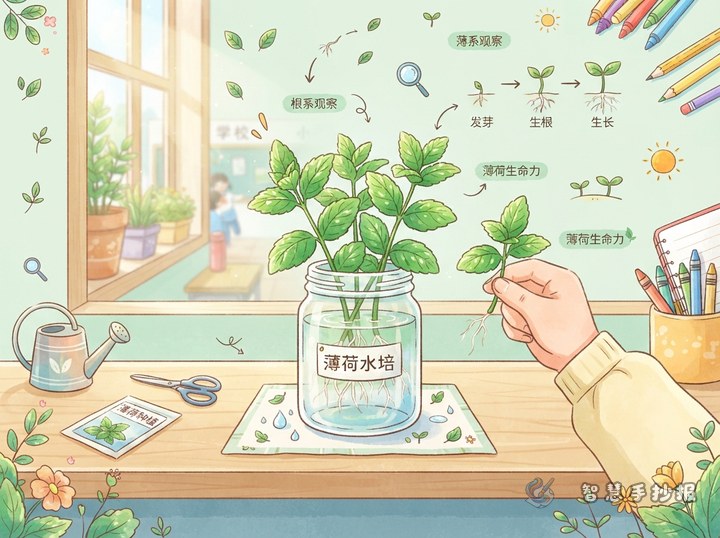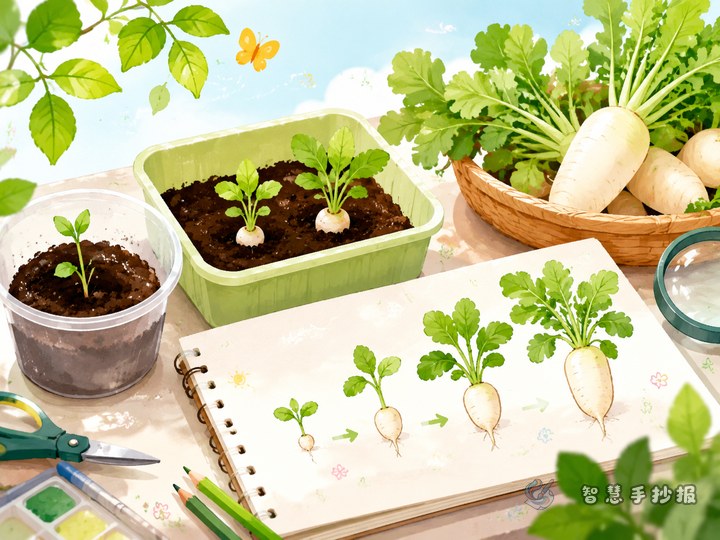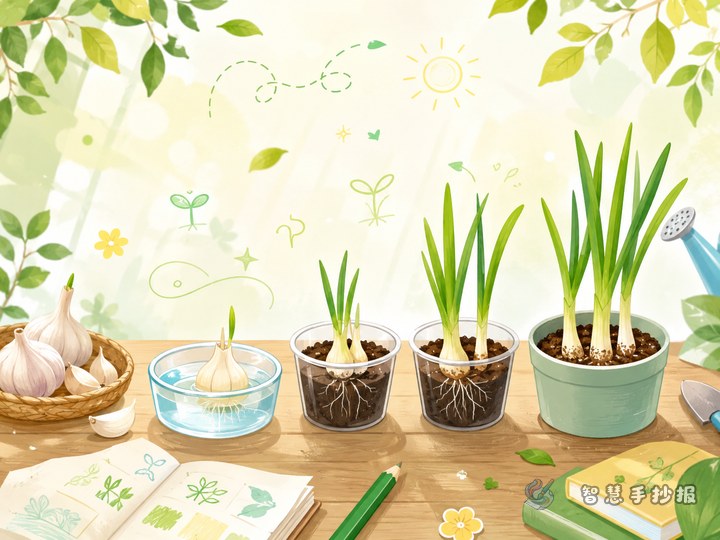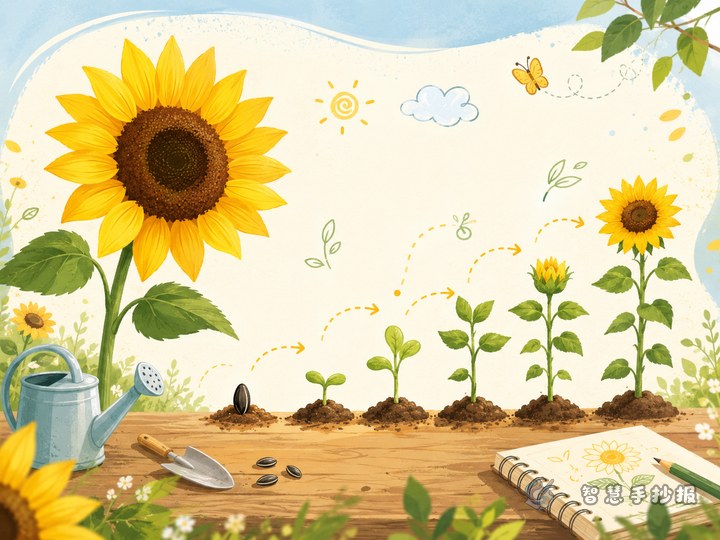
Choose a clear angle: show how a tomato plant changes over time
A tomato planting observation poster works best when it focuses on the growth process, not just general facts about tomatoes. Good title ideas include “My Tomato Plant Diary,” “How My Tomato Grew,” or “Tomato Growth Observation.” These titles make the poster feel personal and easy to understand.
For students, it is helpful to use a real planting experience from home, a balcony pot, or a school garden. When the observation is based on something you actually saw, the writing feels more natural and the layout becomes easier to organize.
Useful sections you can put on the poster
Getting ready to plant
- Prepare a pot, soil, and tomato seeds or a small tomato seedling
- Fill the pot with loose soil
- Plant the seed, cover it lightly, and water it gently
Observation record
- Week 1: The seed is in the soil, and there is no visible change yet
- Week 2: A tiny green sprout comes out of the soil
- Week 3: More leaves appear and the stem stands straighter
- Week 4: The plant grows taller and needs enough sunlight and water
- Later: Small yellow flowers may appear, followed by tiny green tomatoes
What I discovered
Tomato plants like sunlight. With enough light, they look stronger and healthier. Too much water can make the soil soggy, while too little water may make the leaves droop. Daily observation helps children notice how amazing plant growth can be.
Short writing lines for the poster
Poster text should be brief and clear. Two or three sentences in each part are usually enough.
- A tiny seed wakes up quietly in the soil.
- The green sprout pushes through the dirt and begins to grow.
- The tomato seedling gets taller day by day, and more leaves appear.
- With water, sunlight, and care, the plant answers us through growth.
- Watching a plant grow teaches me patience and responsibility.
If there is extra space, add a simple reflection such as: A plant does not grow all at once. It grows little by little every day.
A layout idea that looks neat and lively
This topic works very well as a growth path or timeline poster. A clear structure makes the page easier to read.
- Place the main title at the top center
- Use the left side for planting tools and planting steps
- Use the middle for a timeline showing sprouting, leaf growth, flowering, and fruiting
- Use the right side for tomato facts or personal discoveries
- Add a reflection or care tips at the bottom
Green, red, and yellow are good color choices because they match the tomato theme. Decorations can include leaves, vines, flowers, and small tomatoes. Keep the drawings simple so the page stays clean.
How to make the poster feel fuller
If the page still looks empty, add small sections such as “What tomato plants need,” “How I cared for my plant,” or “Problems I noticed while growing it.” These details fit the topic and make the poster richer without going off track.
You can also write simple observation notes about plant height, leaf number, or color changes. This makes the poster feel more like a real observation record. If you want to keep adjusting the layout, titles, and sections more easily, you can continue designing your work in the Zhihui Handwritten Newspaper WeChat mini program.